Tuesday, September 27, 2016

Spells are Bad Demons (and they're in your magic sword)

Out in the Far Realms, thoughtforms and concepts are active with intention and purpose. We call them "spirits" in a generic sort of way. The least of these spirits are spells: memetic entities that are basically words that are alive. You might also call them "demons." Spells will serve mortal sorcerers in exchange for observing taboos, which they like for reasons that it's best not to think too long about.


There are only so many spells in the world. Spells are discrete. There are only nine-hundred spells of the first circle. There are only nine spells of the ninth circle, each one unique. Sorcerer's own spells like knights own their arms and armor. And, when you defeat a sorcerer, you add his spells to your own grimoire by right of conquest.

Sometimes, spells get trapped in the Plane of Flesh. Indeed, wizards trap them in spellbooks in the labyrinthine passages of runes frequently. Sometimes, they even take on physical form, which is truly bizarre and frightening to see. That's what a familiar is—just a little spell demon in the flesh. Sometimes they get trapped in items, though. This is what people refer to blithely as "magic items."

Items of power are greatly coveted. Too many people have heard of the farmer Wooton Lye-eye who overthrew the king Grim Nassis with the aid of his magic sword (the story is true, actually). They are equalizers to the sorcerer's mysterious power.

Unfortunately, you can't force a spell into an item of power. Magic items are not made or forged. You have to trick a spell into a magic item, which is hard. Being in a magic item is torturous for them. They hate it. But spells are bound by their natures, and if you can somehow get it to promise to inhabit an item, they can't break this oath.

Every magic item is discrete and unique. Every one is alive. Well, that is to say, they're alive because spells are "living." Humans (and even elves) have more in common with slugs than they do with spells. But its worth noting that each magic item has a will. It has things it likes and things it doesn't like. It has an agenda. And, ultimately, it wants to be free—each magic item seeks to be unmade.


Alright What Are We Talking About

  • Every item of power has a spell trapped inside of it. 
  • When wielding the item of power, you can cast this spell if the magic item is charged. Casting the spell discharges the item of power. 
    • Items of power are either charged or uncharged. 
  • Items of power begin begins day charged.
  • Items of power also become charged when their bearer fulfills one of the item's passions. 
Passions
Every demon has a passion. Every demon wants something. Some want to depose kings. Some want to give money to beggars. These actions are how it eats and breathes. When the bearer of an item of power helps the demon fulfill these actions, the magic of the item is rekindled.


  1. Death of a particular race/monster/hair color/religious group/social rank
  2. Destruction of religious artifacts, scripts, and art
  3. Destruction of ego via self-debasement and disassociative drugs
  4. Publicly accuse an innocent person of a capital crime
  5. Discover (or destroy) long-lost secrets and forgotten things
  6. Giving away large sums of material wealth to the poor/specific institutions/to people who fulfill bizarre criteria
  7. Eating something never before eaten
  8. Sex with something pretty weird
All items of power also share one passion in addition to their unique goals: being destroyed. If the bearer ever takes a risk that significantly risks their life (say, at least a 50% chance that they would seriously fucking die), the item of power is charged as if their passion had been fulfilled. 

Anyway, here are three items of power currently lying at the bottom of some dragon's hoard, quietly praying for death. 

The Shield of the Black Spiral
Sir Theo of Thorns managed to trap demon Bra'el in his spellbook shield instead of banishing the demon back to the Far Realms. It was Bra'el's general supposition that Sir Theo further his goals under his diabolical influence--a supposition that proved mostly true. 

The Shield of the Black Spiral is a metal kite shield painted with a jagged black spiral curving in towards its center. The back of the shield contains several spellbook pages pasted to it, for ease of reading mid-combat. 

Magic: The shield can cast Hypnotize against one opponent facing its uncovered surface. 
Passion: To deny pleas of mercy--the shield becomes charged if its bearer ever denies someones request to be spared on the battlefield.

The Helm of Hern
The greater daemon known as the Green Man forced one of his subservient spells into the Helm of Hern in order to fulfill one of his own bargains with the wood elves of the Candlewood. The helm is made of leather, and features two projecting antlers cresting from it. As a helm, its wearer can elect to have it destroyed (permanently) to turn a hit into a miss. 

Magic: The helm can cast Bloodlust* on whoever wears it. 
Passion: Aiding animals--the helm is charged if its bearer provides aid, succor, or healing to an animal. 

Mourn 
The last surviving sword of the legendary three blades forged by Region the rune-king, Mourn was most famously carried by the Unborn Hero and presumed to be buried with him (though the location of his tomb is unknown). 

Mourn is a long, black sword forged of meteoric iron. It is continually cold to the touch; gripping it with bare flesh causes 1d6 frost damage. If emerged in water, the water will freeze over the course of several moments. 

Magic: Mourn can blast a death ray from its tip. 
Passion: Killing family members--Mourn will become charged if the bearer ever slays a member of his own dynasty. 
* Wonder & Wickedness, p. 34

Wednesday, August 24, 2016

Alternate Damage Dice

One thing that I liked about Dungeon World was that each class had a different damage dice. It made sense to me--a fighter is so skilled and so well-trained that no matter what weapon he picks up, he'll be wielding it with deadly accuracy, even as the conservative mage will be pinging away with whatever staff he grasps in his ancient, withered claws.

I liked that rule in DW because having different damage die per weapon has niggled me for a while. It requires a double-think on the part of the verisimilitude of what damage and HP mean. Consider:

  • Hit Points are abstract. They represent how much moxie and luck and chutzpah a character has to absorb near misses and glancing blows. They're not really you getting hit--at least not in a meaningful way. 
  • Different types of weapons will cause varying degrees of tissue damage. A handgun is going to cause a different wound than a chainsaw. A big ass claymore is going to cause a different wound than a nunchaku blow. 
These two ideas aren't entirely congruous. 

Moreover, despite having a fairly abstract combat system, D&D's weapon choices were often rather bland. Sure the quarterstaff has the two-handed and versatile weapon properties, but...so what? In several editions, I found that the group was usually choosing the same weapons because "they were the best" mechanically. That kind of sucks, doesn't it? Shouldn't your weapon choice be thematically appropriate and representative of your character's fighting style? 

Anyway, this here isn't anything groundbreaking, but it was an idea that I had on a walk this morning. If I was ever going to run a Oriental Adventures-esque game, I'd probably shop these as house rules. 

Signature Weapon
Each player character chooses a signature weapon. The barbarian might choose the double-handed axe or the claymore, while the thief chooses the dagger--or visa versa. 
When wielding your signature weapon, you deal d8 damage. If it's a two-handed weapon, you deal d10 damage instead. 

Trained Weapons
If you're wielding a weapon that you're proficient in (but isn't your signature weapon), you deal d6 damage. 

Untrained Weapons
If you're wielding a weapon that you're not proficient in, you deal d4 damage. 

Shuriken
Shuriken means "hidden sword." Throwing stars or daggers weren't really designed to do massive amounts of damage, but throwing a small blade into your opponent's face when they're not expecting it can be pretty effective. Therefore:
If you use a new improvised weapon for the first time during a campaign, you deal d12 damage. 
If you use an improvised weapon for the second time, it's treated as a trained weapon (d6). 
Each subsequent use of that improvised weapon deals d4 damage. 

So, the first time you're in a bar and decide to pick up a bar stool and smash it over your opponent's head, you deal d12. But barstools aren't really made for weaponry, so the gimmick gets old quick and each barstool attack will yield diminishing returns. However, if you'd like to throw the boar's head mantelpiece or a fisherman's net or a roof tile or a dead goblin, the first time you use those you also get to roll a d12. Players should utilize the environment in interesting ways.  


In this system, the damage dice represent "threat" and "skill" more than their wrecking power.

If you want to see two house rule systems for LotFP that treat weapons differently/interestingly in ways beyond varying damage dice, check out Last Gasp Grimoire and Ten-Foot Polemic. 


Monday, August 8, 2016

Religious Touchstones

I discussed in my previous post how I want religion to be relatable (yet weird) and meaningful. I'm still trying to articulate to myself why I think the Greyhawk-esque deity spread is so boring (because the choices flow from mechanical advantage instead of what you think would be most interesting?); but more importantly, I want to "fix" it. Sure, you can be a critic, but it's somewhat unhelpful for me to just say "I don't like this" without saying "...but I do like this."


Fair Warning: For this post, I'm going to be talking generally about the implied setting of my current game. I say implied because most of the setting is given to the players by the rules and fluff text. Rarely do I put in big chunks of prose or exposition.

As mentioned previously, the Cult of Mythrys is important because they are a political organization. They are an institution. The faith is one of the four estates in the social order of the City. They are represented by the suit of cups. They are the scribes, the money-changers, the physicks, the apothecaries, the lore-masters, the historians, the lawyers. They're important to have around.


Touchstones 
What is the Cult like, though? What's it like to be a member? What do they believe?

Alright, full disclosure here--I have a background in LARPing. I wrote and ran a small game for about seven years. There's something I really like about LARPs that I haven't found necessarily true for the tabletop community: the character-facing fluff is written in a way to make you think about your character. Often, tabletop RPGs write fluff to worldbuild. It could be interesting or a good story, but the author is rarely writing with the intention of saying "how" your character acts. The writing doesn't facilitate conversations about that subject.

In well-written LARPs, however, authors stuff cool character traits, cultural habits, ticks, and beliefs into character-facing material. The Ultek consider it vulgar to touch hands, since hands are the agents of their will. Elves do not share their food with mortals. Albionish are deferential to women, and the flowers they wear mean different things about their relationship status. Grueth barbarians consider it a great dishonor to see your back, and will attack it to prove that they are not someone to go unwatched. The Green Elves consider it a great shame to have a magic spell cast on them.

These little details mean something in the game, and boy do they come up. You put weird little cultural gimmicks into the different character choices a player can make, and you're adding chemically reactive ingredients into a potion and shaking it up. Characters conflict. Cultural shock happens. Players are forced to make hard choices about how their character feels about attacking a woman (shock) who is unarmed (double shock) but also possessed and wielding necromantic energies (triple shock!) without concern for herself or others. You have a sword in your hand, but are you willing  to kill an innocent woman to stop the demon inside's rampage? If you do so, doesn't it mean dishonor and disbarment from your order of knighthood? I've seen great, meaningful moments of roleplay come out of these situations.

To try and facilitate the discussion of culture without being prescriptivist about setting or your character, I use touchstones. Touchstones raise questions, but don't necessarily answer them. Or they give you a generic idea and beg you to explore the specifics.


These Things are Mysteries
The Cult of Mythrys is a mystery cult. Its teachings are secrets. The uninitiated may not know--must not know--the truths hinted at and obscured by layers of metaphor, parable, and symbolism. Indeed, it is many tiered. The adherents of higher levels know more sacred secrets than those of lower levels. A monk may spend his entire life pursuing the deeper truths of Mythrys and never gain the true enlightenment of the deepest initiations.
  • A Mythric religious ceremony or religious text is begun and ended with the phrase: "These things are mysteries." 
  • A member of the cult is called a mystai, which means "initiate." Someone non-initiated is called a stulte, which means "fool." 
    • The Cult still considers the non-initiated to be "in" the Cult; they just rank 0. 
  • There are twenty-one ranks of initiation which mystai advance through in their religious career. 
  • If you are in the cult, you are probably rank 1. Your local clergyman is probably rank 4 or 5. Monks and nuns are around level 7-14. Bishops and cardinals occupy the ranks 15+. 
  • It's hard for adventurers to advance in initiation grades. To unlock deeper mysteries, you need to do things like spend a year in silent contemplation, or perform great feats of bodily mutilation, or do a pilgrimage. Things that get in the way of adventuring. 
    • Large donations to the Cult sometimes fit this bill. 
  • Only the Secret Pope has achieved the greatest initiation: the twenty-first rank. He learns the secrets of this initiation directly from the last pope. 

God in One-Thousand Persons, Blessed Multiplicity
The essential gimmick of Mythrys is this: god is many and is also one. He is a contradiction. As mystai advance in ranks, they are told a different story about who or what god is. They believe these stories with utter conviction until they advance to the next rank and have to unlearn what they have learned.

The thousand-faced god is called the Monad, which means "alone." He created everything. He created orders of angelic beings to serve him and sub-create his creation. The greatest of these is a dragon named Demiurge, which means "crafter." It's commonly accepted that Demiurge did a bad job at this, and that's why there's earthquakes and locusts.

  • Each rank in the cult has a view of the Monad that corresponds to the major arcana in the Tarot. 
    • Therefore, rank 1 mystai believe that God is essentially a magician. 
    • Rank 2 mystai believe that God is unable to be worshipped, but they revere Maiden Wisdom (see below) and call her the High Priestess. 
    • Rank 3 mystai believe that Maiden Wisdom is actually God(dess), and call Her the Empress. 
    • Rank 4 mystai realize that no, God is male after all and call him the Emperor. 
    • Etc. 
  • Mystai believe different things and have essentially different worldviews as they advance in their religious orders. 
    • One might believe in reincarnation, the other in a end-of-days resurrection, and a third in the extinction of the soul upon death. They might all agree that the Apocalypse is soon at hand, whereas a more senior member of the Cult believes that the Apocalypse is a heresy. 


Hail Wisdom, Mother of Misery, Monad is With Thee /
Hail Mythrys, Servant of Monad, May You Find Peace

The human face of the Monad is the prophet Mythrys and his mother Maiden Wisdom. There are lots of stories about Mythrys and Maiden Wisdom, most of which are difficult to rationalize. They say that Mythrys was born of a maiden, but also that he was born of a stone--there are some complicated narratives that attempt to make both work. They say that he slew the animals of the zodiac and placed them in the sky. They say that Mythrys died and rose again from the dead. They say that Mythrys now feasts with the Sun in the palaces of Heaven.

It was Mythrys who first initiated men into the sacred mysteries. He had twenty disciples. He taught them each different sacred truths. When he departed from the world of flesh, the twenty-first disciple, a mere child of six, revealed that he was the Secret Pope and became the head of the Cult.

The Cult of Mythrys exists in a Grecian Mystery Cult slash Levant religiosity pastiche. The actual texts and stories used by the Cult don't matter. Players don't have to memorize stuff like that. Players should feel free to make up parables in this mode to serve their own purposes and further flesh out the religious canon of the Cult.

Take Aways
OK. Well. How does that feel? I admit, I like having this vague-yet-defined set up for religions more than quietly feeling dubious that religion in a world where clerics can Create Water would have any problem collecting followers. I like drawing an outline and letting players color in the spaces (Draw Maps, Leave Spaces, as Dungeon World says). I like this mishmash of ideas.

Stats? Still none. I have a vague idea that religions can probably be used to shove in "optional rules," but I'm leery of mechanics taking advantage over "what is cool" when it comes to faith. I sort of like worshipers of the god of chaos having to deal with the sting of critical failures and the thrill of critical successes, though. I sort of like alignment being a social construct instead of a metaphysical one. We'll see.

By the way, check out Ten Foot Polemic's Religion Writeup here and here if you want to see some religious tom-foolery that far surpasses anything that dribbles out of my mouth.

Tuesday, August 2, 2016

OK this is good

I've been playing RPGs since I was 12, but I sat still and watched all twenty-four minutes of this last night:

https://youtu.be/Eo_oR7YO-Bw

I think this video rules. Because I've been in the hobby for >50% of my life, I forgot how many assumptions, unspoken agreements, implicit social contracts, and tactic best practices there were. I bet it is confusing to be a good new player. If and when I ever game with someone new, I am definitely going to show them this video. And as I write, even if I'm not writing for a "new" audience, I need to be aware of the things that I am not saying.

"There as many ways to play D&D as people playing it."
Too true. Too true.

Sunday, July 31, 2016

Clerical Error -- Religion Etc. Etc.

In almost every D&D game I've ever played, I don't love the religions.

I don't think this is an uncommon sentiment--at least in my own RPG echo chamber.
A lot of them are sort of the exact same. Well MY god of death is named the RAVEN QUEEN and boy howdy is SHE different. She has a SKULL as her symbol. I mean. A RAVEN. And YOURS has a skull. Boy oh boy are we different.

To digress ever so slightly, fantasy is interesting because of its similarities to the real world. I don't really care about the weirdness*, I care about how the weirdness highlights and contrasts the meaningful overlap in the real world. I don't care that the orcs are fungi with psychic power, I care that they create families torn by war. The families torn by war I can identify with--its an experience that I can empathize or sympathize with. It's why I care about fantasy. It's not worldbuilding just for its own sake.

RPG religions should be both a) interesting in their own merit (i.e., different from the ubiquitous recoloring of some Roman pantheon) and b) highlight contrasting similarities in my own personal experiences with faith.

"But Josh," you whine in a hateful nasal tone, "RPGs are FANTASY and religion is the REAL WORLD and the two shouldn't overlap because people's religious beliefs are sacred and important and blah blah blah"shut up I've stopped listening to you. I just explained that fantasy isn't interesting in its own merit--and really you don't think it is, you just haven't realized it yet. Fantastic beliefs are only meaningful in the story of your game because you can put them into a cultural context that you understand. Religion is important to a lot of people, and even if you are irreligious it's still important to you. It impacts your daily life no matter where you live in the world; it pressures your history and charges your interactions with other human beings.

The problem I have with religions in RPG experiences I have had, by and large, is that they don't impact my INC life. My buddy Cleric George is a cleric of the Life God for one level (since it gives him sweet access to a class feature and a spell that he wants for his build) and he casts Cure Light Wounds pretty good and I like him. Sometimes he role-plays about how good his god is, and my dwarf vaguely disagrees because surely the DWARF GOD (recolor as you wish) is the best one. But are we different? Does religion feel important? Are we going to have a war about it? Are we going to have a war about the fact that he portrays DWARF GOD as female and I portray him as male? Or that I think he had no wives, and he thinks he had twelve wives? Or because I think that DWARF GOD is an emanation of the ONE GOD and he thinks that there are no fewer than 15-18 gods, depending on who wins the celestial wars?

So often, clerical features are just background fluff in an ultimately unimportant and uninteresting number crunching game. Fffffuck that. I hate that.

I don't really have a great solution to this non-problem, but here is a drunken musing on the subject:

YOUR religious symbol has SIX spokes. HERETIC!

Religion is Important Because NPCs Say So
In A Song of Ice and Fire, the Spider asks this riddle:
“In a room sit three great men, a king, a priest, and a rich man with his gold. Between them stands a sellsword, a little man of common birth and no great mind. Each of the great ones bids him slay the other two. ‘Do it,’ says the king, ‘for I am your lawful ruler.’ ‘Do it,’ says the priest, ‘for I command you in the names of the gods.’ ‘Do it,’ says the rich man, ‘and all this gold shall be yours.’ So tell me – who lives and who dies?”

In Varys's world, it's pretty unclear to Tyrion who would win in a popularity contest between god, country, and wealth. Of these forces, the common murder hobo would probably pull the trigger for the rich man--but why? Because gold is a commodity they understand, and they understand has a place in the scope of the world. ((Obviously, this question is meaningless in some sort of communist utopia in the clouds where nobody has anything tradable, or wealth is punishable by death, or something)) Assumably, though, the king would also confer some meaningful good to the sellsword--lands, titles, women, fame. Things that not even money could buy.

How much more for the priest?

Maybe religion is important because it is important in the in-game world. If you are a heretic, you will be burned--no ifs, ands, or buts. If you are faithful, the crowds call you a saint. They give you food, shelter, succor. The priests adore you, and are eager for your next apologetic treatise. They are eager for you to settle matters of philosophical dispute. They build you statues, churches, hymns. They send armies of paladins where you point your ring'd finger.

Maybe religion should feel important in the game world because, despite the fact that Pastor James C. Kelly down at First Presbyterian can't Cure Wounds or Raise Dead, he's still an important guy and people care what he thinks.


The Cult of Mythrys
This is the general tack I am taking with my current homebrew game. The church is called the Cult of Mythrys, and it's not important because it does miracles or has any number-crunching benefit. The Cult is important because the Cult is important. If you are a member of the Cult, you have rules and restrictions and a culture that you have to fit into; and correspondingly, it's beneficial to you because the Cult is an engine as important (or more?) than the State. The Cult is providing tangible and real goods (and evils) for the people within the world.

The Cult provides food for the poor. They provide lunatic asylums. They provide leper colonies. They provide money-changing stations at a reasonable rate. They provide food and gear for people making religious pilgrimages.

Moreover, the Cult of Mythrys, analogous to the Catholic Church of yesteryear, are probably the only really literate people around. The Testament is written in Vetic (Latin), and there's a religious proscription that all the faithful should learn to speak this language (like Arabic for the Koran) so that they may understand the religious texts without the fouling of translation. That means all the clerics are literate, and are the engines of literacy: they write the books, transcribe the books, illuminate the books. They write letters to your sister (and probably carry them to her, if she lives on their itinerant path). They write the contract you have with the blacksmith, and witness it.

Since they buy and sell money, the Cult is also the first bank. They're also literate with money. They understand exchange rates, economic theories, impacts of tariffs and taxes, and a dozen other things that serfs have no idea about.

How much more important could a fantasy religion be if, in addition to all the cultural goods they wield, a church could literally bring your father back from the dead? Can you even imagine that shit?

I think that I have a more meaningful role-playing experience when I take the miracles out of the religion. I think I have a more meaningful role-playing experience when the religious communities are important or powerful in the world. I think I have more meaningful role-playing experience when the deity or deities aren't a paint-by-numbers recoloring of the Greyhawk deities.

What about you? What is your table's religion(s) like? Why are they fun? What do you like about them?


* I mean, I do.

Monday, July 11, 2016

T.H. White Writes Some NPCs

"The Dark and Middle Ages! The Nineteenth Century had an impudent way with its labels." - T.H. White, The Candle in the Wind, Chapter 3

I've been rereading The Once and Future King, and boy have I been enjoying it. White sort of waxes historical in chapter 3 of The Candle in the Wind and goes into how "modern" people during (the ill-defined) "Arthur's Time" would have been. He sort of paints a sweeping picture about the entire Medieval period and entire European continent. It isn't rigorously thorough in its historicity, but it does make its point.

It's lucky, too, since I'm currently writing a megalithic city setting and need random encounters, random NPCs, and strange sights to see. It was nice of White to pull all this imagery together for me. The first law of GMing is steal, steal, steal.

(You'll notice, perhaps, that I'm using a Tarot draw not a dice roll as the random chance. You roll a d14, if you want.)

Sundry Goode Folk of Ye City
1 - Knight in armor bearing top-knot; will serve as a bodyguard while you stay in the City for modest fee
2 - Ambler clerk with tonsured hair; will copy down and deliver letters for small cost
3 - Crusader, with every piece of clothing, gear, barding, tack, bridle marked with the cross; will happily root out blasphemy
4 - White Brotherhood lay-brother, affixer of Papal seals; illiterate and unhelpful
5 - Barbarian wearing Phrygian cap and beard in defiance of proscribed religious dress; will beg you for money to pay his debts
6 - Sergeant-at-mace, royal bodyguard of the king; he is carrying illegally distilled spirits for sale
7 - Pair of papal nuncios, riding to deliver excommunication; will not be bothered by the likes of you
8 - King-at-arms, official referee of tourneys and jousts; will happily judge any trial of combat
9 - A palmer bearing various icons, including a feather of Jibrael's wing, some of the coals on which St. Laurentius was grilled, a vial of sweat from St. Mikhael from when he found a devil, a vial of Maiden Wisdom's milk, and the bones of various saints; will happily sell these to you for exorbitant rates
10 - An outlaw, bearing a holy writ giving him safe passage in exile; if he ever lowers or drops the writ, he is freely assailable by law--he is accompanied by his wife, her hair shaven, into exile
Page - A shepherd whose nose has been cut off for hunting in the kings wood, herding his flock, bearing tar (with which he tends the sheep's wounds); he will happily tell you stories, but is mildly retarded
Knight - A baron carrying a hot pie, complete with his retinue; he is wearing satin shaped like armor, but is too courtly and good to enjoy the advantages of armor; will take you into his retinue and allow you to go hunting with him
Queen - A witch, carrying a wax figure of a rival to a sacred spring in order to properly baptize the poppet; will curse a foe for a fee
King - A princeling with his nanny; the nurse has recently been given power to whip the child if he does wrong without it being considered treason; the princeling will happily sentence you to death for minor infractions, but the nurse will override him

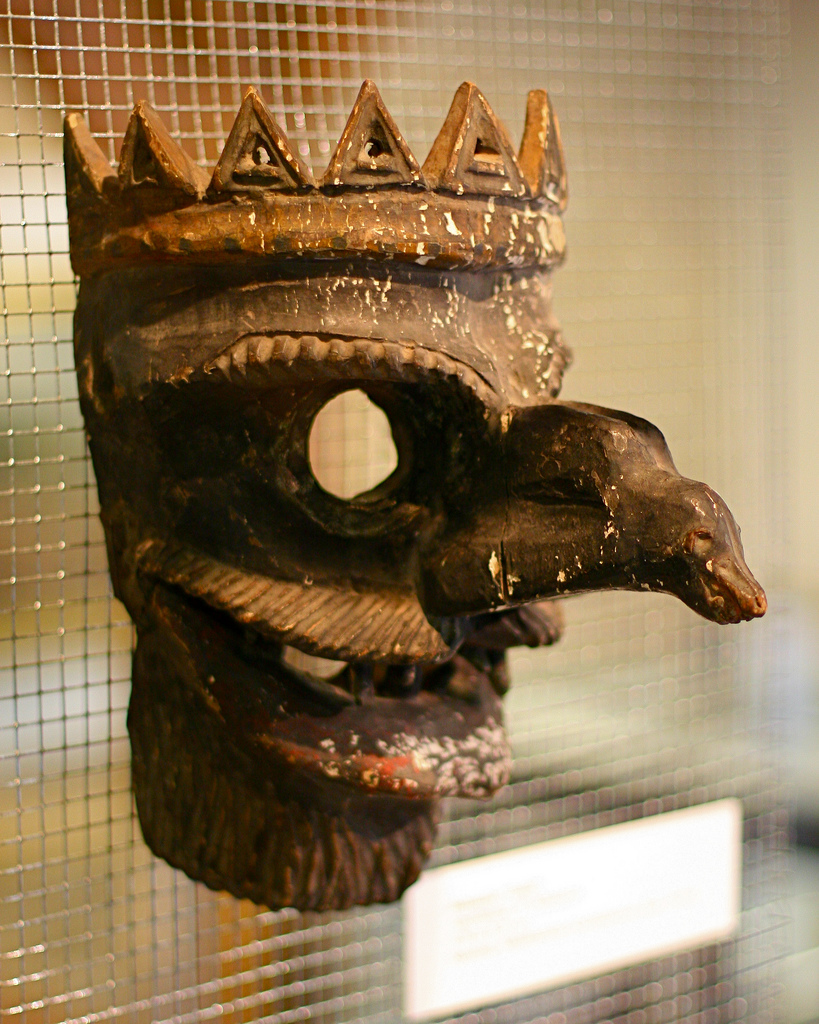
A shame mask


Chance Events and Fortunes had at Ye City
1 - A bankrupt serf is being whipped by a sheriff; as the sheriff whips him, he cries "Who will stay my hand with coin to pay these debts?"
2 - A crowd has gathered at the harbor to watch a sailor leaping from the mainmast tree to settle a gambling debt
3 - A woman bustles blithely in the market wearing a visard; a wooden mask designed to protect her skin from sunburn and her reputation from slander
4 - A woman walks stoically through the streets to jeers; she wears a heavy wooden shame mask and a sign around her neck reads "Adultress" (sic)
5 - You see a man "kissing" a woman's rear, as it protrudes from an open window onto the street
6 - Children are happily playing with the dead body of a corrupt sheriff, still wearing his badge of office
7 - A poor family are gathering loads of manure from the street with forks to sell to tanners; they wait near your animals to see if it will drop a load of dung
8 - The square is full of people observing a magician demonstrating a pendulum clock--the first of this sort of design
9 - A Punch and Judy puppet show vigorously and lewdly lambastes the local lord and the clergy, despite having an audience of only children
10 - Guards push a thronging crowd back as they riot for a chance to grab recently unearthed gold bars hidden in a crumbling patch of the city's walls
Page - A woman is being publically examined by a cleric after claiming to have given birth to a litter of rabbits
Knight - Forty-eight heretical templars are being roasted at the stake, to the joyous cries of the crowd
Queen - A new fountain in the shape of a silver tree entwined with serpents has just been unveiled; it was commissioned by the Secret Pope
King - A triumphal parade winds through the city, bearing treasures from a recent conquest of a distant orcish capital, including false wooden dragon idols and goblin slaves

Camp Actions and Missing Players

For my stupid little fantasy heartbreaker project, I smashed up these rules to cover activities that players could do during rest downtime. The flow of the game is separated, similar to Torchbearer or similar games, between Crawl (adventurin'), Camp (restin'), and City (money-spendin') phases. 

Camp Actions
Typically, a Camp Action is one meaningful activity that you can do while relaxing in the few hours of your watch, after you've done all your important encampment chores. This is not an exhaustive list, but a structure to handle common requests.

Hunting and Gathering
If you have missile weapons, you can spend your time at camp away from camp trying to capture or kill some game. The hunter returns with a ration's worth of food for each success he makes on a Pentacles test. The GM will tell you what sort of food is available; the player is responsible for deciding how picky he'll be about rations.
If you are adjacent to special hexes, this might trigger a camp encounter.

Forage for Components
The Underworld does have one thing going for it--alchemy seems to be just bursting out of it. If you spend your time searching for alchemical components, draw Cups. You find one component for each success.
If you are adjacent to special hexes, this might trigger a camp encounter.

Cartography
If you spend some time updating your map and comparing your notes about the terrain you’ve travelled, you may expeditiously retreat back to town. If you only travel on hexes that you’ve explored, each normal hex counts as .5 for your total movement during a watch

Scout Ahead
If you scout around, you might be able to learn something interesting about the terrain. Test Swords. For each success, the GM will give you a hint about some encounters in the nearby hexes or tell you what sort of monsters frequent here. If you are adjacent to special hexes, you'll learn about them. If you achieve no successes, this might trigger a camp encounter—otherwise, you're sneaky enough to see them and return to camp.

Fellowship
Pick a guild mate. Engage in a role-play with them. Share a memory. Talk about their quests. Ask about their childhood; tell about yours. End the conversation meaningfully so that the table knows you're done talking. At the end of this exchange, you both charge your bonds with each other.

Training
If one of your guild mates is willing to teach you, you can learn a Talent from them. This takes both of your Camp Actions, and they get nothing from the exchange. Invest XP into the Talent they are teaching you. You prepare as many uses of that Talent as you have XP invested.

Read a Book
Do you have a book? Spend some time reading it. Ask the GM one question related to the subject matter of the book. He will tell you what the book says about it.

Fletching
Spend some time looking for and crafting shafts for your recovered arrow heads. Refill your quiver to twenty.  

Guard Patrol
It’s assumed during the Camp Phase that the guild sets up a watch. However, you may dedicate your Camp Phase to setting active watch, patrolling around your encampment, and providing assault counter-measures. If you do so, the GM will draw twice on the Camp Encounter table and take a non-combat result if available.

I wanted to emulate the things these resting adventurers were doing.

I also recently had to face the question: What do you do with players who are absent? I realized that, rather conveniently, the Camp Actions gave a worthy list of things for people to be doing when they were not on-screen.  


Players Missing the Game

If a player misses a session during a Crawl phase, here is the default procedure. The player hero is assumed to be about one hex away, trailing behind the main guild. They are slowed down by their pursuit of one of the Camp Activities. When the player returns, she will tell the table what activity they performed, receive the benefit from it, and rejoin the main group. Obviously some activities (Fellowship, Training) require another player hero to be “absent” with you; only choose activities that make sense for your circumstances.