Friday, August 26, 2022

Rest Interrupted

This post brought to you by insomnia. Yes, insomnia! With insomnia, you can feel bad all day! Try it whether you want to or not!


If you've ever gone camping, you know how different it is to sleep on the ground versus sleeping in your bed. The point of these rules is to create more interesting equipment choices. By mechanizing things like bedrolls, tents, and blankets, you are more inclined to not fill up every single equipment slot with lard.

---

When you rest in your own bed or in a safe haven, you recover all of your HP. When you are sleeping hard in the dungeon or wilderland, use these rules.

Each night you sleep while campaigning, roll a die to see how much HP you recover. The size of the die you roll is determined by how safe and comfortable you are. 

The dice chain is: d0 -> d2 -> d4 -> d6 -> d8 -> 1d10 -> 1d12 -> 3d4

Start at d2.

Boons

For every item on this list you can answer "Yes" to, increase your die type by one step:

- Bedroll

- Roof overhead (tent or otherwise)

- Fire

- Shared booze 

- Hot meal

- Had sex

Banes

For every item on this list you can answer "Yes" to, decrease your die type by one step.

- Precipitation

- Cold

- Hungry

- Sick

- Bugs (can be negated with bug netting)

- Evil environment (dungeons, Swamps of Ill Omen, etc.)

- Combat encounter at night (decreases die by two steps)

Nocturnal Manifestations


Put an event called "Nocturnal Manifestation" on your Meatgrinder table/Overloaded Encounter Die. If you roll this entry during the night's watch, roll again on the following table and randomly determine the target. 

  1. Pet Pest: One of your animal companions or familiars crawls onto you at night. They are trying to get warm, but keep stepping on your face and kneading their claws into your breasts. You are desperate to not disturb them and hold yourself perfectly still, despite being terribly uncomfortable. Roll your recovery die twice and take the lower result.
  2. Snoring Bedmate: The person sleeping nearest you is sawing logs all night. Decrease your recovery die by one step. OR choose to wake them up. They decrease their recovery die by one step instead.
  3. The Old Campaigner's Complaint: You have dysentery. You spend your night squatting, guts roiling. Reduce your recovery die by two steps.
  4. Sleep Paralysis Imp: A terrible demon manifests and sits on your chest, smothering you. It's absolutely terrifying. You recover 0 HP.


Tuesday, July 26, 2022

Kung-fu Training Minigame

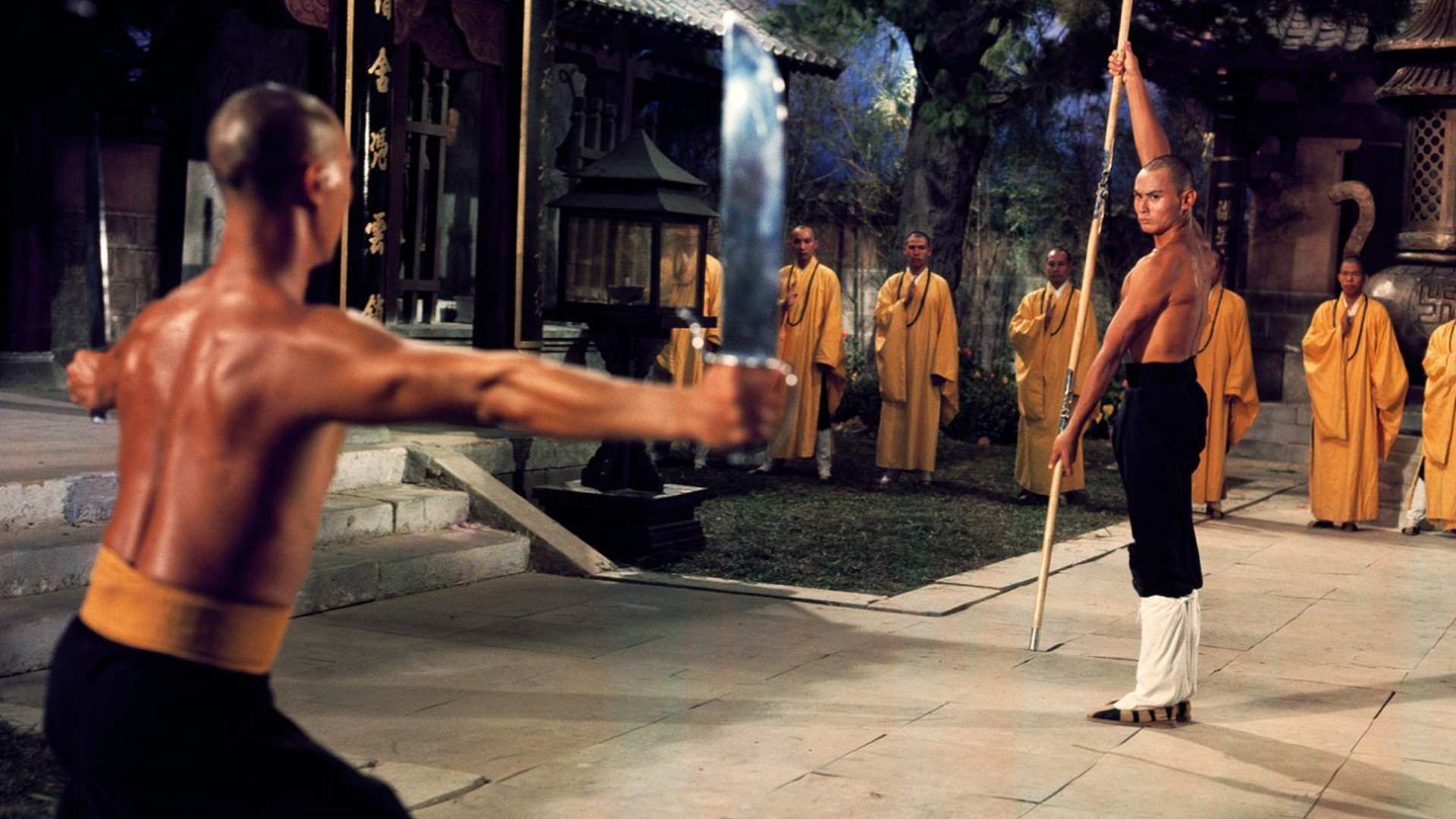
As I said in my previous post, I've been watching a lot of kung fu movies. A core feature of these movies is a training scene. The hero goes from nursing their bruised knuckles to smashing through stone walls. Importantly, there are frequently multiple training scenes. 36 Chambers of Shaolin is essentially one long training scene sequence.

Because training scenes are an important part of the genre, they seem important to gameify. Saying "Okay, you go off and train for a few months and we're back" seems insufficient. 

But how can you make doing 100 pushups, reciting 100 sutras, or carrying 100 jugs of water interesting?

From Kill 6 Billion Demons

Honing Your Skills vs Learning New Skills

When training, you can hone your skills or learn new skills

Honing your skills allows you to improve your HP, master a new technique from your main style, etc.

However, you can only do so much training on your own. You must have a teacher to learn new skills. 

Teachers include:

  • Kung fu masters
  • Kung fu manuals
  • Sparring partners
  • Schools and monasteries 
  • Weirder things, like surviving poison to learn Five-Venoms style
Traveling to find a teacher who can teach you the right technique to overcome the villain is a major point of the game.


Training Montage


The 36th Chamber of Shaolin

Once per session (often at the end), you may declare that you're training. If you currently have a teacher, the GM will tell you 1-3 exercises they have assigned you

For example:

  • Pulling nails from posts with your bare hands
  • Catching thrown tofu without splattering it
  • Catching flies with chopsticks
  • Watching light bouncing off a mirror without turning your head
  • Pulling a laden cart up and down a mountain

Roll 5d6. You must keep at least one die, but may keep more. Your goal is to get the lowest value possible.

Threes are worth zero points. All other numbers are face value. 

  • If you keep a 4, 5, or 6, narrate a failure.
  • If you keep a 1 or 2, narrate a near success.
  • If you keep a 3, narrate an a-ha moment.
The GM will give you a 1-3 points of focus based on your description (see below).

Reroll the remaining dice and repeat the procedure, keeping at least one die and narrating a description until no dice remain. 

Sum the total value of the kept dice. 

  • If the total value of your training montage is equal to or less than your focus, the montage is successful. 
    • If you are training by yourself, hone one of your skills. If you are training with a teacher, learn a new skill.
    • Reset your current focus to 0.
  • If the total value of your training montage is greater than your focus, you do not learn anything new. You are bruised and exhausted.
    • Note down your total focus. Focus persists between training montages until your succeed.

Example:

The player rolls a 3-3-6-5-2 on their first turn. They keep both 3s. They also choose (but don't have to) to keep the 2. They roll the last two remaining dice and get 3-5. They keep the 3. They roll the last die. It's a 4. They must keep it as it is the final die. Their dice are now 3-3-2-3-4. Total score for that montage is 2+4 = 6.

Focus

When you try to learn a new technique, you begin with a focus of 0. The GM awards a player 1-3 points of focus for each narration during the training montage. Focus persists between training sessions until a training montage is successful.

1 point: The GM awards 1 point of focus for evocative descriptions of training. 
Example: "I struggle to smash all the hanging water jugs with my head, getting a bloody nose."

2 points: The GM awards 2 points of focus for descriptions that interact with the environment in some notable fashion, taking advantage of the scenery they've provided. 
Example: "As the Sick God continues throwing slices of tofu, I actually catch one this time without mashing it. Then another. Then another. The Sick God looks impressed and begins throwing the slices faster. I quickly run out of hands with which to catch the slices. I catch one in my mouth and my eyes bulge and cross."

3 points: When a player's narration causes the entire table gasps in awe, bursts into applause, or collapses into laughter, the GM should award 3 points of focus. 
Example: "As Ah-Biao and I spar atop the raised poles, I no longer need to look down and think about my footwork--I simply glide across them, like I'm skating across a pond in winter. As I fall back against his assault, he delivers an unexpected kick. I sail backwards, and would be knocked outside of the sparring ring, but I swing my saber in a lazy arc and cut a section from one of the red poles. I kick off of it in mid-air and land back in the ring, ready to continue."

Design Notes

The goal is to incorporate training scenes into a kung fu RPG in a way that emulates classic grindhouse kung fu movies but is also fun. Fun is derived from choices. 

There two main choices delivered by this system: 1) There's a small strategy in the minigame about when to take a low roll and when to reroll 2) The creative exercise of narrating interesting, pleasing scenes set by the constraints of the GM. These are minor but I hope they deliver a nice experience. 

Here are some other things that appeal to me about this system:
  • The minigame is derived from Threes, a dice game my friends and I play while drinking. It's fun without being complex or demanding.
  • The minigame is also super fast. Without narration, a single turn takes about a minute. With 4-5 narration beats, I anticipate this minigame taking about 5 minutes. This feels like the right training-to-play ratio for a standard RPG session. 
  • The focus system is borrowed from Exalted's stunt system. It is a fun system that works when you get your head around it.
  • Because training happens every session, players should be gaining new skills every session or so. Leveling up is fun and is very genre appropriate.
This needs playtesting, but I think there's something appealing here.

Tuesday, July 19, 2022

Meditating on the White Lotus

Sometimes I make kung fu posts. I've started using the `kung-fu` label to aggregate them. Click on this label to read my other mutterings on this subject.

I've been watching Shaw Brothers films at the gym this summer. If you're unfamiliar, Shaw Brothers was a prolific Hong Kong production company that produced grindhouse kung fu films. Basically, all the audio samples from Enter the Wu-Tang (36 Chambers) were from these films. 

> Frog style is incredibly strong and immune to nearly any weapon.

I like some of the films more than I like others, but almost all of them have something that made me say "Ha ha neat." Almost all of them have something gameable

In this post, I'm going to step through the Shaw Brothers' film Clan of the White Lotus beat by beat. Heavy spoilers warning, obviouslyWhen there's something gameable, I'll riff. 

This is a purely creative exercise. Maybe it will be interesting to you, too!

Clan of the White Lotus

I selected Clan of the White Lotus (titled Fists of the White Lotus in the original North American release) because it is standard Shaw Bros. fare. It is fun without being brilliant. It is third in a series of multi-generational revenge films concerning Pai Mei's betrayal of the Shaolin temple. (You might remember Pai Mei from the Kill Bill series.) It is basically a remake of the first film in this series.

Plot: A wronged martial artist trains tirelessly to carry out a plan of revenge against a martial arts master. In the background, political turmoil that undoubtedly has 70s Hong Kong implications that I do not understand. After leveling up, the wronged martial artist kills his rival. He says "I did it!" The credits roll. 

Cast: Here's a list of the characters to reference while reading this blog post in case any of the names are confusing.
  • Priest White Lotus - The main villain, brother of Pai Mei
  • Wen-Ting - The main character
  • Ah-Biao - The Shaolin fighter from the first film, murdered by Priest White Lotus
  • Mei-Hsiao - Ah-Biao's wife
  • Ko Chin-Chung - Governor of the region, nephew of Priest White Lotus


Intro Credits

The intro credits recap the battle from the first film in the series, Executioners of Shaolin, where two Shaolin monks join forces to defeat the villainous Pai Mei.

Gaming Observation: Designed for Small Tables
The traditional arc of these stories almost always has one hero facing off against one evil master and their horde. There are often minor characters, usually a love interest, a comedic character, and a good martial arts master. These would not make particularly interesting player characters. (Executioners of Shaolin is unusual in that there were two main characters.)

An RPG based on this paradigm would work well if designed intentionally for 1 player hero and 1 GM. Perhaps these two players trade roles--perhaps after every act or after every campaign. 

Rules for dual-heroes or, much more rarely, ensemble casts would be optional.

Act 1


The Shaolin clan is released from prison, following the events of the last movies. This includes Ah-Biao, who defeated Pai Mei. Ah-Biao has been lamed in prison. He returns home to his wife, Mei-Hsiao, and protégé, Wen-Ting.

The governor of the region and member of the White Lotus clan, Ko Chin-Chung, perceives the Shaolin as rebels to the Qing Dynasty. He asks his uncle, head of the White Lotus Clan (simply named "White Lotus Chief" or "Priest White Lotus" in my translation) to help kill the released Shaolin prisoners. Priest White Lotus agrees because he was brother to Pai Mei and wants revenge on Ah-Biao.

The White Lotus ambush and kill the freed rebels. Ah-Biao, because he was injured in prison, is killed. Wen-Ting is defeated by Priest White Lotus, but escapes with Mei-Hsiao.

Gaming Observation: Campaign conventions
The main loop of D&D is "Go into dungeon. Fight monsters. Take treasure. Spend treasure in city." The main loop of a kung fu game is "Watch master get killed by villain. Train. Find counter to villain's style. Defeat villain." This campaign structure can be used sequentially, ad nauseum, with different villains coming to revenge old ones and old heroes dying as inciting incidents.

Act 2


Wen-Ting and Mei-Hsiao go stay with Mei-Hsiao's brother, the buffoonish Cheng. He works making paper mannequins. 

Wen-Ting trains with Cheng to perfect his Tiger Crane style. Cheng is not a good martial artist, but Wen-Ting has to practice on somebody. This is a comedic sequence.

Gaming Observation: Level ups are fun
In a kung fu game, you should level up after every session. This level up can be spent either in training (to learn new skills) or during combats to represent a-ha moments (perfecting the skills you already have). 

Converting "White Lotus" into a campaign arc, imagine every act as one session. Wen-Ting goes from student to master over the course of 4. This implies that max level is 4.

Wen-Ting goes to the temple of the White Lotus to confront Priest White Lotus, cutting a swath through his minions to find him. Wen-Ting and the governor Ko Chin-Chung spar before Priest White Lotus joins the battle.

Gaming Observation: Mooks, Mini-bosses, and Bosses
There are three levels of enemies. 
  • Mooks are your acolytes, your ninjas, your guardsmen--faceless, nameless characters. They exist to die in droves. 
  • Mini-bosses are named characters with strong kung fu. They are worthy foes. They exist to give the player hero someone to defeat while perfecting their skills.
  • Bosses are the main villains of the campaign. Defeating them is the goal of the game.
Priest White Lotus has two powerful defensive abilities:
  • Light body, so strong attacks generate wind that simply pushes him away
  • Strong internal qi, so he can shrug off any attack that does hit
Priest White Lotus explains that he maintains these powers through a restful ritual on this day, the day of the Dragon Boat Festival. Priest White Lotus easily defeats Wen-Ting again. Wen-Ting escapes.

Gaming Observation: Defeat isn't death
When a player hero is defeated in combat, they do not die. Instead, they escape and are given a complication. Overcoming the complication frames the next session and moves the story beats on.

Complications include:
  • Injuries
  • Trailing spies
  • Captured friends
  • Burned home bases
Fighting the master villain is important because you learn what their powers are. Finding techniques that can defeat these powers is the main thrust of the game.

Act 3


Wen-Ting is followed by two incognito White Lotus members. Realizing he's being trailed, he gives them a slip through clever role-play in a tea house. 

Mei-Hsiao gives birth to Ah-Biao's son. Wen-Ting continues to train. Observing the way Cheng's paper mannequins are blown by the storm's wind, Mei-Hsiao has a revelation about how Priest White Lotus dodges.

Mei-Hsiao teaches Wen-Ting a woman's style of kung fu--less power, more grace. To train him in this, Wen-Ting does women's work such as embroidery and taking care of the new baby. (Mastering this style causes Wen-Ting to act effeminately, talking in falsetto and affecting a feminine style. This rules.)

Gaming Observation: Style combinations
The boss is undefeated because nobody knows how to get past their kung fu. Players spend their levels to learn kung fu techniques that, when combined, directly counter the villain's kung fu. 

A kung fu style can probably be abstracted down to a single technique--a defensive strategy, an attack, etc. The game should provide rules for combining styles, allowing players to create brand new techniques. 

Feeling confident in his Embroidery/Tiger Crane style, Wen-Ting returns to challenge Priest White Lotus again. Wen-Ting first (barely) defeats the chief's two swordsman bodyguards. 

Wen-Ting can now manage to strike Priest White Lotus but cannot injure him. Priest White Lotus is then revealed to have a potent attack move: 100-pace Strike. After hit with this strike, you can only walk 100 pages before dying. 

Wen-Ting, staggering from the temple, takes 99 steps and is found by Cheng.

Act 4


Cheng takes Wen-Ting back to the paper mannequin shop. The owner of the paper mannequin shop is revealed to be a doctor and also a rebel sympathetic to the Shaolin cause. The owner uses acupuncture to cure Wen-Ting. 

Wen-Ting reads the owner's acupuncture book and realizes that, using internal kung-fu, White Lotus Priest has moved his vital area (which my translation just called [Mumbling], inexplicably). Wen-Ting specifically arms himself with new weapons for his next confrontation.

Gaming Observation: New weapons
Villains tend to be static. Heroes are dynamic. When a hero changes their approach or gets a new weapon, this should provide them a meaningful bonus to the next encounter. There should be a system where players and GMs negotiate over the strategy of new weapons, with players solving problems through a broad selection of tools.

Wen-Ting returns to challenge the White Lotus Priest one last time. He returns again on the day of the Dragon Boat Festival, one year since his first challenge. 

Using a three-section staff, Wen-Ting solidly defeats the two sword-wielding bodyguards. 

Then, using embroidery pins, Wen-Ting stabs White Lotus Priest's body in his acupuncture points, finally defeating him.

He says "I won!" The credits roll.

Gaming Observation: Combat flow
Sometimes heroes get hit and are knocked back into another room. Sometimes you can tell they have taken a Bad Hit because some blood is coming from their mouth. After the hero has blood coming of their mouth, they can be given a Very Bad Hit that takes them out. Sometimes, when you think the Very Bad Hit is coming, the hero recovers instead.

Instead of tracking HP, player heroes and worthy foes have essentially three states:
  • Balanced
  • Staggered 
  • Taken out
You can't be taken out until you're staggered, first. The rules in REACH HEAVEN THROUGH VIOLENCE simulate these states well, and I'm still pretty proud of them.

Sunday, July 17, 2022

Ten Interesting Traps

There have been many posts on this subject. This is mine.

(Because of His Majesty the Worm, I find myself in the position where I need to explain concepts in a worse way than the originator of the idea. I am standing on the shoulders of giants and falling.)

---

Art for HIS MAJESTY THE WORM by Marcin S

Put some of these traps into your dungeons. Use them as inspiration to create your own.

I. Mysterious Tower, Acid Lake

There is a tumbledown tower on the middle of an island. The island is in the middle of a bright-green acid lake. The lake is death for whoever falls into it.

Why this trap doesn’t suck: The possible rewards are tantalizing. (A mysterious tower? What’s in it?) The dangers are obvious. (The lake is bright green! Acid is deadly!) This is an open-ended problem with many possible solutions but no one obvious solution.

How to run it: Living creatures who fall into the waters are killed. Unless the player is as direct as saying, “I run and jump in the lake!” let them test fate to avoid this.

Unless an item is indestructible, it will quickly be Destroyed if placed in the acid lake. Carefully touching an item to the surface of the acidic water will simply Notch it. Players should be able to quickly experiment to determine how caustic the waters actually are.

Spells might help the guild cross the lake. Gust of Wind would allow at least one adventurer to cross the lake. Defy Depths would probably work, but the adventurer’s boots would burn off their feet as they walked on the surface.

Clever guilds might employ the use of flying monsters elsewhere in the dungeon to help them cross the acidic lake.

II. Arrow Trap

A hallway has a 10’ stretch of wall dotted with small holes on either side.

The floor between the holes in the wall is a pressure plate. Stepping on the pressure plate causes arrows to fire from the holes.

Why this trap doesn’t suck: Pressure plates and traps (arrows, pits, jets of flame, etc.) are genre staples. That’s cool. However, they tend to be both hidden and deadly. That’s a bad combination during play.

You can make these traps not suck by broadcasting the danger clearly and providing some part of the trap for the players to interact with. In this circumstance, the holes are both obvious and interactable. Apply this principle to make tropey traps more fun.

How to run it: If an adventurer steps onto the pressure plate, tell the player they hear a click. They have a split second of real-life time to tell you what they want to do. If they make a move away from the holes—dropping to the floor, launching themselves backwards—they can test Pentacles to avoid the volley. On a failure—or if they do nothing—they take a Wound.

The arrows will only fire once. (They need to be reset after they’re triggered.) If one adventurer triggers the trap, the rest can pass.

The holes on the wall should be a clear genre indication of danger. Adventurers can trigger the trap prematurely by throwing something heavy onto the pressure plate. They can also leap over it with a successful test of Pentacles. They might plug the holes up with alchemical glue bombs. Let the players’ ideas work if they make sense.

III. Quicksand

A swampy section of ground is actually quicksand. It begins to inexorably swallow anybody who steps into it—just like the old movies.

Why this trap doesn’t suck: Tropes are instantly understandable at the table. Quicksand is a good trope because it can be hidden without being deadly. It traps one adventurer and gives the rest of the guild something to do.

How to run it: If the guild is not moving carefully, the first adventurer in the marching order blunders into the quicksand and gets stuck. Unless they have a tool in their hand or on their belt that could help them with the situation (e.g., rope to lasso over a nearby tree limb), they can’t do anything by themselves to get unstuck. Other members of the guild can test Swords to pull the stuck adventurer out: rope grants favor to this test.

IV. Electrified Chest

A metal chest on a plinth. The plinth is electrified. The whole room smells of ozone. Nearing the plinth causes your arm hair to stand on end. Touching either the plinth or chest delivers a nasty shock.

Why this trap doesn’t suck: Although the danger of the chest and plinth might not be obvious by sight, the smells and sensations broadcast the danger. Having obvious treasure allows the guild to be instantly rewarded for their cleverness.

How to run it: Touching the chest or the plinth deals Piercing damage.

There are lots of different ways to disarm the trap. For example, an adventurer can knock the chest off the plinth with the butt of a spear to disconnect it from the electric current (though this might break the contents). Dwimmercraft could also be used to open the chest at a distance. 

V. Big Rolling Boulder

A sarcophagus. Behind it, a large devil statue—in a pose like a bowler about to make a throw—holds a massive boulder. Runes on the lid of the sarcophagus promise death for whoever disturbs the rest of Jarl Ninebones.

If the lid of the sarcophagus is opened, the statue throws the boulder, which rolls towards the guild Indiana Jones-style.

Why this trap doesn’t suck: It should be obvious based on the statue’s pose what will happen if the guild disturbs the sarcophagus. This gives the guild a chance to plan their approach, get out of the way, or disable the trap before it goes off.

How to run it: Once activated, the boulder will roll past the sarcophagus and chase the adventurers back the way they came. Each adventurer in the boulder’s path tests Pentacles. On a success, the adventurer jumps through the narrow door at the end of the passage, escaping the boulder. On a failure, they take Critical damage.

Players who have ideas like as “Jump in the sarcophagus” automatically avoid the boulder without having to test fate. Players who have ideas like as “Raise a stone wall by casting Wall of Elements with 3 Resolve to block the boulder” disable the trap entirely.

VI. Invisible Path

A door opens onto a chasm, apparently dropping into an endless pit. Falling into the pit would be certain death. On the other side of the chasm is another door. 

In actuality, an invisible bridge spans the two doors, though it does not go in a straight line. Rather, it meanders across the gap. 

Why this trap doesn’t suck: The danger is obvious and the solution isn’t. If the guild doesn’t understand there’s an invisible bridge, they can simply leave.

How to run it: The presence of the invisible bridge can be found by reaching out and touching the empty air directly in front of the door. Adventurers can tap on it with a ten-foot pole or tentatively put their weight on the empty air while their companions hold a rope tied around their waist.

The invisible bridge can be painted with paint, spilled ink, smashed lightning bugs, whatever. Sling stones or coins can also mark the path. Sorcerers can also use Dwimmercraft to activate their second sight and perceive the invisible bridge.

If the players have a good idea on how to ascertain the bridge’s position, they can make their way across.

VII. The Hungry Door

A doorframe is filled with a huge, gross, animate, slavering mouth. The teeth grind together, it smiles, it lolls its tongue, it belches. “Feed me!” it barks.

The door will open if it is well fed. It will be sated if it eats five rations or one sizable living creature.

Why this trap doesn’t suck: Like the invisible path, the guild can simply leave the door if they don’t have a good idea on how to get past it. Its danger is avoidable.

Also, the door is gross. Gross things are fun to put in dungeons.

How to run it: The door, despite being animate, can sustain damage like a metal door. If the guild attempts to smash the door down with something smaller than a battering ram, the door will chew on it and spit it out. This Notches items and/or Wounds the limbs of adventurers.

Feeding the door either requires some resource attrition (feeding it some of their precious rations) or cleverness on the guild’s part. Are they willing to sacrifice one of their animal companions? Can the guild bring the door a captured monster to eat?

VIII. Flooding Fish Statue
A shallow pool hosts a large fish statue with a large blue sapphire in its mouth. Removing the sapphire causes the doors to slam shut and water to gush from the fish’s mouth. Within moments, the door will be completely flooded.

Why this trap doesn’t suck: A too-obvious reward should make players suspicious that there is a hidden risk. If the guild makes an effort to position themselves for success before looting the gem from the fish statue, they can significantly reduce the risk of this trap.

How to run it: Tell the players that they have the length of three actions in total to try and disable the trap.

The simplest solution is just to put the gem back in the fish’s mouth. This effectively blocks the water. The guild can also jam something less valuable in the mouth of equivalent size. What do they have that’s shaped like a large gem?

If they have a tool like a crowbar, the guild can test Swords to smash their way out of the room. On a failure, they’ve wasted one of their actions and the water continues to rise.

A spell like Portable Hole will create a hole large enough for the water to flow out. After a few minutes, the water in the reservoir under the fish statue will run out.

If the guild cannot find a way to stop the flow of water after three actions, it’s okay to let them drown. Adventuring is nasty business.

IX. Pyrotechnic Mushrooms

The far side of the hallway is cluttered with ugly orange mushroom growing on the walls, floors, and ceiling. All naked flame in the hallway hisses and sputters. A sulphureous smell pervades the area.

If the mushrooms are disturbed, they fill the air with a highly flammable gas.

Why this trap doesn’t suck: The mushrooms are obviously bad news. The interaction with the guild’s light and the smell broadcasts the danger. Also, interacting with mushrooms will feel different from interacting with mechanical traps.

How to run it: Make it clear the guild cannot pass the mushrooms without disturbing them. If the adventurers have active flames (torches, candles, etc.) while walking through the mushroom area, an explosion is triggered. Anybody carrying a light catches on fire. They take a Wound and one flammable item in their belt/pack is Notched every time an action is taken until they can put themselves out. Everybody adjacent to a light-bearer in marching order takes a Wound.

The adventurers can put their lights out and safely traverse the fungus-riddled section of the hallway—but how will they deal with what’s beyond without a light?

X. Chess Board Room

A 40’ x 40’ room with an alternating pattern of 5’ by 5’ white and black squares on the ground—like a gigantic chess board. 

The guild can enter this room by any square on the front row. When they step onto a square, they hear a click.

The first square an adventurer steps onto magically marks them as a particular chess piece. That adventurer can only move through the room using legal moves for that chess piece. Stepping out of bounds results in electric shocks. 

An adventurer stepping into the king’s square on the back row results in another click. A secret door adjacent to the king’s square opens, allowing the guild to exit into a new area.

Why this trap doesn’t suck: This is a more elaborate, more puzzle-oriented trap—the sort made by a mad wizard. This sort of thing can be fun when used judiciously.

Having no obvious exits to the room is a clue to the players that there’s something up. They have the choice to ignore the room or brave the trap if they want to figure out the room’s purpose (and find the secret door).

Because the penalty for learning the rules of the trap is just a Wound, players have a grace period to experiment.

How to run it: Grab a chessboard or sketch out an 8 square by 8 square grid to show to the players. Ask the players what square they first step on. This procedure will make it obvious that the choice they’re making has some impact.

If an adventurer makes an “illegal” move, they take a Wound from a shock as soon as they step onto the new square.

Of course, there’s no reason the players have to play by the rules. The guild might break up furniture from an adjacent room and construct a long, impractical bridge across the room, then use pickaxes to smash open the secret door.

Wednesday, June 22, 2022

Hexflower Lifepath Character Generation

Sometimes I have thoughts and I have to put them on paper to get them out of my head and get back to the practice of living. This is one of them.

Here, make yourself a BEYOND! THE HYPERTRENCH or Mothership character or something with this. I don't know.

Step 1. Age

Decide how old you are. This determines the number of lifepath hexes you have as well as your starting stats. 

The older you are, the fewer stat points you'll have to work with but the more skilled you will be.

Age (human)

Starting Stat Spread

Number of Hex Steps

Juvenile (<20)

+2, +2, +3, +4

3

Young Adult (20s)

+1, +2, +3, +4

4

Experienced (30-40s)

+0, +1, +2, +3

5

Aged (50-60)

+0, +1, +1, +2

6

Venerable (70+)

+0, +0, +1, +2

7

Step 2. Trace your Lifepath

Next, based on how many hex steps you have, choose a number of hexes to represent occurrences in your life. 

Your first hex must be on the innermost circle (the a hexes). 

Each choice must be contiguous to the last. 

Your last hex must be on the outermost circle (the c hexes).


Start in the middle and work your way outwards

Step 3. Look up the hex code and fill out your character sheet

Once you've made your lifepath choices, look up the corresponding codes. Allocate your starting stat spread based on your age. Note down the skills learned and items gained from each hex. 

If you would gain the same skill twice from two different hexes, increase the skill's rating by +1 instead of +2.

(Designer's Note: The goal of disassociating the benefits of a hex through the codes is intended to make the process of creating a character a storytelling - not a mechanical - exercise. YMMV.)

a1. You were raised on a planet with few natural resources. Things like water, which other folk might take for granted, were more precious than credits to you. Gain Survival +2 and Ride +2

a2. You were raised on a planet being actively stripped of its resources--a gas giant, ice planet, forest world, or otherwise. Gain Tech +2 and Drive +2

a3. You were raised on a planet turned into a junk heap or a colony based on floating wreckage. Gain Repair +2 and Bluff +2

a4. You were raised on a planet-sized ultra metropolis, with both the haves and have-nots. Gain History +2 and Computer+2. 

a5. You were raised on a refugee freighter, blazing away at lightspeed away from the collapse of your homeworld. Gain Travel +2 and Evade +2

a6. You were raised on a forest world, lush with vegetation and natural resources but wild with alien species. Gain Athletics +2 and Natural Bond +2

b1. The crazy old man said he was keeping this for you, and pressed it into your hands. Gain an ancient piece of technology, weaponry, or armor. Gain History +2

b2. Now this is podracing! You entered the races frequently and won more than once. Gain a racing pod, a crash helmet, and Pilot +2. 

b3. You sat in one or two summers with that famous jizz band. You know the one. Gain an andersynth, a camerabot, and Fame +2

b4. You moonlit as a bounty hunter for the local government (such as it was). Gain a pair of restraints, macrobinoculars, and Clue +2.

b5. You signed up for a stint on a star ship and privateering turned into a bit of piracy. Whoops. Gain a vac suit, a grappling gun, and Intimidation +2

b6. You became involved in the black market. Sometimes the black market is harmless - a few offworld luxury goods. Sometimes you had your hands on deathsticks and other awful things. Gain a comms link with a rolodex of known smugglers (50% they're out of jail at any given time), 100 fake credits, and Street Culture+2

b7. You didn't know how wealthy your family really was until you went to one of the best schools in the galaxy. Gain a holo-almanac of the known galaxy, a holo-personal assistant, and Universe +2

b8. You were pressed into military service. Gain a standard issue blaster, magnetic boots, and Military +2

b9. Your jump-pods landed with 364 standard ration bars and all the best wishes of the Empire. Gain a survival kit (air oxygenizer, hydropills, electro-torch), a vibrochete, and Morale +2

b10. You engaged in the blood sports and managed to survive. Gain a personal forceshield and Hand-to-Hand +2

b11. Everybody said they were marauders and savages, but you were taken in by them as a child. You learned their language and some of their strange ways. Gain a ceremonial mask, grogfrog mount, and Ride +2. 

b12. You spent a portion of your life cloistered in an ancient religious tradition. Was this a peaceful religion or did they practice a violent jihad? Gain a set of robes, an ancient artifact, and Religion +2

c1. They were after you, but it was your family who paid the price. Who killed them? You must have revenge. Gain your family's personal service droid and Clue +2

c2. You fell in with the partisans. Whether you believed their tracts or not, you're now wanted. Gain six thermal detonators and Presence +2

c3. The accident took your body and almost took your life. Most of your body is cybernetic. You do not "heal." You are repaired, like a droid. Gain Cybernetics +2. 

c4. You have become addicted to the secuta music, the narcotic soundwaves. You need your daily fix or you'll go through withdraw. Gain a month's supply of secuta tapes, a hologram generator, and Intuition+2

c5. They said you were dead after the tragedy. You saw no reason to correct them. The surgeons gave you a new face to go along with your lie. Gain a personal cloaking device and Stealth +2

c6. Your job was literally killing you. You need to spend a few hours in the bakta tank a week or else the sickness just gets worse. Gain six automeds and Medicine +2. 

c7. You were exiled for your radical and subversive ideas--or the things they said you did. Gain a jetpack and Presence +2

c8. Whether or not what they're saying about you is true, you're a wanted criminal. Gain a data-jamming kit and Hacking +2

c9. You bet everything on a toss and loss it all. Easy come, easy go. But now you're in deep with one of the slimiest slugs in the galaxy. Gain a lucky (marked) set of zabacc cards and Bluff +2. 

c10. The slug has collateral against you. If it got out, you would lose everything. Gain an illegal cloning tank and Biology +2. 

c11. From the viewport, you saw your planet crumble away into nothing. The image haunts you. Gain an emergency beacon, a bioscanner, and Diplomacy +2

c12. You were part of the Imperial machine, but you escaped. The Empire doesn't forgive or forget those who leave it behind. Gain plasteel armor and Military +2. 

c13. Although the Empire does not recognize AI to be sentient, you know for a fact that it can be. You owe an AI your life. It was kind to you when no one else was. You will repay this debt: you won't allow it to go offline. Gain an electronic tool set and Computers +2

c14. Your family was enslaved. You've vowed to set them free. Gain six EMP grenades and Environs +2

c15. You were placed in long-term stasis. Do you even remember by whom? A bounty hunter? No wait, it was for a long-term hyperspace jump. Huh. Anyway, you're unfrozen now--a stranger in a strange time. Gain an ancient artifact and History +2

c16. You were an "indentured servant." What a complicated way to say "slave." You escaped. But under your skull, a locator chip is beeping. The little traitor. Gain a cybernetic diagnostic scanner and Repair +2

c17. You made the wrong enemy and a bounty was placed on your head. You've seen a few bounty hunters sniffing around whenever you stay in one place too long. You've got to keep moving. Gain a set of omnigoggles (views all different spectrums of light) and Stealth +2

c18. You knew what you were getting into. You took the oaths. You joined the society. You declared the Empire your enemy. They did the same to you. Gain an ancient weapon or armor. Gain Spellcasting +2


Bonus: Did you remember I made a not!StarWars hack once? It's true! 

Monday, June 20, 2022

Dungeoncrawling Advice for Players

There’s been a lot of good, actionable advice for Referees to telegraph traps, create Jayquays loops, and keep accurate time records. I have seen less advice on how to play a character in an old-school way (although I think the teaching dungeons Tomb of the Serpent King’s and Lair of the Lamb have good player-facing advice). In fact, I think you’d agree that most advice about “play” is geared towards Referees. 

I’m interested in exploring how to be a good player. 


This post is in many ways a sequel to my Player Manifesto, here. 


“The (Egyptian) Book of the Dead is made up of a number of individual texts and their accompanying illustrations. … They served a range of purposes. Some are intended to give the deceased mystical knowledge in the afterlife, or perhaps to identify them with the gods … Others are incantations to ensure the different elements of the dead person's being were preserved and reunited, and to give the deceased control over the world around him. Still others protect the deceased from various hostile forces or guide him through the underworld past various obstacles.” 

- “The Book of the Dead”, Wikipedia


Art by Emily Cheeseman for His Majesty the Worm

As you explore you will find hazards that need to be navigated around, avoided, or retreated from. 


This is a game about interacting with the world as if it actually exists. Because RPGs are a conversation game, you explore the game world through asking questions. You can ask what your adventurer can see, feel, hear, etc. No need to roll dice–just ask what you can perceive and the Referee will answer you honestly. As the Referee describes things, follow up with specific questions to dig deeper into the game world.


The answer is not on your character sheet. There’s no list of skills or abilities to limit what you can do within the fictional world. Don’t ask “Can I make some sort of test to look for…” or “Can I roll to disarm…” Interrogate your surroundings by asking questions and state your character’s actions: the Referee will tell you if you need to touch the dice


That said, your character sheet might contain something you can use to your advantage! You might have an item, spell, or Talent that you can put to a clever use. Your success and your failure are defined by your ideas. 


Locked Doors

Some doors are locked. 


If the door has a keyhole, you might find the key on a dungeon denizen on this level. Keys tend to be coded: the copper key fits in the copper door, the mermaid-shaped key fits in the door painted with mermaids, etc. 


If the door has a keyhole, you can also try to pick the lock with lockpicks. Picking a lock with lockpicks requires a successful Dexterity check. 


You can also try to force a door. You might bash it down with a Strength check. A tool like a battering ram or crowbar gives you a bonus to this test.


Some doors can only be opened by some mechanism. You need to say a particular passphrase, twist the taxidermied moose head, depress all four pressure plates in the room, etc. If a door seems stuck, come back to it later. You might have more perspective on how to open it after exploring further. Ask dungeon denizens if they have any advice.


Secret Doors

Some doors are secret. These doors might be obscured (behind a bookshelf) or architectured to be all but invisible (stone doors that only open when you twist a candle sconce). 


You find secret doors by describing how you search for them. You can look at a wall to see if you can see any seams. You can tap on a wall to hear if it sounds hollow. You can look behind curtains, inside wardrobes, and under rugs to see if there’s anything there. 


Look at your map. Are there any gaps where a room would logically make sense? Look for secret doors there.


Look for patterns. Secret doors are hidden in places that make “sense” for them to be. If you find a secret door behind one portrait, search behind other portraits to see if there’s a pattern to be found.


If you don’t ask for specific information and simply say, “I spend as long as it takes to search the room for hidden doors,” the Referee can tell you if there’s a secret door but draws on the Meatgrinder to see if your torches gutter due to the time you take searching. 


Checking for Traps

Some doors, rooms, or passageways are trapped. You find traps by describing how you search for them. 


Open the door very slowly to feel if there’s a trigger in the hinges that activates a trap. Bend down and check to see if there’s a tripwire in the doorframe. Walk carefully to check if there are any pressure plates in the hallway. 


If you create a procedure like “We walk down the hallway tapping the floor in front of us with our ten-foot pole,” the Referee can tell you if you find any traps but draws on the Meatgrinder table to see if an encounter occurs as you spend extra time lingering in each room.


Dealing with Traps

Some traps might be unavoidable no matter how carefully you search. You decide how to deal with the traps you trigger.


Some traps will simply occur–the room begins to fill with water as soon as the door is opened. Other traps allow you to make a Saving Throw to avoid the worst outcome, e.g., you make a Save vs Death to grasp the edge of the collapsing bridge as it falls apart. 


The way you describe your actions when a trap is triggered will determine how the Referee adjudicates what happens next. 


Here are some examples. 


Example the First

As you walk down the hall, you step on a pressure plate. You hear a “CLICK!” as it sinks into the floor. You hear mechanisms whirring in the walls, like a machine spinning up. 


With a split second decision to make, you don’t have a lot of information to act on–but doing something is better than nothing.


What do you do?


Some suggestions:

  • Can you keep pressure on the pressure plate in case releasing it is the trap’s trigger?

  • Can you drop prone to try and avoid whatever is coming? Can you do so while keeping pressure on the plate?

  • Do you have a shield? Can you bring it to bear to protect yourself from potential threats?

  • Does somebody in your guild have the Aegis Talent? Can they use it for your benefit once the trap is sprung?


Example the Second

You find a door set into a frame resembling the face of a green devil. Inside the green devil’s mouth is a black hole. It’s not just dark, a literal void exists within the green devil’s mouth. 


What do you do? 


Some suggestions:

  • Discretion is the better part of valor. If you don’t need to deal with the green devil face, can you simply leave it alone?

  • If you need to deal with the face, are there any switches or buttons hidden? Can you press the eyes? Can you twist the horns?

  • Don’t interact with the void in the mouth with your bare hands. Throw a sling stone into it. Touch it with a staff at a distance. 

  • Does someone in your guild have the Counter-spell Talent? Does it have any effect on the face?


Example the Third

As the guild steps into a room, the door slams shut and locks. With a grinding sound, the east and west walls slowly begin moving towards each other, threatening to crush all within like a giant trash compactor. 


What do you do?


Some suggestions:

  • Was a guild member trapped outside when the door slammed shut? Are there controls anywhere they can use to deactivate the trap?

  • Do you have pitons in your pack? Can you drive them into the wall to slow or stop the walls’ advance?

  • Is the door flush with the wall? Is there any space in the door frame in which to hide yourself?

  • Can you search for a secret door? Is there a service panel on the walls? In the ceiling? On the floor?

  • Do you have a crowbar? Can you pry open the locked door?

  • Do you have a slime bomb? Can you throw it to Destroy part of the wall or the door?

  • Do you have the Enlarge spell? Can you cast it on a staff to turn it into a sturdy log that you can use to hold the two walls apart?

  • Do you have the Portable Hole spell? Can you cast it on the wall to see the mechanism beyond? Can you jam or disrupt the mechanism if you reach your hand through the hole?


Wednesday, June 15, 2022

Dark Souls-esque Worldbuilding

When I was a kid, I checked out The World of Robert Jordan's The Wheel of Time from the library over and over and pored over it. I loved it. I wanted to get deep in the lore, learn about the world, memorize the names of the creatures and the spells.

My tolerance for this stuff is pretty different now. 

Several writers have well articulated my current position: no lore, no homework.

But how? How can I pretend to be an elf in my elf game without doing any work up front? How can I be on the same page as other players? As the GM? How do I navigate inconsistencies and incongruities, and "Actually, you wouldn't say that because elves are strict vegetarians/allergic to iron/don't ride horses." 

Games are about decision making but it's hard to make informed decisions about a niche subject. 

Dark Souls offers one solution. That game is notoriously thin on traditional plot. But there's a six hour long video on Youtube called "The Extreme Dark Souls Lore Video - Prepare to LEARN Edition" that has the most interesting story you've ever heard.

How does Dark Souls deliver its lore? One way is through its item descriptions. 

Consider these two tool writeups: 
  • Cordage - Put this into your pack to tie up canvas to keep the rain off of you or pull your food into trees to deter bears. Useful for 100 other things.
  • Scarecrow - Put this outside your tent to make sure undead scarecrows don't try and come in seeking shelter. Scarecrow are quite polite, so won't come into a tent they know another scarecrow is already occupying. 
By putting these two tools into your RPG book, you're telling players something about the world: the existence of rain, bears, and zombie scarecrows. 

I've been chewing on this for a while. For a recent collab project, I put the following list of items together for different races:

Trinkets

You begin the game with one of the following significant items. Roll a d20 based on your Folk to determine what you begin with. Or, roll a d100 if you don’t care where you’ve gained your trinket from.


Burrower

Dwarf

Elf

Human

Andantine

1

Granny Greenthumb's Marvelous Growing Potion: You have a clay bottle baring a single use of a marvelous growing potion. Any plant doused with the potion will grow supremely large overnight. It is the secret to Granny's winning streak at the County Fair.

Dwarf Lamp: Once lit, this lamp will never go out by mischance.

Swan Brooch: The brooch of an elven princess. When worn, no wild or foul creature will disturb your body at rest - whether sleeping, unconscious, or dead.

Winion Wine, Vintage of 54: A prized vintage. Will be readily accepted as a gift. Those who drink it are inclined to be generous. Those who overindulge quickly become sleepy.

Harp of Golden Strings: A harp strung with golden strings. Those with untroubled hearts who hear the music of this harp think the music is very sweet. Those with burdens on their conscience find the harp's music agitating.

2

Umbrella: Your aunt's umbrella. Fashioned to be resistant to almost everything - not just the sun and rain, probably acid and fire as well.

Gem of Captured Moon: While underground, this milky white gem glows with the light of the moon. It provides enough light for dwarvenfolk to see by, but seems overbright and blinding to the Shadow.

Elven Rope: This rope is cleverer than most. Will hold the knots done by an inexperienced child's hands but will also uncoil at its master's tug.

Deren Honey: A jar of honey from the famous Deren Vales. Can sweeten even the bittest medicine. Cakes made from this honey are greatly prized.

Herb Pouch: Herbs kept in this pouch are kept as fresh and potent as the day they were picked.

3

Bird Whistle: Plays a remarkably convincing birdsong. A local bird will always come and investigate the sound.

Red arrows: Three arrows forged under the mountain of Dale. These arrows can always be recovered when searched for after a hunt or a battle.

Wild Hunt Bow: Strung with an elf hair. Living trees refuse to give shelter to arrows shot from an elven bow - they will stand aside instead of letting the elf's quary hide behind them.

Dumbledor the Tame Bee: This honeybee is the size of a child's fist and perfectly tame. He follows you around like a pet. He only stings servants of the Enemy.

Auroch's Hunting Horn: When blown, members of your fellowship will always hear the call - no matter how far away they are. In the wilds, you have a 2-in-6 chance of attracting outside help. When blown near your home haven, this is a 6-in-6 chance.

4

Gamgee's Ropes: Knots made of these ropes will never go out. Gives advantage in tests of ropewalking or climbing.

Water of Karvan-Varan: This water is always cold. Will quickly quench any moderately sized fire or cool a powerful fever.

Water from the Elven King's Well: This water removes the stain of shadow on trees and growing things. If given to a sickly or poisoned tree, the tree wil certainly recover. If given to a brooding and grumbling huorn, it might think kinder of you.

Marshall's Helm: A helm once worn by a marshall of the Northmark. It bears the crest of a boar, whose bristly back is studded with horsehair. This helm can turn a deadly blow into a miss once, ever, and then it is shattered.

Sunstone: This piece of cut crystal shines like a flashlight during the day. On a bright day, this affect is not particularly noticeable (but not without its uses). On a cloudy day or during a storm, the sunstone is excellent for navigation.

5

Southern Star Pipeweed: When smoked after a meal, increase your Endurance recovery by +1. Good for 20 smokes.

Dwarven Chessboard: This chessboard will play out games by itself or play against an opponent. It's devilishly hard to beat.

Elven Mead: Though sweet tasting, drinking this mead brings on melancholy. Those drinking it reminisce about what has been lost.

Meadhall Horn: This beautifully engraven horn is writ with runes of protection. If poison ever touches this horn, it will explode into shards.

Striding Boots: Those who wear these boots leave no trace of their passing. They walk on top of the snow and leave no footprints in mud.

6

Playing Cards: The face cards are painted to resemble members of your family tree. You're always particularly lucky with this deck.

Seal of Secrecy: Can be used to seal a message. If someone other than the intended recipient attempts to open the message, the seal and the message itself bursts into flame. Can be used once.

Mirowmead: A cordial made from honey from the garden of the Lady of Flowers. This phial of miruvor holds 20 sips. Each sip heals 1 Endurance.

Witch's Gift: A tightly-woven bundle of bones and herbs. Throw it into the fire and breathe deep. In your dreams, you will be given the answer to a single question on your heart.

Raskovnik Sprig: You have a single sprig of a magic herb. When rubbed onto a lock, the lock opens. Can be used once.

7

Puffball Mushroom: A delicious puffball mushroom. If you can bear to part with it, you can throw it to create a smokebomb, in a pinch.

Dwarven Master Key: Opens doors intentionally constructed to be opened by the key. Doors built in this way let dwarves in but keep others out. Relatively common in most dwarven holdings; any dwarf-made door has a 2-in-6 chance of opening to a master key.

Elven Waybread: A wafer of waybread is always enough to feed the entire fellowship, be they two or twelve. No more no less. When the rules ask you to erase a ration, only a single ration of lembas needs to be erased for the entire fellowship.

Spool of Golden Sheep's Thread: If woven into cloth, the garment will be especially beautiful. If used to find your way back through a tangled space, this thread will serve as a trusty guide - it is longer than it seems and will not be broken by mischance.

Annals of the Kings: This book of lore by no means contains epic prose, but it serves as a useful reference. When you encounter the name of an ancient person of note, either of the Free Peoples or a Shadowlord, you may reference your book of lore and gain a short description of who they were, when they lived, and what they are known for.

8

Mountain's Root Walking Stick: A walking stick made from the thick tubers that grow under the hills. Any halfling that walks with this walkings tick has a base speed equal to a human.

Fireproof Cloak: Woven with minerals that dwarves know, this cloak will never catch fire.

Philter of Starlight: While outside under the stars, this philter shines brightly enough to see by (but does not rob you of your night side). All non-elven companions can see clearly in the night while this philter shines.

Gentle Bridle: When placed over a horse's head, they will submit and be tameable. (Getting the bridle actually on a wild horse is another matter.)

Draught of Sleep: A wineskin full of sleeping draught. Those who drink from it have untroubled dreams.

9

Acorns from the Party Tree: These six acorns, when thrown, *always* hit their mark. If ever used as a bullet for a sling, the acorn is lost forever as it rolls away and hides in the earth.

Ironcleaving Knife: A small pen knife sharp enough to cut metal. Can be used to cut links on a chain, for instance, but it is too small to use in combat.

Origami Butterfly: A simple paper butterfly that can spring to life at your command and carry a message to someone far away. Works once.

Embers of Dragon Coals: Burning coals, kept live in mushrooms. Can be used to start a fire in any circumstance - even in the middle of a snow storm. If you collect the coals of the fire afterwards, they keep this property. (These coals have been burning, starting fires, and re-collected all the way back to the time that the Marswyrm burned Deren Mere.)

Daggers of Star Iron: This ancient dagger never needs to be sharpened and always keeps its edge.

10

Cask of Green Dragon Ale: A cup of this ale cheers the heart and causes you to reminisce about happy times. Over indulging in this ale causes you to act downright silly and embarassing.

Treasure Map: A treasure map left to you by your uncle. It contains elvish runes on it that you cannot read, and a big broad X in a strange land.

Elven Robe: This lightweight robe is good for all seasons. It keeps you dry in rain, warm on top of the coldest peaks, and cool in the hottest desert wastes.

Poison Berries: You have three poison berries. A single berry will make someone sick. Two will cause unconsciousness. Three will cause death.

Mermaid's Fishing Net: A fishnet woven of mermaid's hair. It rarely needs mended, and almost always produces a catch.

11

Clever Wallet: Your wallet is enchanted with a squeaky voice. If it is ever picked, it will squeal an alarm. If it is ever empty, it will chastise you for being a spendthrift.

Puzzle Chest: This chest is hard to open unless you know the trick of it. Your family taught you the right combination of twists and turns to open it.

Eldwood Sword: This wooden sword is as sharp and strong as one made of iron.

Pukel Statue: Given as a gift by the Woodwoses to your ancestors as a token of friendship. Family legend says that it cried out when your ancestor's house caught fire. Perhaps there's still some warning magic in the little stone man.

Kingsleaf: Three golden leaves of the rare kingsleaf herb. Each leaf has a multitude of beneficial properties. They draw out poisons used by goblins, heal venoms of great spiders, and steady the heart against all manifestations of fear.

12

Pocketwatch: This is the most technologically advanced thing in the entire setting, and it lives in your pocket.

Beard Oil: This beard oil keeps your beard in a lustrous shine. Might be useful to grease anything else you need greasing, as well.

Vial of Moonsilver ink: A small vial containing moonsilver ink. It can be used in a variety of magical crafts, from writing moon letters to scribing runes of power on your dwarf doors. How will you use it?

Banner: A banner and standard, proudly displaying the arms of your house or realm. When carrying it into battle, you have advantage on attempts to route and drive your foes back.

Broken Sword: A splintered blade and hilt, handed down to you from your ancestors. Will you reforge it?

13

Foxfire Mushroom: A mushroom softly glowing with as much light as a candle. Each time you use it, roll a d6. On a 1, this is the last time the mushroom will shed light.

Elaborate Hood: When you walk into a room with a group while wearing this hood, everybody notices you first.

Treetop Tent: A tent that makes it comfortable and safe to camp in the branches of a tree. Comfortably fits four.

Dowsing Rod: Always points towards the nearest source of water.

Hound of Eres Sea: This dire dog came from across the ocean in the land of Eres Sea. He is a faithful guardian against the spying cats of the Grimlakin King, wargs, werewolves, and other fell beasts.


It is allotted to the hound to speak three times, ever. If you ask him a question, he will give you good advice; the GM determines what he says.

14

Door Shield: You carry a small round door with you as a shield. Many in your fellowship find it very charming.

Ingot of Moonsilver: Moonsivler is more precious than gold, for it is both beautiful and useful for all metalcrafts. What will you make this ingot into?

Elven Almanac: Contains accurate information about astronomical events (eclipses, etc.) and advice about when to sew and reap.

Signet Ring: A ring emblazoned with the sigil of your house or realm. Seals marked with this ring are clearly letters written at your command. Other folk of the Freelands will always give you guest right when this ring is worn.

Feather of Windproud the Eagle: You once did the giant eagle, Windproud, a good turn. In exchange, she gave you one of her great golden feathers. If you are ever in need, release the feather onto the wind and she will come to you.

15

Gaffer's Lunchbox: This lunchbox allows you to pack rations more efficiently. Two rations can be held in the same slot as the lunchbox slot.

Dwarven Violin: This violin always keeps its pitch, never needs to be tuned, and rarely breaks its strings.

Glitterdust: A pinch of this dust glows with soft light - not enough to read by, but clearly visible in the dark. You can use all of the dust to cover a single target in a glow clearly visible to elves - elves can track this target effortlessly through their glowing footprints. Only running water can wash off glitterdust.

Painted Shield: A shield proudly painted with the arms of your house or realm. You may sunder your shield to absorb a single blow for you or any member of your fellowship in combat with you.

Living Tree Staff: You carry a blossoming staff with silver bark and golden leaves. As long as you carry it, it lives and grows. Wherever you choose to plant it will be blessed indeed.

16

Boomerang: This boomerang always seems to return to you, even when dropped or forgotten.

Dwarven Boots: These sturdy boots are designed for mountaineering. They have spikes in the toe that aid in climbing. Their grips make it easy to move over icy surfaces.

Glamourmoss: You have a single pinch of glamourmoss. It can be used to change a detail of a person's apperance - change your hair color, remove scars, change your presenting gender, etc.

Pilgrim's Rucksack: Treat your Strength as +2 for the purposes of how many significant items you can carry.

Apple of Idun: Given to the folk of Ardentine by the Earthmother; you have one of the last ones in existence. Any who eat of the apple will be blessed with an almost unnatural long and vigorous life. Will you eat it or give it as a gift?

17

Mother's Looking Glass: Just a simple hand mirror. Looking at it always reminds you of your truest self.

Smith's Hammer: Though smithing cannot be done away from the forge, this 9 lb. hammer can prove a useful tool (and baneful weapon!) on a journey.

Broken Runestone: It is said that your people made henges of runestones to travel quickly across the land in ancient times. They are now broken. You have a piece that fits into one of these runestones. If you can find the right henge, perhaps you can make it work one last time?

Narwhal Horn Spear: A spear, long enough to be used from horseback, tipped with the tusk of the narwhal. You can thrust it hard enough to shatter it, which causes it to deal maximum damage.

Spyglass: A spyglass allows you to see far distances clearly.

18

Silvery Net: You have a bug catching net of woven silver threads. Useful not only for bugs but for magical things like will o' wisps.

Goblin Bomb: You recovered this bomb after a goblin raid. It would be clumsy to use in combat, but you know too well how they can be used to blow open doors, collapse sections of the mine, or cause other destruction.

Elven Comb: A simple comb that carries very minor glamours. Even on a journey, you always feel cleaner and more presentable after using this comb.

Valraven: When Marswyrm was slain, ravens feasted on her body and became enchanted. They were called valravens and have the power to speak the Common speech. One named Frân is sworn to your service. It can carry messages for you and croak them aloud, and carry back whatever was said to them.

Coracle Shield: This large shield is bouyant and can bear the weight of person in full battle dress, like a coracle.

19

Turfsod Paint: Burrowers paint the outside of their holes with this paint, which is a perfect camoflage. This paint makes anything look like stone, earth, and moss.

Orc Tusk Necklace: A necklace strung with orc tusks. Seeing this necklace drives orcs into a rage--they pursue its bearer rabidly.

Eldrich Ocarina: Creates such beautiful music that nearby fairies - even shy ones - might visit.

Warg Pelt: The pelt of a colossal warg shot by your father and tanned by your mother. When worn as a cloak, you look both noble and fell. When used as a blanket, you are kept warm even in bitter winter.

Star Charts: Accurate information about astronomical events (eclipses, etc.).

20

Fireworks: Pinched from the old wizard, a set of three beautiful rockets. One rocket is shaped like a green draogn. One is printed with a pattern of a yellow bird. One is shaped like a question mark.

Rati Drill: A hand drill that can penetrate stone as easily as wood.

Pondering Orb: Of old, your people made seeing stones. This is a pale imitation. You may look into it and be shown a single scene - from the past, present, or future. The orb then cracks and fades to black, never to be used again. The GM will always show you an interesting and useful scene.

Eightlegs: This is a paragon of horses, a foal of the god of horses. A fellowship on horseback led by Eightlegs have +3 added to their base movement rate.

Queensfan: You have a single leaf of very rare herb. Place it on the mouth of one mortally wounded and they will recover if there is even a flicker of life left within them.


I hope these items make an impact on how players perceive what different folk do and how they do it.