I've been playing RPGs since I was 12, but I sat still and watched all twenty-four minutes of this last night:
https://youtu.be/Eo_oR7YO-Bw
I think this video rules. Because I've been in the hobby for >50% of my life, I forgot how many assumptions, unspoken agreements, implicit social contracts, and tactic best practices there were. I bet it is confusing to be a good new player. If and when I ever game with someone new, I am definitely going to show them this video. And as I write, even if I'm not writing for a "new" audience, I need to be aware of the things that I am not saying.
"There as many ways to play D&D as people playing it."
Too true. Too true.

Tuesday, August 2, 2016

Sunday, July 31, 2016
Clerical Error -- Religion Etc. Etc.
In almost every D&D game I've ever played, I don't love the religions.
I don't think this is an uncommon sentiment--at least in my own RPG echo chamber.
A lot of them are sort of the exact same. Well MY god of death is named the RAVEN QUEEN and boy howdy is SHE different. She has a SKULL as her symbol. I mean. A RAVEN. And YOURS has a skull. Boy oh boy are we different.
To digress ever so slightly, fantasy is interesting because of its similarities to the real world. I don't really care about the weirdness*, I care about how the weirdness highlights and contrasts the meaningful overlap in the real world. I don't care that the orcs are fungi with psychic power, I care that they create families torn by war. The families torn by war I can identify with--its an experience that I can empathize or sympathize with. It's why I care about fantasy. It's not worldbuilding just for its own sake.
RPG religions should be both a) interesting in their own merit (i.e., different from the ubiquitous recoloring of some Roman pantheon) and b) highlight contrasting similarities in my own personal experiences with faith.
"But Josh," you whine in a hateful nasal tone, "RPGs are FANTASY and religion is the REAL WORLD and the two shouldn't overlap because people's religious beliefs are sacred and important and blah blah blah"shut up I've stopped listening to you. I just explained that fantasy isn't interesting in its own merit--and really you don't think it is, you just haven't realized it yet. Fantastic beliefs are only meaningful in the story of your game because you can put them into a cultural context that you understand. Religion is important to a lot of people, and even if you are irreligious it's still important to you. It impacts your daily life no matter where you live in the world; it pressures your history and charges your interactions with other human beings.
The problem I have with religions in RPG experiences I have had, by and large, is that they don't impact my INC life. My buddy Cleric George is a cleric of the Life God for one level (since it gives him sweet access to a class feature and a spell that he wants for his build) and he casts Cure Light Wounds pretty good and I like him. Sometimes he role-plays about how good his god is, and my dwarf vaguely disagrees because surely the DWARF GOD (recolor as you wish) is the best one. But are we different? Does religion feel important? Are we going to have a war about it? Are we going to have a war about the fact that he portrays DWARF GOD as female and I portray him as male? Or that I think he had no wives, and he thinks he had twelve wives? Or because I think that DWARF GOD is an emanation of the ONE GOD and he thinks that there are no fewer than 15-18 gods, depending on who wins the celestial wars?
So often, clerical features are just background fluff in an ultimately unimportant and uninteresting number crunching game. Fffffuck that. I hate that.
I don't really have a great solution to this non-problem, but here is a drunken musing on the subject:
Religion is Important Because NPCs Say So
In A Song of Ice and Fire, the Spider asks this riddle:
“In a room sit three great men, a king, a priest, and a rich man with his gold. Between them stands a sellsword, a little man of common birth and no great mind. Each of the great ones bids him slay the other two. ‘Do it,’ says the king, ‘for I am your lawful ruler.’ ‘Do it,’ says the priest, ‘for I command you in the names of the gods.’ ‘Do it,’ says the rich man, ‘and all this gold shall be yours.’ So tell me – who lives and who dies?”
In Varys's world, it's pretty unclear to Tyrion who would win in a popularity contest between god, country, and wealth. Of these forces, the common murder hobo would probably pull the trigger for the rich man--but why? Because gold is a commodity they understand, and they understand has a place in the scope of the world. ((Obviously, this question is meaningless in some sort of communist utopia in the clouds where nobody has anything tradable, or wealth is punishable by death, or something)) Assumably, though, the king would also confer some meaningful good to the sellsword--lands, titles, women, fame. Things that not even money could buy.
How much more for the priest?
Maybe religion is important because it is important in the in-game world. If you are a heretic, you will be burned--no ifs, ands, or buts. If you are faithful, the crowds call you a saint. They give you food, shelter, succor. The priests adore you, and are eager for your next apologetic treatise. They are eager for you to settle matters of philosophical dispute. They build you statues, churches, hymns. They send armies of paladins where you point your ring'd finger.
Maybe religion should feel important in the game world because, despite the fact that Pastor James C. Kelly down at First Presbyterian can't Cure Wounds or Raise Dead, he's still an important guy and people care what he thinks.
The Cult of Mythrys
This is the general tack I am taking with my current homebrew game. The church is called the Cult of Mythrys, and it's not important because it does miracles or has any number-crunching benefit. The Cult is important because the Cult is important. If you are a member of the Cult, you have rules and restrictions and a culture that you have to fit into; and correspondingly, it's beneficial to you because the Cult is an engine as important (or more?) than the State. The Cult is providing tangible and real goods (and evils) for the people within the world.
The Cult provides food for the poor. They provide lunatic asylums. They provide leper colonies. They provide money-changing stations at a reasonable rate. They provide food and gear for people making religious pilgrimages.
Moreover, the Cult of Mythrys, analogous to the Catholic Church of yesteryear, are probably the only really literate people around. The Testament is written in Vetic (Latin), and there's a religious proscription that all the faithful should learn to speak this language (like Arabic for the Koran) so that they may understand the religious texts without the fouling of translation. That means all the clerics are literate, and are the engines of literacy: they write the books, transcribe the books, illuminate the books. They write letters to your sister (and probably carry them to her, if she lives on their itinerant path). They write the contract you have with the blacksmith, and witness it.
Since they buy and sell money, the Cult is also the first bank. They're also literate with money. They understand exchange rates, economic theories, impacts of tariffs and taxes, and a dozen other things that serfs have no idea about.
How much more important could a fantasy religion be if, in addition to all the cultural goods they wield, a church could literally bring your father back from the dead? Can you even imagine that shit?
I think that I have a more meaningful role-playing experience when I take the miracles out of the religion. I think I have a more meaningful role-playing experience when the religious communities are important or powerful in the world. I think I have more meaningful role-playing experience when the deity or deities aren't a paint-by-numbers recoloring of the Greyhawk deities.
What about you? What is your table's religion(s) like? Why are they fun? What do you like about them?
* I mean, I do.
I don't think this is an uncommon sentiment--at least in my own RPG echo chamber.
A lot of them are sort of the exact same. Well MY god of death is named the RAVEN QUEEN and boy howdy is SHE different. She has a SKULL as her symbol. I mean. A RAVEN. And YOURS has a skull. Boy oh boy are we different.
To digress ever so slightly, fantasy is interesting because of its similarities to the real world. I don't really care about the weirdness*, I care about how the weirdness highlights and contrasts the meaningful overlap in the real world. I don't care that the orcs are fungi with psychic power, I care that they create families torn by war. The families torn by war I can identify with--its an experience that I can empathize or sympathize with. It's why I care about fantasy. It's not worldbuilding just for its own sake.
RPG religions should be both a) interesting in their own merit (i.e., different from the ubiquitous recoloring of some Roman pantheon) and b) highlight contrasting similarities in my own personal experiences with faith.
"But Josh," you whine in a hateful nasal tone, "RPGs are FANTASY and religion is the REAL WORLD and the two shouldn't overlap because people's religious beliefs are sacred and important and blah blah blah"shut up I've stopped listening to you. I just explained that fantasy isn't interesting in its own merit--and really you don't think it is, you just haven't realized it yet. Fantastic beliefs are only meaningful in the story of your game because you can put them into a cultural context that you understand. Religion is important to a lot of people, and even if you are irreligious it's still important to you. It impacts your daily life no matter where you live in the world; it pressures your history and charges your interactions with other human beings.
The problem I have with religions in RPG experiences I have had, by and large, is that they don't impact my INC life. My buddy Cleric George is a cleric of the Life God for one level (since it gives him sweet access to a class feature and a spell that he wants for his build) and he casts Cure Light Wounds pretty good and I like him. Sometimes he role-plays about how good his god is, and my dwarf vaguely disagrees because surely the DWARF GOD (recolor as you wish) is the best one. But are we different? Does religion feel important? Are we going to have a war about it? Are we going to have a war about the fact that he portrays DWARF GOD as female and I portray him as male? Or that I think he had no wives, and he thinks he had twelve wives? Or because I think that DWARF GOD is an emanation of the ONE GOD and he thinks that there are no fewer than 15-18 gods, depending on who wins the celestial wars?
So often, clerical features are just background fluff in an ultimately unimportant and uninteresting number crunching game. Fffffuck that. I hate that.
I don't really have a great solution to this non-problem, but here is a drunken musing on the subject:
 |
| YOUR religious symbol has SIX spokes. HERETIC! |
Religion is Important Because NPCs Say So
In A Song of Ice and Fire, the Spider asks this riddle:
“In a room sit three great men, a king, a priest, and a rich man with his gold. Between them stands a sellsword, a little man of common birth and no great mind. Each of the great ones bids him slay the other two. ‘Do it,’ says the king, ‘for I am your lawful ruler.’ ‘Do it,’ says the priest, ‘for I command you in the names of the gods.’ ‘Do it,’ says the rich man, ‘and all this gold shall be yours.’ So tell me – who lives and who dies?”
In Varys's world, it's pretty unclear to Tyrion who would win in a popularity contest between god, country, and wealth. Of these forces, the common murder hobo would probably pull the trigger for the rich man--but why? Because gold is a commodity they understand, and they understand has a place in the scope of the world. ((Obviously, this question is meaningless in some sort of communist utopia in the clouds where nobody has anything tradable, or wealth is punishable by death, or something)) Assumably, though, the king would also confer some meaningful good to the sellsword--lands, titles, women, fame. Things that not even money could buy.
How much more for the priest?
Maybe religion is important because it is important in the in-game world. If you are a heretic, you will be burned--no ifs, ands, or buts. If you are faithful, the crowds call you a saint. They give you food, shelter, succor. The priests adore you, and are eager for your next apologetic treatise. They are eager for you to settle matters of philosophical dispute. They build you statues, churches, hymns. They send armies of paladins where you point your ring'd finger.
Maybe religion should feel important in the game world because, despite the fact that Pastor James C. Kelly down at First Presbyterian can't Cure Wounds or Raise Dead, he's still an important guy and people care what he thinks.
The Cult of Mythrys
This is the general tack I am taking with my current homebrew game. The church is called the Cult of Mythrys, and it's not important because it does miracles or has any number-crunching benefit. The Cult is important because the Cult is important. If you are a member of the Cult, you have rules and restrictions and a culture that you have to fit into; and correspondingly, it's beneficial to you because the Cult is an engine as important (or more?) than the State. The Cult is providing tangible and real goods (and evils) for the people within the world.
The Cult provides food for the poor. They provide lunatic asylums. They provide leper colonies. They provide money-changing stations at a reasonable rate. They provide food and gear for people making religious pilgrimages.
Moreover, the Cult of Mythrys, analogous to the Catholic Church of yesteryear, are probably the only really literate people around. The Testament is written in Vetic (Latin), and there's a religious proscription that all the faithful should learn to speak this language (like Arabic for the Koran) so that they may understand the religious texts without the fouling of translation. That means all the clerics are literate, and are the engines of literacy: they write the books, transcribe the books, illuminate the books. They write letters to your sister (and probably carry them to her, if she lives on their itinerant path). They write the contract you have with the blacksmith, and witness it.
Since they buy and sell money, the Cult is also the first bank. They're also literate with money. They understand exchange rates, economic theories, impacts of tariffs and taxes, and a dozen other things that serfs have no idea about.
How much more important could a fantasy religion be if, in addition to all the cultural goods they wield, a church could literally bring your father back from the dead? Can you even imagine that shit?
I think that I have a more meaningful role-playing experience when I take the miracles out of the religion. I think I have a more meaningful role-playing experience when the religious communities are important or powerful in the world. I think I have more meaningful role-playing experience when the deity or deities aren't a paint-by-numbers recoloring of the Greyhawk deities.
What about you? What is your table's religion(s) like? Why are they fun? What do you like about them?
* I mean, I do.
Monday, July 11, 2016
T.H. White Writes Some NPCs
"The Dark and Middle Ages! The Nineteenth Century had an impudent way with its labels." - T.H. White, The Candle in the Wind, Chapter 3
I've been rereading The Once and Future King, and boy have I been enjoying it. White sort of waxes historical in chapter 3 of The Candle in the Wind and goes into how "modern" people during (the ill-defined) "Arthur's Time" would have been. He sort of paints a sweeping picture about the entire Medieval period and entire European continent. It isn't rigorously thorough in its historicity, but it does make its point.
It's lucky, too, since I'm currently writing a megalithic city setting and need random encounters, random NPCs, and strange sights to see. It was nice of White to pull all this imagery together for me. The first law of GMing is steal, steal, steal.
(You'll notice, perhaps, that I'm using a Tarot draw not a dice roll as the random chance. You roll a d14, if you want.)
Sundry Goode Folk of Ye City
1 - Knight in armor bearing top-knot; will serve as a bodyguard while you stay in the City for modest fee
2 - Ambler clerk with tonsured hair; will copy down and deliver letters for small cost
3 - Crusader, with every piece of clothing, gear, barding, tack, bridle marked with the cross; will happily root out blasphemy
4 - White Brotherhood lay-brother, affixer of Papal seals; illiterate and unhelpful
5 - Barbarian wearing Phrygian cap and beard in defiance of proscribed religious dress; will beg you for money to pay his debts
6 - Sergeant-at-mace, royal bodyguard of the king; he is carrying illegally distilled spirits for sale
7 - Pair of papal nuncios, riding to deliver excommunication; will not be bothered by the likes of you
8 - King-at-arms, official referee of tourneys and jousts; will happily judge any trial of combat
9 - A palmer bearing various icons, including a feather of Jibrael's wing, some of the coals on which St. Laurentius was grilled, a vial of sweat from St. Mikhael from when he found a devil, a vial of Maiden Wisdom's milk, and the bones of various saints; will happily sell these to you for exorbitant rates
10 - An outlaw, bearing a holy writ giving him safe passage in exile; if he ever lowers or drops the writ, he is freely assailable by law--he is accompanied by his wife, her hair shaven, into exile
Page - A shepherd whose nose has been cut off for hunting in the kings wood, herding his flock, bearing tar (with which he tends the sheep's wounds); he will happily tell you stories, but is mildly retarded
Knight - A baron carrying a hot pie, complete with his retinue; he is wearing satin shaped like armor, but is too courtly and good to enjoy the advantages of armor; will take you into his retinue and allow you to go hunting with him
Queen - A witch, carrying a wax figure of a rival to a sacred spring in order to properly baptize the poppet; will curse a foe for a fee
King - A princeling with his nanny; the nurse has recently been given power to whip the child if he does wrong without it being considered treason; the princeling will happily sentence you to death for minor infractions, but the nurse will override him
Chance Events and Fortunes had at Ye City
1 - A bankrupt serf is being whipped by a sheriff; as the sheriff whips him, he cries "Who will stay my hand with coin to pay these debts?"
2 - A crowd has gathered at the harbor to watch a sailor leaping from the mainmast tree to settle a gambling debt
3 - A woman bustles blithely in the market wearing a visard; a wooden mask designed to protect her skin from sunburn and her reputation from slander
4 - A woman walks stoically through the streets to jeers; she wears a heavy wooden shame mask and a sign around her neck reads "Adultress" (sic)
5 - You see a man "kissing" a woman's rear, as it protrudes from an open window onto the street
6 - Children are happily playing with the dead body of a corrupt sheriff, still wearing his badge of office
7 - A poor family are gathering loads of manure from the street with forks to sell to tanners; they wait near your animals to see if it will drop a load of dung
8 - The square is full of people observing a magician demonstrating a pendulum clock--the first of this sort of design
9 - A Punch and Judy puppet show vigorously and lewdly lambastes the local lord and the clergy, despite having an audience of only children
10 - Guards push a thronging crowd back as they riot for a chance to grab recently unearthed gold bars hidden in a crumbling patch of the city's walls
Page - A woman is being publically examined by a cleric after claiming to have given birth to a litter of rabbits
Knight - Forty-eight heretical templars are being roasted at the stake, to the joyous cries of the crowd
Queen - A new fountain in the shape of a silver tree entwined with serpents has just been unveiled; it was commissioned by the Secret Pope
King - A triumphal parade winds through the city, bearing treasures from a recent conquest of a distant orcish capital, including false wooden dragon idols and goblin slaves
I've been rereading The Once and Future King, and boy have I been enjoying it. White sort of waxes historical in chapter 3 of The Candle in the Wind and goes into how "modern" people during (the ill-defined) "Arthur's Time" would have been. He sort of paints a sweeping picture about the entire Medieval period and entire European continent. It isn't rigorously thorough in its historicity, but it does make its point.
It's lucky, too, since I'm currently writing a megalithic city setting and need random encounters, random NPCs, and strange sights to see. It was nice of White to pull all this imagery together for me. The first law of GMing is steal, steal, steal.
(You'll notice, perhaps, that I'm using a Tarot draw not a dice roll as the random chance. You roll a d14, if you want.)
Sundry Goode Folk of Ye City
1 - Knight in armor bearing top-knot; will serve as a bodyguard while you stay in the City for modest fee
2 - Ambler clerk with tonsured hair; will copy down and deliver letters for small cost
3 - Crusader, with every piece of clothing, gear, barding, tack, bridle marked with the cross; will happily root out blasphemy
4 - White Brotherhood lay-brother, affixer of Papal seals; illiterate and unhelpful
5 - Barbarian wearing Phrygian cap and beard in defiance of proscribed religious dress; will beg you for money to pay his debts
6 - Sergeant-at-mace, royal bodyguard of the king; he is carrying illegally distilled spirits for sale
7 - Pair of papal nuncios, riding to deliver excommunication; will not be bothered by the likes of you
8 - King-at-arms, official referee of tourneys and jousts; will happily judge any trial of combat
9 - A palmer bearing various icons, including a feather of Jibrael's wing, some of the coals on which St. Laurentius was grilled, a vial of sweat from St. Mikhael from when he found a devil, a vial of Maiden Wisdom's milk, and the bones of various saints; will happily sell these to you for exorbitant rates
10 - An outlaw, bearing a holy writ giving him safe passage in exile; if he ever lowers or drops the writ, he is freely assailable by law--he is accompanied by his wife, her hair shaven, into exile
Page - A shepherd whose nose has been cut off for hunting in the kings wood, herding his flock, bearing tar (with which he tends the sheep's wounds); he will happily tell you stories, but is mildly retarded
Knight - A baron carrying a hot pie, complete with his retinue; he is wearing satin shaped like armor, but is too courtly and good to enjoy the advantages of armor; will take you into his retinue and allow you to go hunting with him
Queen - A witch, carrying a wax figure of a rival to a sacred spring in order to properly baptize the poppet; will curse a foe for a fee
King - A princeling with his nanny; the nurse has recently been given power to whip the child if he does wrong without it being considered treason; the princeling will happily sentence you to death for minor infractions, but the nurse will override him
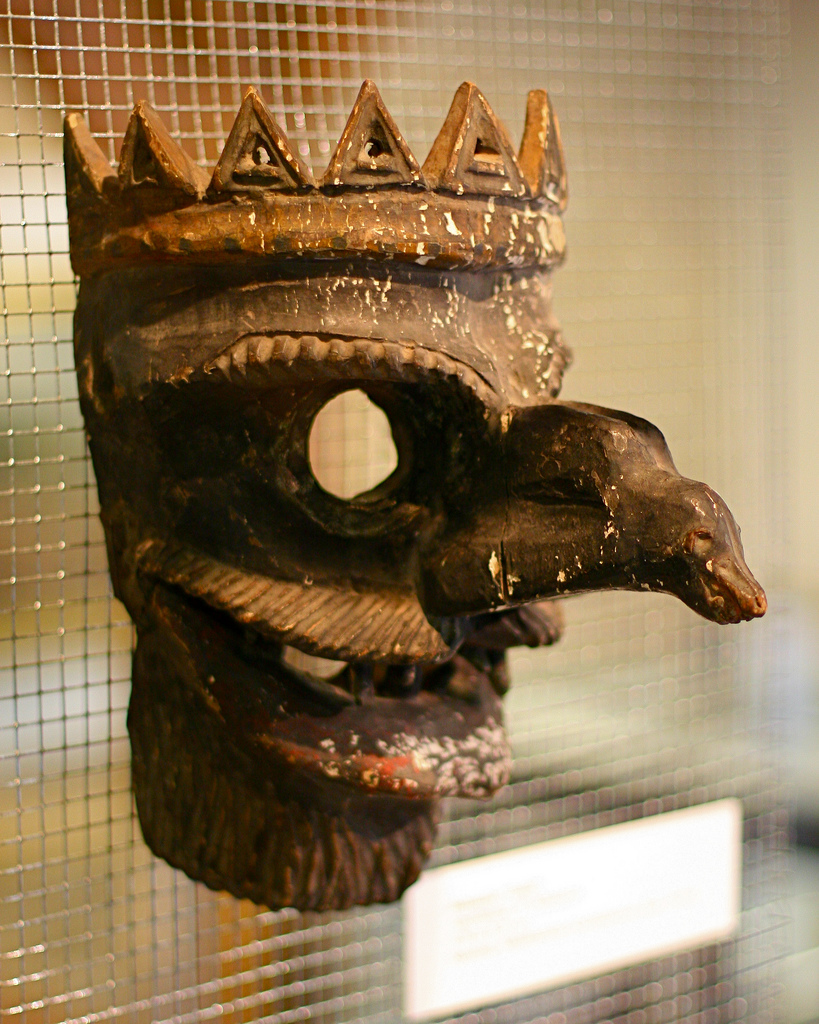 |
| A shame mask |
Chance Events and Fortunes had at Ye City
1 - A bankrupt serf is being whipped by a sheriff; as the sheriff whips him, he cries "Who will stay my hand with coin to pay these debts?"
2 - A crowd has gathered at the harbor to watch a sailor leaping from the mainmast tree to settle a gambling debt
3 - A woman bustles blithely in the market wearing a visard; a wooden mask designed to protect her skin from sunburn and her reputation from slander
4 - A woman walks stoically through the streets to jeers; she wears a heavy wooden shame mask and a sign around her neck reads "Adultress" (sic)
5 - You see a man "kissing" a woman's rear, as it protrudes from an open window onto the street
6 - Children are happily playing with the dead body of a corrupt sheriff, still wearing his badge of office
7 - A poor family are gathering loads of manure from the street with forks to sell to tanners; they wait near your animals to see if it will drop a load of dung
8 - The square is full of people observing a magician demonstrating a pendulum clock--the first of this sort of design
9 - A Punch and Judy puppet show vigorously and lewdly lambastes the local lord and the clergy, despite having an audience of only children
10 - Guards push a thronging crowd back as they riot for a chance to grab recently unearthed gold bars hidden in a crumbling patch of the city's walls
Page - A woman is being publically examined by a cleric after claiming to have given birth to a litter of rabbits
Knight - Forty-eight heretical templars are being roasted at the stake, to the joyous cries of the crowd
Queen - A new fountain in the shape of a silver tree entwined with serpents has just been unveiled; it was commissioned by the Secret Pope
King - A triumphal parade winds through the city, bearing treasures from a recent conquest of a distant orcish capital, including false wooden dragon idols and goblin slaves
Camp Actions and Missing Players
For my stupid little fantasy heartbreaker project, I smashed up these rules to cover activities that players could do during rest downtime. The flow of the game is separated, similar to Torchbearer or similar games, between Crawl (adventurin'), Camp (restin'), and City (money-spendin') phases.
Camp Actions
Typically, a Camp Action is one meaningful activity that you
can do while relaxing in the few hours of your watch, after you've done all
your important encampment chores. This is not an exhaustive list, but a
structure to handle common requests.
Hunting and Gathering
If you have missile weapons, you can spend your time at camp away from camp trying to capture or kill some game. The hunter returns with a ration's worth of food for each success he makes on a Pentacles test. The GM will tell you what sort of food is available; the player is responsible for deciding how picky he'll be about rations.
If you are adjacent to special hexes, this might trigger a camp encounter.
If you have missile weapons, you can spend your time at camp away from camp trying to capture or kill some game. The hunter returns with a ration's worth of food for each success he makes on a Pentacles test. The GM will tell you what sort of food is available; the player is responsible for deciding how picky he'll be about rations.
If you are adjacent to special hexes, this might trigger a camp encounter.
Forage for Components
The Underworld does have one thing going for it--alchemy seems to be just bursting out of it. If you spend your time searching for alchemical components, draw Cups. You find one component for each success.
If you are adjacent to special hexes, this might trigger a camp encounter.
Cartography
If you spend some time updating your map and comparing your notes about
the terrain you’ve travelled, you may expeditiously retreat back to town. If
you only travel on hexes that you’ve explored, each normal hex counts as .5 for
your total movement during a watchScout Ahead
If you scout around, you might be able to learn something interesting about the terrain. Test Swords. For each success, the GM will give you a hint about some encounters in the nearby hexes or tell you what sort of monsters frequent here. If you are adjacent to special hexes, you'll learn about them. If you achieve no successes, this might trigger a camp encounter—otherwise, you're sneaky enough to see them and return to camp.
Fellowship
Pick a guild mate. Engage in a role-play with them. Share a memory. Talk about their quests. Ask about their childhood; tell about yours. End the conversation meaningfully so that the table knows you're done talking. At the end of this exchange, you both charge your bonds with each other.
Pick a guild mate. Engage in a role-play with them. Share a memory. Talk about their quests. Ask about their childhood; tell about yours. End the conversation meaningfully so that the table knows you're done talking. At the end of this exchange, you both charge your bonds with each other.
Training
If one of your guild mates is willing to teach you, you can learn a Talent from them. This takes both of your Camp Actions, and they get nothing from the exchange. Invest XP into the Talent they are teaching you. You prepare as many uses of that Talent as you have XP invested.
If one of your guild mates is willing to teach you, you can learn a Talent from them. This takes both of your Camp Actions, and they get nothing from the exchange. Invest XP into the Talent they are teaching you. You prepare as many uses of that Talent as you have XP invested.
Read a Book
Do you have a book? Spend some time reading it. Ask the GM
one question related to the subject matter of the book. He will tell you what
the book says about it.
Fletching
Spend some time looking for and crafting shafts for your
recovered arrow heads. Refill your quiver to twenty.
Guard Patrol
It’s assumed during the Camp Phase that the guild sets up a
watch. However, you may dedicate your Camp Phase to setting active watch,
patrolling around your encampment, and providing assault counter-measures. If
you do so, the GM will draw twice on the Camp Encounter table and take a
non-combat result if available.
 |
| I wanted to emulate the things these resting adventurers were doing. |
I also recently had to face the question: What do you do with players who are absent? I realized that, rather conveniently, the Camp Actions gave a worthy list of things for people to be doing when they were not on-screen.
Players
Missing the Game
If a player misses a session during a Crawl phase, here is
the default procedure. The player hero is assumed to be about one hex away,
trailing behind the main guild. They are slowed down by their pursuit of one of
the Camp Activities. When the player returns, she will tell the table what
activity they performed, receive the benefit from it, and rejoin the main
group.
Saturday, July 9, 2016
Take me to the Dark Waters
Nostalgia is potent. It makes sitting down for an afternoon
and playing a frustrating NES game into a fun experience. It lets you rewatch
petty, derivative films and have a good time.
Nostalgia colors your perceptions and memories. It lies to
you. It says "this is good," even if it’s bad. As near as I can tell,
nostalgia has fueled the last decade of the entertainment industry.
 |
| Did anyone else like this garbage? |
Under nostalgia's heady smoke, the other day I thought to
myself "Self: Do you remember how awesome Pirates of Dark Water was?
That show was great! Why don't you put on an episode and look it up on the
wiki, it'll be a laugh."
Here's a real fact: that show was less good than I remembered it. But it surprised me in lots of little ways. The protagonists weren't alabaster white. It was packed with non-Tolkien fantasy. It had ships large enough to have their own ecosystem. It reminded me of LeGuin's Earthsea series.
Because this is the future, I could find out everything I ever wanted to know about this show. I could find every episode. I could find every comic book. I could read the series bible. I even found an official-but-canceled RPG based on it.

This might just be the deadly nostalgia talking, but playing
in a setting like Pirates of Dark Water actually sounds super
fun. That's why I'm jabbering about it on here, so I can harvest all the gold
nuggets and separate them from the shit nuggets of 90s cartooning.
Here are some awesome quotes from the source material:
"The planet will be as wild as a writer’s imagination. Nothing is too far-fetched if it comes organically from a world where evolution has pushed out in bizarre new directions."
"The planet will be as wild as a writer’s imagination. Nothing is too far-fetched if it comes organically from a world where evolution has pushed out in bizarre new directions."
Fuck yes. That is the RPG world I do like.
"The humans of Mer are a rugged breed and may best be
described as sea cowboys."
I would like to be described as a sea cowboy, please. Unfortunately, the other
races listed in the RPG (out of the professed hundreds) are traditional fantasy
derivatives. Calling your ancient forest dwellers "Kree" doesn't make
them not-elves.
"The Maelstrom is Bloth’s massive and deadly
warship. This colossal warship is the latest in Merian destructive
eco-technology. It is built from the bleached carcasses of leviathans, and
resembles a gargantuan floating fossil. The masts are visible as the giant creatures’
vertebrae. Massive rib cages serve as jail pens and holding cells below the
immense deck. Its enormous size is a tribute to Bloth’s bloated ego and is its
one drawback. Below the main deck sits a labyrinth of passageways, sewer
lines, holding cells and slaves’ quarters. An entire subculture exists within
the bowels of this monstrous vessel."
As you telling me that there are pirate kings, and the
pirate kings have pirate ships that are large enough to have a whole dungeon
inside of them? That rules.
"THE IMBIBERS are a group of specially trained children
who drink Dark Water. They becoming all knowing for a short span of time and
then turn to stone to take a place of honor in their tribe’s sanctuary."
Feeding children Cthulhu's excrement so they can be omniscient but then turn to stone is something every RPG setting needs. SOLD.
Feeding children Cthulhu's excrement so they can be omniscient but then turn to stone is something every RPG setting needs. SOLD.
OK, so out of this 1990s word salad, what can be gameified?
I don't know. Here are a few things I'd put into a game.
Luck
I remember the character Ioz saying, "By the Luck!" on the TV show sometimes. Davos Seaworth is always going on about luck, too. Luck is important for pirates and vikings; you need luck on the sea because nothing YOU do can affect its great bulk.
I remember the character Ioz saying, "By the Luck!" on the TV show sometimes. Davos Seaworth is always going on about luck, too. Luck is important for pirates and vikings; you need luck on the sea because nothing YOU do can affect its great bulk.

Get rid of Saving Throws. You have a new attribute called
Luck that you roll for all those sorts of things.
At the beginning of the game, it's a neutral (+0) stat. When
roll a 20, subtract 1 from your score--your luck has begun to run out. When you
roll a 1, it goes up by one point--you begin to work off your bad karma.
If your luck ever goes down lower than allowed, it rolls
over to the highest rank. Same if it goes too high.
Your luck stat also goes up by 1 every time you do attempt
something very swashbuckling, like riding a chandelier to the upper story of
the tavern or swinging from the rigging to another ship. Incentivize being a
cool pirate in a cool pirate game. "Brave deeds breed luck," as they
say.
Ship Idols
Almost everybody worships anthropomorphic Luck. Some
people worship ship idols, too.
 |
| Love is what keeps her afloat. |
With forests hard to come by (the planet is 98% water), ships must be made out of exotic materials--a leviathan's bones, a lion turtle's shell, a crashed meteorite--even something as exotic as wood.
These things were once living. Everything was once living.
Now they're a boat.
How do they feel about that? Well, it depends on well you treat them.
How do they feel about that? Well, it depends on well you treat them.
When ship idols are awake and pleased, they're the best
boats in the whole world. Ships of different construction like different
things. Leviathan-bone ships might like it when you dump captives with cut
throats and bound hands into the water. Ships of bound eldwood like it when you
pull them up into river mouths and let them drink freshwater.
Whenever a successful sacrifice is made to a ship idol, the
ship gains inspiration, to use a 5E parlance. Anybody on board who's a member
of the crew can use the inspiration on something related to seacraft--piloting,
navigation, kicking a boarding pirate back into the water, etc.
When they're mad? Well...
Magic and Balance
Sorcerers are an important member of any crew. They can sing away storms and call up winds and talk to the ship and drive away merfolk. Every ship has a sorcerer.
Sorcerers are an important member of any crew. They can sing away storms and call up winds and talk to the ship and drive away merfolk. Every ship has a sorcerer.
 |
| LeGuin said that publishers did not want characters to appear on the covers because of the color of their skin. |
In LeGuin's Earthsea series, Sparrowhawk talked a lot about
"the Balance." LeGuin's Taoist leanings crept in (more elaborated
textually in The Lathe of Heaven). It is better to not cast magic
than to cast magic. It was better to not act than to act.
This is something textually pleasing but extremely difficult
to "simulate" in a role-playing game. If the players aren't *acting*,
why sit down every Tuesday with your buds? Why not just read LeGuin from the
privacy of your own home and get drunk?
Even so, magical restraint is a trope,
and RPGs are all about emulating tropes. It's an important thing for rules to
do.
OK, so, sorcerers can do big magical things, but it fucks up
the Balance. Let's steal (steal steal steal!) West End Games' Force token
rules. Here they are for a bad pirates setting.
For each sorcerer at the table, set out two coins--both
facing heads up.
When a sorcerer casts a spell, flip a coin face down.
When a coin is face down, the GM can use one of his Balance
Moves against the players by flipping the coin's face back up. He does
this at opportune moments, or just when the players are on a flow of good luck.
(It's important for stories to have both ebbs and flows.) He can do this when
it makes sense narratively. He can do this whenever, as long as one of the
coins tails up.
Ship-Sorcerer's Spells
Why mess with the Balance Coin in the first place? To cast spells. A Ship-Sorcerer can cast any of the following six spells if he flips the Balance Coin:
Why mess with the Balance Coin in the first place? To cast spells. A Ship-Sorcerer can cast any of the following six spells if he flips the Balance Coin:
Windkey
The spell of Windkey can put a steady wind into your sails, or take it away. It can send a storm you can see towards any of the eight compass directions. It can calm waters. It can call waves large enough to drown a swimming man. It can capsize smaller ships.
The spell of Windkey can put a steady wind into your sails, or take it away. It can send a storm you can see towards any of the eight compass directions. It can calm waters. It can call waves large enough to drown a swimming man. It can capsize smaller ships.
Chanting
The spell of Chanting recites the memories of the Pattern of Ages. The sorcerer can ask the GM any question about history and receive an answer.
The spell of Chanting recites the memories of the Pattern of Ages. The sorcerer can ask the GM any question about history and receive an answer.
Patterns
The spell of Patterns searches the memories of the Pattern of Ages and reveals the recurring elements through textual analysis. By looking at what comes before, the sorcerer guesses to what comes afterwards. He may ask the GM, "If X happens, what will happen?" The GM will answer him.
The spell of Patterns searches the memories of the Pattern of Ages and reveals the recurring elements through textual analysis. By looking at what comes before, the sorcerer guesses to what comes afterwards. He may ask the GM, "If X happens, what will happen?" The GM will answer him.
Hand
The spell of Hand are the hundred small illusions and useful
dwimmers that sorcerers use to prop up their power. They can levitate straight
up into the air. They can lift objects that can fit in their hand and call them
to them through the air. They can summon a magelight and have it hover near
them. These are vulgar displays of power.
Naming
The spell of Naming reveals a living creature's name to the sorcerer. This is important for Binding.
The spell of Naming reveals a living creature's name to the sorcerer. This is important for Binding.
Binding
The spell of Binding is a single command that must be obeyed by a dead creature whose living name the sorcerer knows.
Balance Moves
Ok, so the sorcerer is casting spells willy nilly. What's
happening because of that?
- Storm
clouds gather at the horizon.
- The
Dark Water comes.
- The
Dark Water devours the nearest island.
- A
creature of the deeps, fleeing the Dark Water, comes to the surface. Roll
on the wandering monster table.
- The
stars are wrong. The GM turns a failure just rolled into a great failure.
Instead of missing the dragon, your sword is shattered on its hide. When
trying to swing across the gap, you fall and crack your head on the
deck.
You'll notice that a lot of the situations that Balance
Moves might prompt a sorcerer to use more sorcery. This feeds into
a vicious cycle. The Dark Water comes, so the sorcerer windkeys the ship to
safety. This makes more Dark Water come.
It might be better to do nothing...
Chimera Beasts
I'm finally ready to admit this: I really like hybrid
animals.
 |
So, what. Do we only use monsters that require no immediate
over-explanation? Fight another kraken? Fight another hydra?
No! Let's see some gorilla rhinos.
 |
| Has science gone too far? |
But you know what a cat is. And you know what an owl is. So
a catowl is both of those things. Nocturnal. Carnivore. Aloof and coy. Quiet,
except for its meow-hoot. Can fly. Cute as the dickens.
Chimera animals are an easy way for a GM to infuse the game world with understandable fantasticism.
I think I've convinced myself that sometime I'd really like to run an Earthsea/Dark Waters hex crawl where the pirate PCs wander a bizarre and fantastic realm, trying to deal with the fact their world seems to be falling into black nothingness or making themselves filthy rich while everybody else dies.
Chimera animals are an easy way for a GM to infuse the game world with understandable fantasticism.
I think I've convinced myself that sometime I'd really like to run an Earthsea/Dark Waters hex crawl where the pirate PCs wander a bizarre and fantastic realm, trying to deal with the fact their world seems to be falling into black nothingness or making themselves filthy rich while everybody else dies.
What would you want to include in this setting?
Monday, July 4, 2016
Kith-specific Equipment
Right now I'm playtesting a stupid fantasy heartbreaker with some friends who are nice to humor me. We started the playtest before I had even started writing a traditional equipment list and I just let the players choose whatever fantasy garbage they wanted, because why not right? Crowd source that shit.
Originally I had intended to have four separate equipment lists, one for each racial group. I wanted to do this because 1) I wanted a person's race to be a defining feature, not a piece of set dressing and 2) I thought it would provide good variety in equipment between players.
When I mentioned this conceit to a player, she pointed out that limiting choices in this way would limit a choices in a player's ability to define their own character concept. That is, if I gave the orcs all the sailing gear and winter clothing garb, it robs you of your cool Eskimo whale-hunter concept that you had wanted to play.
She's right, I think. Narrow bands of equipment lists are probably too limiting; equipment and inventory management is a big part of the game. But I had wanted your starting equipment list to be more than just a generic adventurer's pack. I wanted it to be flavorful. I wanted it to be fun.
To this end, I wrote up this little flavor generator today.
When you create your character, choose as many pieces of equipment from the Forge chapter as you can fit into your backpack. Then, draw randomly or choose descriptors for some of these items from this list.
Castle-forged Gear (Men)
Glamour-Woven Gear (Fey)
Treasures Most Artfully and Masterfully Wrought (Underfolk)
Mostly Stolen Loot (Orcs)
I sort of like how it turned out. I like that humans cared more about the interpersonal relationships defined by the items than by the items' construction. I like how orcs "borrow" from other races. I like how they prompt players to think twice about dropping their starting sword for another weapon they find in the Dungeon.
We'll see if it actually "does" anything though.
Originally I had intended to have four separate equipment lists, one for each racial group. I wanted to do this because 1) I wanted a person's race to be a defining feature, not a piece of set dressing and 2) I thought it would provide good variety in equipment between players.
When I mentioned this conceit to a player, she pointed out that limiting choices in this way would limit a choices in a player's ability to define their own character concept. That is, if I gave the orcs all the sailing gear and winter clothing garb, it robs you of your cool Eskimo whale-hunter concept that you had wanted to play.
She's right, I think. Narrow bands of equipment lists are probably too limiting; equipment and inventory management is a big part of the game. But I had wanted your starting equipment list to be more than just a generic adventurer's pack. I wanted it to be flavorful. I wanted it to be fun.
 |
| From houseoforr.com |
To this end, I wrote up this little flavor generator today.
When you create your character, choose as many pieces of equipment from the Forge chapter as you can fit into your backpack. Then, draw randomly or choose descriptors for some of these items from this list.
Castle-forged Gear (Men)
1, …half-shattered, but in your
family for generations
2. …hand-made by your mother just for
you
3. …once belonged to your brother
4. …given to you as a present
5. …made by your own hand as your journeyman’s project
6. …from a far-away land
7. …blessed by a cleric of Mythrys
8, ...marked with religious
iconography
9. …marked with the insignia of your
house
10. …marked with the insignia of a
rival house
Jack. …plain but exceedingly well
made
Knight. … once beautiful, but now
tarnished
Queen. …gaudy and gilt, but with
no real value
King. …ornate and princely
1. …slightly shimmering with
prismatic colors
2. …made of obsidian blacker than
night
3. …woven of eldwood vines
4. …emits a light hum when tapped
5. …seems to work itself
6. …always at the top of your
backpack when you reach for it
7. …made of animal bones
8. ...grown fully made from a tree
9. …spangled with gem dust
10. …cooled in the waters of ancient
Eldermere; yet cool to the touch
Jack. …carved by magic song
Knight. …primitive, but elegant
Queen. …painted with stylized animal
iconography
King. …made by the hand of the
Tripartite
1. …etched with a silvery script,
detailing its history
2. …made of once-living crystal
3. …made of fallen star-metal
4. …banded with ancient bronze
5. …shaped in the semblance of a fantastic
monster
6. …studded with crystal gems
7. …carven with runes that are only
exposed by the light of the moon
8. ...covered by a delicate filigree of
spun gold
9. …was never exposed to the light of
the sun
10. …forged in the lava flows of the
deeps; yet warm to the touch
Jack. …ancient beyond days
Knight. …reforged from an item of
great history
Queen. …made by your own hand; an exemplar
of your craft
King. …made by the head of your
guild
1. …crude and jagged, but efficient
2. …carven from mammoth bones
3. …carven from dragon bones
4. …studded with glittering dragon
scales
5. …wreathed in draconic iconography
6. …stolen from a temple of Mythrys
7. …stolen from the corpse of a
hanged man
8. ...looted from a human crusader
9. …stolen from a halfling merchant
10. …bloodstained and dirty, but
serviceable
Jack. …bears its name marked in
runes
Knight. …a reward from your thegn,
marked with the runes of your clan
Queen. …made by a wood-witch,
blessed with her blood
King. …etched with golden runes
and set with pearls
We'll see if it actually "does" anything though.
Tuesday, June 28, 2016
The Gods Must Be Crazy
Last Gasp Grimoire's Mystic Rules are just amazing and I can't say enough nice things about them. I love the idea of a distant god with a dim understand of human physiology trying desperately to help make the world a better place with MORE SNAKES. Also on the list of things I like are Paper and Pencil's Magic Words. I like the idea of mixing and matching words of cosmic power for both whimsy and mechanical advantage. It's just neat.
ANOTHER thing I like is having cleric types (and all spell-users, for that matter) feel notably different from each other. I wish that, as a cleric of dwarven ancestors, all of my powers revolved around dwarf shit like falling rocks and opening tunnels and reforging swords, but half the time I feel pretty compelled by the mechanical efficiency of moon beam and wall of fire or whatever. There's nobody saying I can't take those spells (prayers?), and though I try my hardest to stick to a theme I'm encouraged mechanically to use the tools at my disposal.
I had an idea this morning while I was waking up and my cat was mercilessly and relentlessly clawing me, so bear with me, this might be shit. I'm finding out as I type it.
When a cleric and a GM talk about what deity the cleric will worship, they come up with a list of canonical spells. These are the miracles that it is known that the god grants. In D&D, this might be a cleric's Domain Spells. Or maybe this list only consists of one or two spells--the GM might choose one and the player might choose one. These are spells that the cleric always has access to because it's inherently the god's shtick.
The cleric then populates a list of dX other spells, probably a d6 or a d8. These are the secret revelations.
Each god has a one or two word theme. They also have three sub-themes.
So Thor's theme is Thunder and lightning. He also has a theme of Wrestlin', Hammerin', and Drinkin'.
Odin's theme is Wisdom. He also has a theme of Undeath, Poetry, and Frenzy.
When a cleric is in a bind and one of the canonical spells isn't appropriate, he may pray to his deity. His deity, hearing the prayer of her faithful, stretches down her divine will and manifests aid through a secret revelation.
The cleric rolls on the revelation table. If he accepts the rolled spell, he swaps out any one word in the spell's title with any of the god's themes or sub-themes. He can instead call on either of the adjacent spells on the table (one above or one below), but in that case he can only rename the spell with the god's main theme.
So, for instance, a Wall of Force on the spell list might become a Wall of Lightning, if cast by a cleric of Thor. It might become a Wall of Undeath if cast by a cleric of Odin. Similarly, a Summon Monster might be a Summon Hammer if cast by Thor, or a Summon Frenzy if cast by Odin.
The effects of a thematically changed spell ultimately lie with the GM, but they can be modeled after the spell in question. If Wall of Fire does 5d6 damage when you pass through it, Wall of Lightning probably does too, just change the damage type. But "Wall of Undeath" might be meaningfully different. Maybe it gives you a disease? Maybe it grapples you? The GM will have to adjudicate this on the fly, using the core spell as a baseline.
Here's an example spell list for the Goddess of Rats:
Goddess of Rats
Theme: Rats
Sub-Themes: Secrets, Disease, Sewers
Canonical Spells: Speak With Animals (Rats Especially), Spider Climb
Secret Revelations (d8)
1 - Animal Friendship (Rat Friendship, Disease Friendship, Animal Disease, Animal Secrets)
2 - Cure Disease (Cure Rats, Cure Secrets, Secret Disease, Sewer Disease)
3 - Animal Growth (Rat Growth, Animal Disease, Sewer Growth)
4 - Hold Animal (Hold Sewers? Hold Secrets? IDK)
5 - Rope Trick (Rat Trick, Sewer Trick, Secret Trick)
6 - Stinking Cloud (Rat Cloud, Stinking Secret, Disease Cloud)
7 - Dispel Magic (Dispel Secret, Dispel Disease, Dispel Sewer)
8 - Find Familiar (Find Rat, Find Secret, Find Sewer, Rat Familiar, Sewer Familiar)
Practically speaking, I have no idea if this would really work in play, but it sounds like it could be...fun...somehow?
ANOTHER thing I like is having cleric types (and all spell-users, for that matter) feel notably different from each other. I wish that, as a cleric of dwarven ancestors, all of my powers revolved around dwarf shit like falling rocks and opening tunnels and reforging swords, but half the time I feel pretty compelled by the mechanical efficiency of moon beam and wall of fire or whatever. There's nobody saying I can't take those spells (prayers?), and though I try my hardest to stick to a theme I'm encouraged mechanically to use the tools at my disposal.
I had an idea this morning while I was waking up and my cat was mercilessly and relentlessly clawing me, so bear with me, this might be shit. I'm finding out as I type it.
When a cleric and a GM talk about what deity the cleric will worship, they come up with a list of canonical spells. These are the miracles that it is known that the god grants. In D&D, this might be a cleric's Domain Spells. Or maybe this list only consists of one or two spells--the GM might choose one and the player might choose one. These are spells that the cleric always has access to because it's inherently the god's shtick.
The cleric then populates a list of dX other spells, probably a d6 or a d8. These are the secret revelations.
Each god has a one or two word theme. They also have three sub-themes.
So Thor's theme is Thunder and lightning. He also has a theme of Wrestlin', Hammerin', and Drinkin'.
Odin's theme is Wisdom. He also has a theme of Undeath, Poetry, and Frenzy.
When a cleric is in a bind and one of the canonical spells isn't appropriate, he may pray to his deity. His deity, hearing the prayer of her faithful, stretches down her divine will and manifests aid through a secret revelation.
The cleric rolls on the revelation table. If he accepts the rolled spell, he swaps out any one word in the spell's title with any of the god's themes or sub-themes. He can instead call on either of the adjacent spells on the table (one above or one below), but in that case he can only rename the spell with the god's main theme.
So, for instance, a Wall of Force on the spell list might become a Wall of Lightning, if cast by a cleric of Thor. It might become a Wall of Undeath if cast by a cleric of Odin. Similarly, a Summon Monster might be a Summon Hammer if cast by Thor, or a Summon Frenzy if cast by Odin.
The effects of a thematically changed spell ultimately lie with the GM, but they can be modeled after the spell in question. If Wall of Fire does 5d6 damage when you pass through it, Wall of Lightning probably does too, just change the damage type. But "Wall of Undeath" might be meaningfully different. Maybe it gives you a disease? Maybe it grapples you? The GM will have to adjudicate this on the fly, using the core spell as a baseline.
Here's an example spell list for the Goddess of Rats:
 |
| I imagine the goddess of rats looks like Yolandi |
Theme: Rats
Sub-Themes: Secrets, Disease, Sewers
Canonical Spells: Speak With Animals (Rats Especially), Spider Climb
Secret Revelations (d8)
1 - Animal Friendship (Rat Friendship, Disease Friendship, Animal Disease, Animal Secrets)
2 - Cure Disease (Cure Rats, Cure Secrets, Secret Disease, Sewer Disease)
3 - Animal Growth (Rat Growth, Animal Disease, Sewer Growth)
4 - Hold Animal (Hold Sewers? Hold Secrets? IDK)
5 - Rope Trick (Rat Trick, Sewer Trick, Secret Trick)
6 - Stinking Cloud (Rat Cloud, Stinking Secret, Disease Cloud)
7 - Dispel Magic (Dispel Secret, Dispel Disease, Dispel Sewer)
8 - Find Familiar (Find Rat, Find Secret, Find Sewer, Rat Familiar, Sewer Familiar)
Practically speaking, I have no idea if this would really work in play, but it sounds like it could be...fun...somehow?
Subscribe to:
Posts (Atom)