
Reagents in Wilderland, or, Herb Lore and Why It Matters
 |
| Jimmy Cauty hung on my wall all of my high school years. |
- J.R.R. Tolkien, "On Fairy Stories"*
So. As I've said, magic in the Wilderlands is both rare and pervasive. What a paradox.
In my earlier post, I called deliberate magic "spells," which were separated into least magic (called cantrips), discrete expressions (enchantments), and greatest workings (runes).
((If I had my dithers about me, I'd probably render "cantrip" into something a bit more Germanic (spae? dwimmer?), but ah well.))
This post is concerned with enchantments. That is, the type of spells one might work if one is a magical professional, i.e., a wizard. These are intentional workings of magic, separate from the natural magic a supernatural creature may intuitively possess or ritual expressions of magical craft.
It does not seem that Gandalf casts his spells one after the other. There seems some limiting factor as to when he unleashes his potency. Vancian spell casting (for all its charms) seems inappropriate for the Wilderlands setting. Therefore, what is the limiting factor?
Magic is complicated in the collected legendarium, with only breadcrumbs given to readers to lead them towards an implied system of the "physics" of the supernatural. The better part is given in Letter 155 (which comprised the main source for my thesis). If you take The Hobbit by itself, in true Formalist fashion, these breadcrumbs become so sparse as to be meaningless. So let's widen our view by one degree.
It's clear that Tolkien was writing The Hobbit as a professor of Old English. The names of the dwarves, the selection of monsters and fantastic elements from northern Europe, the presence of manifest Scandinavian mythology, all point to a scholarly exercise of (children's) literature in the vein of the Eddas or Beowulf. If we ignore the rest of the trilogy, we must at least accept the direct influences of Old English literature on The Hobbit.
When constructing a gameable magical "system" from The Hobbit, we can therefore look towards the text as a primary source and Old English literature as a secondary source. If the primary source is silent, we defer to the secondary source.
Northern European Fairytale Magic
Scale of dragon; tooth of wolf; / Witches' mummy; maw and gulf / Of the ravin'd salt-sea shark; / Root of hemlock digg'd in the dark;
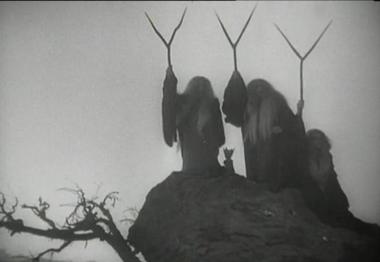 |
| Orson Welles's adaptation of Macbeth |
> "There were seiðr rituals for divination and clairvoyance; for seeking out the hidden, both in the secrets of the mind and in physical locations; for healing the sick; for bringing good luck; for controlling the weather; for calling game animals and fish. Importantly, it could also be used for the opposite of these things – to curse an individual or an enterprise; to blight the land and make it barren; to induce illness; to tell false futures and thus to set their recipients on a road to disaster; to injure, maim and kill, in domestic disputes and especially in battle."
I'd argue that magic in this genre is inseparable from the *tools* of sorcery: the magic staff, the magic cloak, the magic potion. Therefore, we limit enchantment to the tools that the wizard has at his disposal. It's the old D&D inventory management sub-system: a pack can only haul so much, and wizards have additional inventory management concerns.
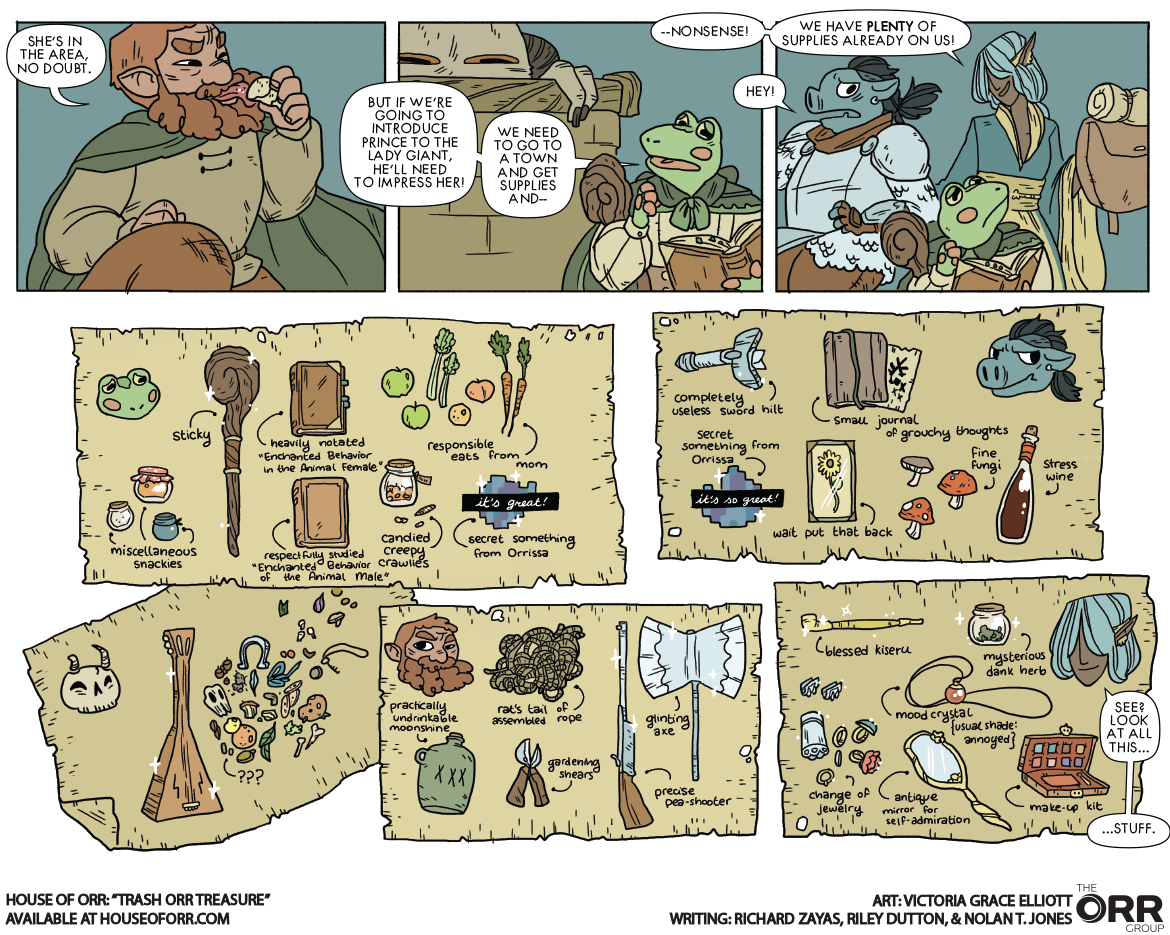 |
| From the (now sadly defunct) webcomic House of Orr |
"Now these nine herbs have strength | against nine who had fled from glory"
In my previous post, I posited a few rules for finding magical reagents. Those were, hm, fine. In this post, I'd like to expand on those rules and create additional structures for enchantments.
In my previous post, I posited a few rules for finding magical reagents. Those were, hm, fine. In this post, I'd like to expand on those rules and create additional structures for enchantments.
For these rules, I assume that inventory management is important. I'm using rules similar to Lamentations of the Flame Princess. If you hand wave inventory, wizards will be particularly more powerful.
The magic of the Wilderland is hidden in its wild spaces. Wizards collect the strange, the uncanny, the weird, and the unpleasant to weave enchantments.
Reagents are items that, at their basic level, have small magic. When combined together, however, their alchemical potential become unlocked.
The known reagents are nine herbs, and are:
- Mucgwyrt; a root that grows in marshes and is good in beer
- Attorlade; a tall grass that grows in cultivated lands
- Stune; is an bitter herb that grows in soggy turf
- Wegbrade; is sometimes called "waybread" since it's tuberous root is edible
- Maegthe; a fair-smelling flower that blooms in spring
- Stithe; is a nettle-like plant covered in fine, irritating thorns
- Wergulu; is a wild tree that yields all-but-inedible crab apples
- Fille; a bushy, very aromatic herb with silver leaves
- Finule; has yellow flowers and feathery leaves, and grows especially near the sea
Finding Reagents
Searching for reagents is a hex action. It takes about as much time and effort as hunting or camping. A gather components hex action allows a number of rolls equal to the wizard's Intelligence modifier, with a minimum of one. A relevant skill such as Herbalism yields an additional +2 rolls.Use the following table for your rolls:
Reagent
|
Fields
|
Fens
|
Forest,
Haunted
|
Forest,
Verdant
|
Graveyards,
Battlefields, Barrows
|
Steadings
|
Seashores
|
Mountains,
Foothills
|
Mountains,
Peaks
|
Mucgwyrt
|
-
|
1
|
1
|
-
|
-
|
1
|
-
|
-
|
-
|
Attorlade
|
1
|
-
|
-
|
1
|
-
|
2
|
-
|
1
|
-
|
Stune
|
2
|
2
|
2
|
-
|
1
|
-
|
1
|
2
|
-
|
Wegbrade
|
3
|
3
|
3
|
2
|
-
|
-
|
-
|
3
|
-
|
Maegthe
|
4
|
-
|
-
|
3
|
-
|
3
|
-
|
4
|
1
|
Stithe
|
-
|
4
|
4
|
4
|
-
|
-
|
-
|
5
|
2
|
Wergulu
|
5
|
-
|
-
|
5
|
-
|
4
|
-
|
6
|
-
|
Fille
|
6
|
-
|
5
|
6
|
2
|
5
|
-
|
-
|
3
|
Finule
|
-
|
-
|
6
|
-
|
-
|
6
|
2
|
-
|
4
|
Weaving Enchantments
"As soon as Gandalf had heard Bilbo's yell he realized what had happened. In the flash which killed the goblins that were grabbing him he had nipped inside the crack, just as it snapped to. He followed after the drivers and prisoners right to the edge of the great hall, and there worked up the best magic he could in the shadows."
A wizard can weave an enchantment if they have two reagents to mix together.
A combination of two reagents creates the components for a single spell. This component must be held in the hand when cast. Weaving an enchantment takes one exploration turn and combines the two reagents into a component, which takes up one pack slot. Weaving multiple enchantments in this way may be done as part of a camping hex action.
Each reagent combines with another with a unique alchemical effect, per the following table:
Reagents cannot be combined with themselves, e.g., two portions of mucgwyrt are not reactive with each other.
Optional Rule: Unknown Effects
If your PCs are merely wizards' adopted pig boys or witches' apprentices, you can randomize and keep the combinations hidden. When the players mix stune and finule, they'll have no idea what enchantment will happen until they cast it. This can add some Rogue-like experimentation fun (and danger) to the mix.
Reagent
|
Mucgwyrt
|
Attorlade
|
Stune
|
Wegbrade
|
Maegthe
|
Stithe
|
Wergulu
|
Fille
|
Finule
|
Mucgwyrt
|
X
|
Abjure Undead
|
Second Sight
|
Pass Through Grave
|
Restoration
|
Lifespring
|
Part the Veil
|
Circle of
Protection
|
Levitation
|
Attorlade
|
Abjure Undead
|
X
|
Magic Missile
|
Command
|
Giant Size
|
Far Hand
|
Animate Object
|
Seal Pact
|
Word of Truth
|
Stune
|
Second Sight
|
Magic Missile
|
X
|
Charm of Fire
|
Charm of Air
|
Charm of Earth
|
Charm of Water
|
Elemental Aegis
|
Turning of Seasons
|
Wegbrade
|
Pass Through Grave
|
Command
|
Charm of Fire
|
X
|
Love
|
Hate
|
Vision of the Past
|
Vision of the
Present
|
Vision of the
Future
|
Maegthe
|
Restoration
|
Giant Size
|
Charm of Air
|
Love
|
X
|
Glamour
|
Guise
|
Sleep
|
Flare
|
Stithe
|
Lifespring
|
Far Hand
|
Charm of Earth
|
Hate
|
Glamour
|
X
|
Darklight
|
Malediction
|
Give Voice
|
Wergulu
|
Part the Veil
|
Animate Object
|
Charm of Water
|
Vision of the Past
|
Guise
|
Darklight
|
X
|
Lightning Bolt
|
Werelight
|
Fille
|
Circle of
Protection
|
Seal Pact
|
Elemental Aegis
|
Vision of the
Present
|
Sleep
|
Malediction
|
Lightning Bolt
|
X
|
Entangle
|
Finule
|
Levitation
|
Word of Truth
|
Turning of Seasons
|
Vision of the
Future
|
Flare
|
Give Voice
|
Werelight
|
Entangle
|
X
|
Optional Rule: Unknown Effects
If your PCs are merely wizards' adopted pig boys or witches' apprentices, you can randomize and keep the combinations hidden. When the players mix stune and finule, they'll have no idea what enchantment will happen until they cast it. This can add some Rogue-like experimentation fun (and danger) to the mix.
Casting Enchantments
Then Gandalf climbed to the top of his tree. The sudden splendour flashed from his wand
like lightning, as he got ready to spring down from on high right among the spears of the
goblins. That would have been the end of him, though he would probably have killed many of them as he came hurtling down like a thunderbolt.
like lightning, as he got ready to spring down from on high right among the spears of the
goblins. That would have been the end of him, though he would probably have killed many of them as he came hurtling down like a thunderbolt.
An enchantment is cast when a wizard holds the component and commands the spell with an incantation.
A spell can effect anything a wizard can see. A spell cannot effect things the wizard cannot see.
Components are consumed when the enchantment is cast.
Some enchantments may be maintained with concentration. You may only maintain one enchantment with concentration at a time. If you suffer any damage, you must succeed in an Wisdom saving throw to maintain concentration.
New Rule: Incantations
When a wizard casts a spell, the wizard's player may elect to cast using an incantation. If this is the case, the wizard does not use table talk to describe how they cast the spell or what the target is. Instead, the wizard's player must speak an incantation.
An incantation is:
A list of spells of enchantment here follows. Steal or tweak for your game set in Wilderland and the Wide World.
Sidebar: Magical Efficacy I like it when spells are successful. I think it's more interesting and more in keeping with the source material. In The Hobbit (and related fairy tales) you rarely see a spell just "not working" because of a monster's strength, will, or chutzpah. I find it more interesting when a spell works, but the target has the opportunity to overcome it. This makes spells a valuable resources that, in essence, create a stopwatch of effects during combat.
When a wizard casts a spell, the wizard's player may elect to cast using an incantation. If this is the case, the wizard does not use table talk to describe how they cast the spell or what the target is. Instead, the wizard's player must speak an incantation.
An incantation is:
- A poem
- At least four lines long
- Rhyming
The GM knows what spell is being cast because of the component the wizard is holding, but must interpret the target or effects of the spell based on the incantation spoken.
Furthermore, if an incantation is used, the spell is considered empowered. An empowered spell does a little more damage, affects a few more people, or lasts a little longer. Many enchantments listed below have pre-built empowered versions. Some don't. If there is a gap, the GM and the wizard's player can work together to set something reasonable. Empowered enchantments may be given caveats, IFTTT conditions, or lingering durations based on the GM's interpretation of the incantation spoken.
Furthermore, if an incantation is used, the spell is considered empowered. An empowered spell does a little more damage, affects a few more people, or lasts a little longer. Many enchantments listed below have pre-built empowered versions. Some don't. If there is a gap, the GM and the wizard's player can work together to set something reasonable. Empowered enchantments may be given caveats, IFTTT conditions, or lingering durations based on the GM's interpretation of the incantation spoken.
The Enchantment List
Small wonder that spell means both a
story told, and a formula of power over living men.
A list of spells of enchantment here follows. Steal or tweak for your game set in Wilderland and the Wide World.
Abjure Undead
The wizard sings a song of rest and
reminds the undead of his true nature. The target undead spirit—be it wraith,
or grave wight, or vampire—must flee to their resting place as if they had failed
a Morale check. When they reach their resting place, or if they are already
dwelling there, this spell ceases to affect them.
Animate
Object
The wizard commands an object to
fulfill its intended purpose. A dagger stabs. A key unlocks. A pick digs. The
wizard gives a single word command to an object. The item then obeys the
command as if wielded by an invisible hand.
The GM interprets what the object does
based on the instruction given.
An item will only ever fulfill one task
per casting of this spell, no matter how many words are spoken in explanation.
A key will unlock either the door to the cell, or your manacles, or your
friend’s manacles, but never all three in the same casting. By this token, an
unattended weapon will only strike once per casting. The item will strike with
the wizard’s Attack value, in this instance.
This spell may be maintained by
concentration.
Empowered: If empowered, the wizard
gives a command to an object that consists of as many words equal to his Wisdom
modifier (minimum 1).
Charm
of Air
The wizard controls the flow of wind in
simple but significant ways. The wizard may:
·
Blow
out a candle or torch
·
Disperse
or isolate a dangerous gas
·
Cause
minor adjustments to the local weather i.e., diverting an afternoon rain
Empowered: An empowered charm of air creates even more meaningful
effects, per the GM’s discretion: it might be enough to power a sailing vessel
or blow a door off of its hinges.
Charm
of Earth
The wizard controls a substantive amount of earth in
simple but significant ways. The wizard may:
·
Lift,
push, or pull about 10 lbs. of stone or wood
·
Shape
a piece of unworked stone or wood as if you had craftsman’s tools
·
Shatter
a fist-sized hunk of stone or wood
·
Quickly
bury an object about the size of a chest
·
Raise
a small hill
·
Dig a
trench
Empowered: An empowered charm of earth creates even more
meaningful effects, per the GM’s discretion: it might be to create a navigable
tunnel through solid stone or to raise a meaningful length of stone wall.
Charm of Fire
The wizard controls a substantive amount of
fire in simple but significant ways. By channeling a fire mana, the wizard may:
·
Start
a fire as if he had flint and tinder
·
Cause
a fire to produce a huge amount of smoke
·
Extinguish
a torch or bonfire
Fire, even when woven with
magic, still must obey its basic nature: a wizard cannot start a fire on
“nothing,” it must have a fuel source to burn.
Empowered: An empowered charm of fire creates even more
meaningful effects, per the GM’s discretion: it might be possible to extinguish
a house fire or change the direction of a forest fire.
Charm of Water
The wizard controls a substantive amount of
water in simple but significant ways. The wizard may:
·
Raise
something that’s sunken but visible
·
Move
about a bucket’s worth of water
·
Dry
something that’s wet
·
Grant advantage
or disadvantage to tests related to swimming or sailing
·
Cause
the nearby water level to raise or lower by about a foot
Empowered: An empowered charm of water creates even more
meaningful effects, per the GM’s discretion: it might be possible to part a
lake Noah style or to capsize a ship.
Circle
of Protection
The wizard etches a mandala of
protection around himself. As preparation for casting, the wizard spends a turn
sketching out a circle of protective runes with the component. This circle
encompasses a radius of no more than 10 feet.
When the wizard incants this spell, he names
a type of creature. All creatures who share this category—be it specific name
(e.g., John), gender (men), race (goblins), or feature (born of woman)—may not
pass the circle.
Empowered: If the wizard traces the
circle but does not yet “cast” the spell, may trap a creature within through a
word of power.
Command
The wizard speaks a single word of
command. The target must try and obey the command, as long as it’s not outright
suicidal, until they complete it. Each turn, the target may attempt a Saving Throw.
If successful, the target shakes off the command.
Empowered: If empowered, the wizard may
speak two words of command.
Darklight
The wizard’s light is invisible to
others. A targeted light source will not go out while this spell is active.
Additionally, this light provides illumination only for the one holding it. The
light is not seen by any others nearby. This allows the wizard to move
stealthily even with perfect visibility.
This spell must be maintained with
concentration.
Empowered: If empowered, the wizard may
specify up to (Intelligence modifier) targets to also see in the light of the
targeted object.
Elemental Aegis
The wizard makes a sign of protection
against the world’s bite. The target of the spell becomes almost immune to
damage from one of the chosen elements.
If the target is protected against fire, they and their gear take no damage from heat or flames up to and
including a forge’s fire.
If the target is protected against water, they and their gear take no damage from cold or icy blasts.
If the target is protected against air, they do not need to breathe.
If the target is protected against earth, they do not suffer damage from falling.
This spell is maintained by
concentration.
Empowered: If cast empowered, the
wizard protects the target from two elements.
Entangle
The wizard calls forth thorns, stones,
or unseen hands to hold their foe. Until the target can pass a Saving Throw,
they cannot move from their current space.
Empowered: If empowered, this spell
targets a 10 x 10’ area.
Far Hand
The wizard moves objects without
touching them. This spell can lift an object within line of sight and move it
as if the wizard had his hand on it. This spell can only lift objects about as
heavy and as large as the wizard could lift one handed.
Empowered: If empowered, the wizard may
maintain this spell with concentration.
Flare
The wizard causes a torch to suddenly
blaze with light. Whoever’s holding the torch is blind until they can pass a
Saving Throw.
Blinded creatures treat every attack
like a surprise attack.
Empowered: If empowered, this spell can
target lights as large as a bonfire. If cast on a bonfire, everybody in the immediate area has a 50%
chance of becoming blind until they can pass a Saving Throw.
Giant
Size
The wizard becomes the size of a mountain
giant. The target triples in size. Their fists deal d6 damage. When making
Strength checks, treat their Strength as 20.
This spell may be maintained by
concentration.
Empowered: If cast empowered, the
target of the spell takes half damage from the weapons of puny humans.
Give
Voice
The wizard awakens silent things and talks
with them. This spell allows one thing the power of speech, even if it can’t
normally talk. This lets the wizard converse with a dead body, with trees, with
the stones of a castle, with a sword, etc.
The thing will converse with the
wizard, but is under no compunction to tell the truth or be helpful (check
Reaction as normal). The thing has a basic knowledge of events that happened
near it, or of actions that it took, translated through their unique
perspectives. For example, a sword might know if it killed someone, but doesn’t
remember what the victim looked like; however, it has a clear memory of the
weapon its victim wielded.
If cast on an inanimate object, the
thing speaks in the language of its owner or creator.
If cast on a corpse, it speaks in the
language it knew in life.
Plants have their own secret languages.
Test Intelligence to see if you speak the tongue of root and leaf.
Empowered: If cast empowered, the Reaction
check is made with advantage; the GM will choose the most advantageous
reaction.
Glamour
The wizard weaves glamours. The wizard
creates an illusion of any object or creature you wish. The illusion is merely
an image—a hologram—and has no weight or substance, creates no sound, no
smells, etc. Interacting with the
illusion reveals that it’s fake.
This spell is maintained with
concentration.
Guise
The wizard befuddles the mind. This
spell places an illusion on a target that makes it seem as if it is a
different, but similar, thing. For example, the wizard may pass another person
of their same race. A silver coin might seem like a gold coin. A letter from
your elderly aunt may seem like an official writ. Assuming the object is the
same basic shape, this illusion is not broken by interacting with the object.
This spell is maintained with
concentration.
Hate
The wizard plants seeds of hatred. The
target of this spell feels an intense feeling of hate toward a secondary
visible target that the wizard specifies, until the target can pass a Saving
Throw. While active, the primary target attempts to attack the secondary
target.
When this spell is over, all parties
become particularly aware of the spell’s influence on them.
This spell is maintained by
concentration.
Levitation
The wizard floats upwards, unshackled
by the earth. If cast on a creature, the creature may move upwards or downwards
through the air as if climbing a ladder. If cast on an object, it becomes all
but weightless. This spell may be maintained by concentration.
Empowered: The wizard may instantly
cast this spell, as long as he has the component on his person, via a word of
power. This may stop an unwanted fall, as the target gently floats earthward.
Lifespring
The wizard shelters the spirit of a
dying creature. This spell applies one of the following effects; apply the
first relevant effect in this list:
·
If
cast on a creature with 0 Blood who is not yet dead, the target restores 1
Blood and is considered stable.
·
If
cast on a creature who is stable but unconscious, the target becomes conscious.
·
If
cast on a poisoned creature, the target is cured of the poison.
·
If
cast on a diseased creature, the target is cured of the disease.
·
If
cast on a creature with at least 1 Blood, the target regains 1d6 Blood.
Empowered: If empowered, the wizard can
choose which of these effects to imbue—not just the first applicable one.
Lightning
Bolt
The wizard conjures up a blast of thunder
and lightning. The target takes 1d6 damage.
Empowered: If empowered, this spell
deals 2d4+Wis damage.
Love
The wizard charms the eyes of the
unwary. The target of this spell feels an intense feeling of love (ala charm) towards a secondary
visible target that the wizard specifies, until the target can pass a Saving
Throw. While active, the primary target wishes to express their love as
ardently as possible.
This spell may be maintained by
concentration.
When this spell is over, all parties
become particularly aware of the spell’s influence on them.
Magic Missile
The wizard asks if there is something
in his environment that’s flammable—some pinecone or acorn. If the GM says no,
the wizard has the option of pulling something from his pack to set ablaze and
throw.
The magic missile explodes on impact
and spreads fire in a 5’ radius. All creatures in this area may make a Dexterity
roll. If successful, they may move 5’ and avoid the blast. If unsuccessful, the
target catches on fire. Creatures on fire take 1d6 blood damage at the end of
their turn. They can spend their turn putting themselves out.
Malediction
If cast on a creature, they will suffer
a random curse effect—use the table below to find out which one. Wizards will
use this spell to bully others into completing quests or working their
will. This spell is maintained with
concentration.
- Dogs hate you. Any dog you meet automatically is going to try and attack you and prioritize you over all other targets. Going into a city is a nightmare.
- You’re afflicted with bad dreams. You have a 50% chance to regain no blood or sweat from sleep due to your nightmares.
- Food has a 50% chance of becoming ash when you eat it. If this happens, you waste that ration.
- You are doomed. All Saving Throw actions are made with disadvantage.
- You gain the desiccated look of an undead corpse. Most NPCs will default as hostile towards you. Nobody wants to sleep with you. On the plus side, most undead will ignore you.
- You’re cursed to speak in rhymes. Everything you say in-character must rhyme.
- Your weapons rust and break easily. On an Attack roll or 1-3, your weapon gains a Notch. Wooden weapons can suffer one Notch, iron weapons can suffer two, and steel weapons can suffer three before breaking.
- You transform into a member of the opposite sex. It’s weird (but maybe exciting?).
- Rats and other vermin begin to love you. They follow you around everywhere. They want to sleep in your mouth. Every night, there is a 50% chance they’ll relieve you of something in your pack that they know you don’t want and replace it with garbage. Nice garbage.
- Every footstep you take rings an ethereal, unseen bell that accompanies a voice that says, SHAME. Stealth is impossible.
- You grow sick and infirm. You are (regrettably) immune to effects that would magically heal you.
- You grow old for the duration of the curse—like a withered crone. You are ugly and unattractive. You cannot see more than 30’ in front of you through your cataracts. You don’t go anywhere fast.
Empowered: If empowered, the curse will
stay with the target until the wizard dismisses it (which he can do at any
time) or it is counter-spelled. It is not maintained with concentration.
Part
the Veil
The wizard pulls down the veil between
the seen and the unseen. Everything within ten paces of the wizard are in the
same world. Spirits from the Unseen World are visible and tangible. Living
beings may likewise be interacted with by spirits.
However, outside of this small radius,
those covered by the enchantment seem as spirits. They are partially
transparent, which gives advantage to hiding tests. They are intangible, and
cannot be harmed by arrows or missiles.
This spell may be maintained with
concentration. The wizard cannot move from this area while the spell is
maintained.
Empowered: Spirits who enter the area
of the spell cannot leave until they pass a Saving Throw.
Pass Through Grave
The target of this spell is invisible
and unnoticed by the undead. This spell may be maintained by concentration.
Restoration
The wizard’s touch restores strength.
If the target has at least 1 Blood, the target regains 1d4 Sweat.
Empowered: If empowered, this spell
restores the target 1d6+Wis Sweat.
Seal
Pact
The wizard creates a magical contract. When
cast, the wizard magically seals a contract or oath made by two willing
parties.
If a party to the oath ever violates
the terms of the pact, two things happen: 1) all other parties of the oath are
immediately aware of the violation, and 2) the violator becomes doomed. This
means, at the absolutely most crucial moment in the future, the violator will
automatically suffer a critical failure when making a test.
Empowered: If empowered, this spell may
create a pact that includes more than two participants.
Second Sight
The wizard sees into the Unseen. Any
magical effect is immediately apparent as magical. Invisible creatures or
incorporeal things become visible. Any illusion seems as unreal as a painting
or fresco.
This spell may be maintained by
concentration.
Sleep
The wizard puts another into a magical
sleep. If not in a tense or dangerous situation, the target falls asleep and
can only be awoken with a sharp slap. If in a tense or dangerous situation
(like combat), the subject goes last in initiative and has disadvantage to
their Armor checks until they suffer a sharp slap (or worse damage).
Empowered: If empowered, a sleeping
target does not age, nor do they need to eat or drinks while asleep.
Turning
of the Seasons
The wizard chooses a different season
to visit on his immediate area.
·
If
spring is chosen, the air becomes cool and a light rain begins to fall. Plants
immediately bud and flower.
·
If
summer is chosen, the air becomes very hot and the skies become clear. Plants
immediately leaf and produce fruit.
·
If
autumn is chosen, the air becomes cool, the skies become misty, and an
obscuring fog raises in the area. Plants darken to their autumnal hues.
·
If
winter is chosen, the air becomes bitter cold and a heavy snow begins to fall.
Plants immediately become dormant.
The GM may adjudicate certain effects
on plant-based creatures based on the season chosen, e.g., sleep effects during
winter.
This spell is maintained by
concentration. Plant life returns to their normal state as soon as the spell
ends.
Empowered: This spell is not maintained
by concentration. Instead, the effects last until the sun crosses the horizon.
Visions of the Future
The wizard glimpses the weavings of
fate. The player may ask the GM, "If X happens, will Y happen?" The
GM will answer him honestly.
Empowered: If empowered, the wizard may
ask a follow up question.
Visions
of the Past
The wizard glimpses the weavings of
fate. The GM answers one yes or no question about a past event.
Empowered: If empowered, the wizard may
ask a follow up question.
Visions
of the Present
The wizard glimpses the weavings of
fate. The GM answers one yes or no question about a single extant person,
place, or thing.
Empowered: If empowered, the wizard may
ask a follow up question.
Werelight
The wizard binds a will o’ the wisp to
his service. A small light, providing a candle’s worth of illumination, is
conjured. The wisp will obey the wizard’s verbal requests, but is insubstantial
and easily dispelled. This spell is maintained by concentration.
Word
of Truth
The
wizard discerns truth from lies. While this spell is active, the wizard knows
if the target tells a knowing lie.
While
under the effect of the spell, the target knows that they are essentially
hooked up to a magical polygraph.
This
spell is maintained with concentration.
Sidebar: Magical Efficacy I like it when spells are successful. I think it's more interesting and more in keeping with the source material. In The Hobbit (and related fairy tales) you rarely see a spell just "not working" because of a monster's strength, will, or chutzpah. I find it more interesting when a spell works, but the target has the opportunity to overcome it. This makes spells a valuable resources that, in essence, create a stopwatch of effects during combat.
White Magic vs. Black Magic?
:format(jpeg):mode_rgb():quality(90)/discogs-images/R-2825654-1302747923.jpeg.jpg) |
| Did you know Christopher Lee provided voicing for a concept album based on a Lord Dunsany book? |
It was in this way that he learned where Gandalf had been to; for he overheard the words of the wizard to Elrond. It appeared that Gandalf had been to a great council of the white wizards, masters of lore and good magic; and that they had at last driven the Necromancer from his dark hold in the south of Mirkwood.
What's the difference? The difference is in the reagents used to create the enchantment. White magic uses herbs and the natural gifts of the world. Black magic's reagents are animal viscera. Hence Shakespeare's:
"Liver of blaspheming Jew,
Gall of goat, and slips of yew
Silver'd in the moon's eclipse,
Nose of Turk and Tartar's lips,
Finger of birth-strangled babe
Ditch-deliver'd by a drab"
I assume the spell lists for both black magic and white magic would be more or less the same, with some thematics changed, e.g., Entangle calls grasping ghostly hands instead of thick roots and vines.
I'm not taking the effort in this post to write up a corresponding reagent combination table featuring eye of newt and tongue of dog. If your players are playing necromancers, golly, by all means. Go for it. Share your results with me.
Authorial Note: Hey, sorry about the big gaps between posts. I started this blog when I had a very boring job. Now I have a very exciting one that I like a lot more, but it keeps me way busier. Thanks for still hanging around.
* "On Fairy Stories" is going a little afield of using the Hobbit as a pure primary text, but it predates the trilogy and is so essentially in "theme," I can't resist.


