Saturday, May 27, 2023

Mario vs ActRaiser vs Final Fantasy vs Zelda - Types of Advancement in RPGs

A new video game title came out recently and a few other bloggists did Zelda posts, so I felt left out and jealous. 


When you level up in a pen and paper RPG, you sometimes grow more powerful. Let's talk about types of TTRPG advancement by making a shaky analogy to the last video games I played: Super Nintendo Games. 

Mario advancement 


In Super Mario World, you gain power ups for sure. But Mario does not gain levels. He always takes damage the same way: If you're hit while Big Mario (even if you have a powerup like the cape), you become Small Mario. 

Advancement in Mario comes from you, the player, being better at the game. Your twitch reflexes get better, you learn the interactions from the different items in the game, you learn the patterns of the enemies, you learn the layout of the levels.

TTRPG paradigm: Player skill 

Some RPGs have little mechanical advancement. Often, these games are intended for one-shots, but some are intended for long term play even though they have few mechanics whatsoever (FKR is one example). But more broadly, this sort of paradigm comes into play for lots of games.

Player skill is noted as an important feature in OSR games. Learning that a troll's regeneration is stopped by fire is a player skill. Learning to drive pitons into the door of your room before you sleep is a player skill. Learning to listen at doors (and then not doing that because of ear seekers) is a player skill. Player skill makes you more successful at overcoming the challenges of the game in a persistent way.

ActRaiser advancement


In ActRaiser, you play as God ("The Master" in North America). You have to manifest to slay demons, and also help your worshippers build their towns by delivering well-timed miracles. Gameplay moves between two modes: platforming and "simulation" (which is really an overworld, top-down flight shooting/town building hybrid). 

TTRPG paradigm: Endgame shift

In ~D&D games, there's talk of tiers. 4E D&D covered three tiers of play (level 1-10 = heroic > 11-20 = paragon > 21-30 = epic). Other editions and D&D-alikes have cut this pie up in different ways (adventurer > conqueror > king), but the gimmick is still there. OSR bloggists insist that this is important. 

In practical terms, I've played lots of high level games and never really done domain management. I think this type of shift is rare, but understand that it exists for some people. 

Advancement in this paradigm comes from abilities that obviate the early challenges of the game. Dungeon challenges such as starvation, darkness, and spiked pits are completely overcome by higher level spells such as Create Food, Light, and Flight. 

(There's a reason that early tournament dungeons had long lists of spells that simply didn't work: Passwall, Teleportation, etc. Those spells removed the challenges of the dungeon, so they were removed from tournament play almost as soon as they were put in. Similarly, 3E making Create Food and Create Light into spammable cantrips removed dungeon crawling as the essential focus of the game. But I've digressed).

Once the early game challenges are trivialized, gameplay opens up into new pathways. This can be political intrigue in a city-centric game, getting your own castle and beginning a wargame with Chainmail, or blasting off in your spelljammer to explore other worlds.

Final Fantasy advancement


In Final Fantasy 6, you move around the overworld getting sucked into random and scripted battles, assembling a team of misfit heroes with different powers, and trying to save the world (and failing). Pure JRPG stuff. 

You begin the game fighting hornet and leaf bunny, and end the game fighting ymir and zone eater. You begin by casting Fire, which costs 4MP and deals 21 damage. You end by casting Ultima, which costs 80 MP and deals 150 unblockable damage. 

There's some new strategies that emerge as you have your full roster of heroes, but the gameplay is essentially the same. You get new powers, new spells, and new items that are slightly better than your old ones. Sometimes, you visit the starting levels and can totally destroy leaf bunny in one hit, but usually it takes the same number of moves to defeat the enemies in your current zone. 

TTRPG paradigm: Deep growth

Games coming from the design tradition of 3E (including Pathfinder and 5E) live in a space of "challenge ratings" and "adventuring days." The gimmick is this: The game should have narrative tension where players almost are defeated, but manage to win the day. At the end of a quest, you should be beaten, bloody, and without any spellslots, but you defeat the boss and get the McGuffin. If you're level 1, this might be a fight against goblins in a cave. At level 10, this might be a fight against giants and trolls in a cloud castle.

(These games claim (and consistently fail) to provide this experience, and all the number crunching in the world can't seem to get this right.)

Advancement in this paradigm comes from getting more, bigger numbers. You start off with a base attack bonus of +1. You end with a base attack bonus of +10. You start with 10HP. You end with 100HP. You can see the numbers going up, and that makes you feel good. 

Zelda advancement


In The Legend of Zelda: Link to the Past, your little guy (Zelda, I think his name is) explores a sandbox world. You can go anywhere, but find yourself facing roadblocks of "Big Boulder" and "Water." Later, you find the power glove that can move the boulder and flippers that let you swim. As you continue to explore and delve dungeons, you get all sorts of persistent power-ups that let you engage the game in new ways, traversing new environments or adding new types of moves and attacks to your core set. 

Link to the Past does have small bumps in advancement. The normal sword does 1 damage, the forged sword does 2 damage, and the master sword does 3 damage. But for the most part, advancement comes from the range of options available and the interactions between these items instead of more numbers. 

TTRPG paradigm: Wide growth

In some games, the number of abilities you have access to increases, but these abilities are neither inherently more powerful (Fire > Fire 2) nor game changers (Flight, Wish, Resurrection). Rather, they're incomparables.

His Majesty the Worm lives in this space. There are very few abilities that actually increase your base numbers; for example, your attributes never go up. But you can learn any talent in the game, training with your friends to learn their skills. 

Advancement in this paradigm comes from new options that let you approach problems in new ways. 

Friday, May 19, 2023

Matrices of Blorbiness


Here are some discussions of different aspects of playstyle. In my RPG career, I have definitely sat at the table for all of these situations. And as of today, I have some crisp opinions about what I prefer.

Mandatory Apotropaic against the Nerd: There are lots of different sliding scales to measure RPG play, lots of legitimate ways of play, lots of things that enjoy at different times, etc. etc. 


The Blorb to Quantum Continuum


These are different experiences:

Situation 1

The GM has a puzzle to open a secret door.

The players don't know how to open the secret door, but push different buttons and twist different knobs. 

Each time they touch something, the GM describes something happening. 

The players keep pushing buttons until they understand the mechanism and input the right pushes and twists to open the door.

Situation 2

The GM has a puzzle to open a secret door.

The players don't know how to open the secret door, but push different buttons and twist different knobs. 

Each time they touch something, the GM describes something happening. 

The players keep pushing buttons until the GM thinks they look bored, then describes the players having a Eureka moment and the door opens.

Situation 3

The GM has a puzzle to open a secret door.

The players don't know how to open the secret door, but push different buttons and twist different knobs. 

The players look for a way to bypass the secret door. They roll Perception and get a 20. 

The GM thinks "Wow, a 20, that's really high." They then describe a secret panel that wasn't there previously. The panel gives them access to the trap's mechanisms, allowing them to bypass the door.


Here are three other different experiences:

Situation 1

The GM has a monster stat block. The monster has HD3+3.The GM rolls for HP and determines the monster has 7 HP.

The players hit the monster and do 6 damage. 

The monster gets to act next round.

Situation 2

The GM has a monster stat block. The monster has HD3+3.The GM rolls for HP and determines the monster has 7 HP.

The players hit the monster and do 6 damage. 

The GM decides that it'd look cool if they took it down in one hit, and what does it really matter. The GM describes the monster dying.

Situation 3

The GM has a monster stat block. He does not roll for HP.

The players hit the monster and do 6 damage. 

The monster takes as many actions as the GM wants, until the players look appropriately bruised and beaten for a monster of this level, then describes the monster dying.

---

Essentially, these three experiences differ in terms of "blorbiness" the situations have. 

Imagine a scale. On one end of the scale reality is fixed (blorby). On the other end of the scale, reality is uncertain as Heisenburg, with secret doors or extra ogres popping into existence as the GM needs them.

In our scenario, it seems that the GM is willing to bend the fictional reality out of concerns of the players' fun. (And nobody is arguing the players shouldn't have fun, so we can sympathize with our GM in these scenarios, even if we disagree with them.)


The Sandbox - Railroad Continuum


Here are two other experiences:

Situation 1

In a dungeon, one player character contracted a magical disease. They lose 1 point of Strength a day until they benefit from the Cure Disease spell.

The GM asks the players what they want to do. They decide to carry their diseased companion back to town.

The journey takes 12 days. The diseased player has 9 Strength. On the 10th day, the character succumbs to the disease and dies. That night, he rises again as a mummy. 

The rest of the players flee. The GM makes a note that a mummy now lives in hex 0201, about 2 days outside of town.

Situation 2

In a dungeon, one player character contracted a magical disease. They lose 1 point of Strength a day until they benefit from the Cure Disease spell.

Outside of the dungeon, the GM's favorite NPC -- who they played as a PC for years -- named MacMuffin the Wise is waiting for them. He casts Cure Disease on the poisoned character.

MacMuffin the Wise teleports the party to the Vorpal Plane, so they can use the Holy Sword they just got against MegaSatan.


These two scenarios differ in terms of how much the GM preps "plot." In one situation, the players have a good bit of freedom about where they can go. There's a map, and the GM has no expectations about the direction the players will necessarily go. In the other, the GM has a very clear idea of the events that will happen every session. First, the players get the Holy Sword. Then, they go to Hell. Then, they get defeated in Hell, and wake up in Ultra Hell. Then...


Combinatory Problems

With the caveat noted at the top of the article, there's a degree of success that occurs at certain coordinates of these two playstyles. 

BlorbRailroad: Sometimes, a GM has a very crisp idea in mind about how the door can be opened and how hard the monster is. When these expectations break down during play, frustration occurs.

When the players don't know how to open the puzzle door and there's no alternative egress, the players get frustrated.

When the GM creates a cool boss giant that gets one-shot KO'd by the players' broken, janky builds, the GM gets so mad he has to go outside to cool off.

Blorb principles create friction in a railroad because the fixedness of the fictional reality doesn't allow for the practicalities of sequential narrative scenes. The players cannot guess what the GM is thinking, and the GM cannot elegantly force the players to follow their story.

BlorbSandbox: In this quadrant, the GM has a crisp idea in mind about how the door can be opened. And if the players don't figure it out? They can leave. They can go back to town. They can look at the quest board to earn some extra coin. Then they can hire a team of dwarf hirelings to come with them back to the door and take the damn thing off of its hinges.

This quadrant can feel frustrating. When you limp victorious out of the dungeon but die to a swarm of low-level rats because you're at 1 HP, you did not have the Lord of the Rings experience you were hoping for.

This quadrant can be exciting. Hard-won victories where the players actually win through moxie and luck, not just as a foregone conclusion, are fun. When you abandon the riddle door and have an "aha" moment about how to get past it 3 months later, you feel like a genius. When you only have one arrow  and you actually kill the dragon with a super lucky critical hit, the whole table explodes in cheers.

(This is my favorite quadrant.)

QuantumSandbox: In this quadrant, the GM has a setting, a map, and some handy procedures. They also are committed to principles like improvisation or shared setting creation. They ask the players questions and use the answers. Nobody had previously imagined that the elves lived on the moon and rode meteors down to earth, but when the elf player mentioned this, everybody said "Wow cool." 

This quadrant allows for near infinite generative ability from the players and GM alike. Nobody knows exactly what's going to happen, and that's exciting.

This quadrant can also remove a feeling of mystery or discovery. If the answer to "Who killed Farmer Ben" is "Whoever the players make the most convincing argument against," then there's just a story that sort of feels like a murder mystery. Nobody really feels like Poirot.

QuantumRailroad: In this quadrant, the GM has a pre-prepared story, some scripted fight scenes, some pretty painted minis, and the players are along for the ride. 

When the players buy into it, this can be fun. The GM artfully makes the fight sequences feel tough but fair from behind the mystery of the GM screen. Nobody knows whether they really rolled high enough on Perception to see the secret door, but the secret door is found. And down this hallway? An ogre! Wow! That ogre mini is very well painted, you did a great job on that Steve.

This can also be a frustrating experience. Every fight is just a quicktime event. The fun of making a character is all in the pre-planned 1-20 "build" process, not the actual "discovery of a character through roleplaying." And down this hallway? An ogre. No matter what. 


Saturday, May 13, 2023

Dolmenwood HIS MAJESTY THE WORM House Rules

I've been a big fan of Dolmenwood for a long time now. I bought almost all of the Wormskins back in the day (losing out on some of the first and the last one). Gavin's house rules for camping, hex crawling, hunting, etc., wheedled their way into my brain and served as inspiration for HIS MAJESTY THE WORM's own focus on the micro-scale. How are you keeping warm and snug in a dungeon? What exactly are you eating? These questions are important for me.

Having drawn my playtest of HIS MAJESTY THE WORM to a close (total 8 years, ~5 years in the same campaign) I wanted to run a different game. Dolmenwood has been on my vision board for a while, so out of the dungeon, into the wilds!

My group is doing their session 0 on Tuesday. Here are the materials I've prepped for them.

(It's entirely possible that these rules are pat nonsense to anybody unfamiliar with HIS MAJESTY THE WORM. I apologize. I hope when the book comes out, maybe these house rules are useful to you.)

Art by Tom Kilian, who also has some pieces in HIS MAJESTY


Character creation

His Majesty the Wyrm Lifepath Character Generation - I had half of this written, then my players said "What if we were a coven of witches?" Most of them haven't read the intro yet, and I was hesitant to align them with a particular faction yet, so I went with an Umbrella Academy-esque/"Xavier's School for Gifted Youngsters in Dolmenwood" bit. 

A lot of this is directly inspired by Beyond the Wall, my favorite OSR hack. 

I hate how specific this is. When players uncover other factions and unlock other player choices, I'm going to have to do more work to make this generic and applicable more broadly. But I also think some of these choices are pretty flavorful and fun.

House rules

Dolmenwood HMTW Player's Guide - Since we're moving into the overland play space, I adapted and expanded the optional hexcrawling rules. Then I pulled in a bunch of Dolmenwood specific flavor stuff that I think players will want to know--what food can I buy at this inn? What do the herbs do?

I've been playing HIS MAJESTY THE WORM by the book for 8 years because I wanted to make sure the rules worked as intended, but I hate playing any game by the rules (and don't expect anybody else to stick to the rules when they play the game). This campaign is a chance for me to mix stuff up. Introduced a bunch of new talents here for the setting. Playing fast and loose here, no promises that these will work.

Tuesday, April 25, 2023

Foraging for Herbs in Dolmenwood (in His Majesty the Worm)

Spinning up a Dolmenwood campaign for my weekly His Majesty the Worm game. It's fun to prep a new campaign. 

Here is a procedure to find herbs in Dolmenwood, originally inspired by this hexculture post.

Gather Herbs

Gather Herbs is a Hex Crawl action. It takes a watch to accomplish and prompts a Meatgrinder event.

You look for rare herbs and fungi. Draw 1 + Cups minor arcana cards and make a poker hand.

• Pair: You gain a random common herb or mushroom endemic to this region.

• Two pair: You gain 2 random common herbs or mushrooms or a specific common herb.

• Three of kind: You gain 3 random common herbs or mushrooms.

• Straight: You gain a random rare herb or mushroom endemic to this region.

• Full house: You gain 2 random rare herbs or a specific rare herb.

• Four of a kind: You gain 3 random rare herbs or a specific rare herb from any region.


Herbs by Terrain

The herbs you find are determined by the terrain you are currently in.

Common herbs are listed first, with rare herbs coming after the semicolon. 


    Bog: Lankswith, Gillywort, Marshwick; Nag-blood
    Farmland: Fenob, Wayfarrow, Lilywhite; Tom-a-merry
    Forest, boggy: Marshwick, Wayfarrow, Gillywort; Nag-blood
    Forest, craggy: Lilywhite, Fenob, Bosun's balm; Arrowhame, Witch's oyster
    Forest, hilly: Lankswith, Gillywort, Marshwick; Moonhaw
    Forest, open: Wayfarrow, Bosun's balm, Lilywhite; Nag-blood
    Forest, tangled: Fenob, Lankswith, Gillywort; Tom-a-merry
    Forest, thorny: Bosun's balm, Marshwick, Spirithame; Witch's oyster
    Fungal forest: Gillywort, Marshwick, Spirithame; Moonhaw, Smottlebread
    Hills: Fenob, Lilywhite, Marshwick; Arrowhame
    Meadow: Lankswith, Wayfarrow, Bosun's balm; Moonhaw
    Swamp: Fenob, Lankswith, Spirithame; Nag-blood, Smottlebread

Fungi and Herbs (Converted to His Majesty the Worm)

Those that dwell within the eaves of the Wood know these herbs and their properties by name. You can buy them during a City Phase or find them when you Gather Herbs.

Arrowhame: Tiny, dried leaves of a climbing plant. Rehydrated and applied as a paste to diseased flesh, allows you to test Wands. If the test succeeds, the affliction recedes within 1d3 days. Repeat applications of arrowhame are ineffective.
Bosun’s balm: Roots dredged up from a rare river weed. Eaten at breakfast, the herb stimulates the body’s energies, bringing on great endurance for one day. The user gains two extra pack slots that day.
Fenob: The root-bulbs of a forest flower. A bulb of fenob placed under the tongue before bed provides one extra charge to be spent during the Rest and Recovery step of the Camp Phase.
Gillywort: A finely ground, white powder derived from the leaves of a creeper that favours dank cave-mouths. When the powder is added to liquid, there is a 50% chance that it turns a shocking purple in the presence of poison. A dose of gillywort is enough to test one liquid.
Grue’s ear: Rubbery, pink ear fungus. Consuming a specimen brings on a mild psychedelia wherein the character’s vision is tinged pink and they become sensitive to bright light. The character’s alertness is also enhanced, granting favor to tests of Cups related to alertness (e.g., avoiding being ambushed) for the rest of the day.
Lankswith: Powdered root of a floating pond weed. Taken as a tea with supper, cures common ailments overnight.
Lilywhite: Carefully dried and folded petals of a marsh lily. Smoking the petals in a pipe brings on a deep, soporific state that aids sleep in harsh conditions. Smoked before bed, the character can have a restful sleep even if there’s a detriment (cold, sick, rainy, etc.).
Marshwick: The seeds of a scarce and unremarkable marsh flower, ground into a blue powder. A character afflicted by a poison who drinks a dose of marshwick with a swig of wine may test Wands. If the test succeeds, the poison is neutralised. Repeat doses are ineffective.
Moonhaw: Pale white berries of a thorny bush, only harvested at night under the light of the moon. After chewing a handful of the berries, the character gains the ability to see normally in utter blackness. The effects are short-lived, lasting 30 minutes.
Nag-blood: A rich, crimson, viscous fluid extracted from the pulp of the rare ruddy medlar. Imbibing a dose induces a frenzy of aggressive emotions which are especially strong in the heat of battle, leading to a berserk rage. This lasts for a watch. A character under the influence gains a +1 bonus to Attack actions but must always play the lowest card for Initiative.
Smottlebread: Spongy, green, bread-like hunks of giant mushroom flesh. Consuming a chunk of smottlebread causes a trance state lasting [draw] x 10 minutes, during which the character enters into communion with the spirit of the smottlebread—a gargantuan, benevolent, elephantine entity formed of green spheres. While the trance lasts, the character is completely immobilised. Following the trance, the character’s vision is tinged green and their coordination is fuddled. All Attack, Dodge, Riposte, or Roughhouse actions are made with disfavor. However, both Wands and Cups cards can be used to take the Recover action. This effect lasts for the rest of the day.
Spirithame: Delicate, curled leaves of a rare moss. When crushed and applied to wounds, granting the Heal effect. Spirithame loses its effectiveness quickly—a character can only benefit from one dose per day.
Tom-a-merry: Tiny, cute mushrooms as tall as a baby’s finger, with pointy blue caps. Consuming a dose of tom-amerry induces a hallucinatory state where time lurches and becomes distorted. During a Challenge, cards that are placed facedown have disfavor, and the player must play their highest card for Initiative. However, the character also gains the ability to see invisible objects and creatures. The effects last for a watch.
Wayfarrow: Desiccated red berries of a thorny bush. Chewing the berries throughout the day brings on great vigour and stamina when marching. If the character engages in a forced march, they have a 50% chance of being fit for action the following day, without becoming Exhausted.
Witch’s oyster: Miniature, bright violet oyster mushrooms that grow in high tree branches. Boiling a portion and drinking the water induces a visionary trance lasting 1-4 hours. Upon awakening, the character gains an oracular insight into a topic that puzzles them. The referee provides the player some hint or insight into this subject.

Tuesday, March 14, 2023

Oblivion Social Encounters using Errant's Lockpicking

There's been a lot of ink spilled about social encounters in RPGs. This is not a big theory post. This is not a "This is how I run it at my table and it works" post (I already did that). This is just an idea. Maybe you will like it.

Oblivion

Hey, remember the game Oblivion? It had a minigame where you had different options on how to respond to an NPC. The NPC either liked that option or hated it. You could tell by their very-articulate, hyper-realistic expressions which they liked best. 


Errant

Errant is one of my fave games. One of the things I like about it is that it has a hundred mini-games, procedures, and cool ideas tucked into it that you can use, ignore, or adapt for your purposes.

For example, it's lockpicking procedure has the would-be thief choose between the actions of twist, tap, or turn to guess the combination to pick a particular lock.


On the Non-player Character

In Courtney Campbell's On the Non-Player Character, NPCs are described as having locks (things they hate) and keys (things they like). Use a key to persuade an NPC to do something for you, but if you choose one of their locks, they'll seize up.


...Can you guess where I'm going with this yet?


Picking the Social Lock

When a player first meets an NPC, they have three starting attitudes. 

  1. Friendly
  2. Uncertain
  3. Unfriendly

Friendly NPCs will generally act in good faith and try to help the PCs. They will perform minor favors for them willingly. Performing larger favors - funding expeditions, marriage contracts, or voting in their favor in front of the senate - will require some gift or favor in return on the PCs' part. 

If an NPC's attitude is uncertain, you can use this procedure to befriend them.

Conversation actions

The conversation actions are: 

Admire - Flatter or praise the NPC. Say something you like about them.

Joke - Tell a joke or otherwise introduce a bit of levity. If the GM actually laughs, this counts as two successes.

Mock - Say something mean spirited about the situation at hand or another NPC.

Share - Say something about yourself. Tell the NPC a rumor or a story.

Sympathize - Say something that empathizes with the NPC or the situation at hand. Be specific.

Every NPC requires 3 checks to befriend them.

  • Using a conversation action usually gives 1 check.
  • Each NPC has a key: an action they very much like. Choosing this action provides 2 checks.
  • Each NPC has two locks: actions they do not care for.
    • Upon selecting a locked action, the NPC will be offended. Once the NPC is offended, they remain so until they are befriended.
    • If another locked action is chosen while the NPC is offended, they become unfriendly, and refuse to entertain this or future requests (unless the PCs take a future action that would change this status).

Basic rules

The player simply says what action they're taking, maybe with a little contextualization. "I want to joke with Captain Jake. I'll tell a funny story about a pirate's monkey or something."

Expert (thespian) rules

The player roleplays exactly what they say, and the GM determines what conversation action is actually used.

"Say, sorry you're having pirate trouble recently. You know what a pirate's favorite letter is, don't you know? It's Sea! Like C. Get it?"

"OK, that sounds like a joke to me. Captain Jake doesn't seem to like that you're making light of the severity of the pirate threat, and says: 'Ye shannae be laughing when Onion Jack boards your boat.'"

Personality: Keys and Locks

NPCs have likes and dislikes, wants and needs: their personality

An NPC has some action they like: their key. An NPC also has two dislikes: their locks.

These are jotted down by the GM when they write the NPC. They can also use one of the stock persons included in this blog post for expediency. 

Roleplaying the NPC's personality convincingly is one of the GM's jobs. It should be relatively apparent after an in-character conversation with the NPC what certain facets of their personality are: whether they are fair minded, religious, mean spirited, judgmental, or otherwise. 

You don't have to speak in a silly voice to do this. You can state plainly what you believe to be the NPC's primary personality traits.

Disposition

The current situation of the NPC or the relative position between the PC and the NPC is called a disposition. A disposition introduces a twist into the process of befriending an NPC. For example:

Drunk - For the first action, any action taken will be correct.

Grateful - If the PCs have recently done the NPC a good turn, they will be grateful. They only need two checks to turn friendly.

Suspicious - If the NPC has a reason to be wary of a PC or their motives--especially if they look like an unwashed, smelly adventurer in a civilized setting--they are suspicious. The first locked action causes them to turn unfriendly.

Bribable - A wrong action can be ignored if 2d20 gold are immediately spent on the NPC.

Personas

To generate an NPC personality, roll d8.

  1. Analyst: Rational, traditional, and outwardly focused.
    Key: Share
    Locks: Admire, Joke
  2. Craftsman: Hard-working and down-to-earth.
    Key: Admire
    Locks: Joke, Mock
  3. Anchor: Loyal, task-focused, and overworked.
    Key: Sympathize
    Locks: Joke, Share
  4. Mentor: Supportive, approachable, and fair.
    Key: Share
    Locks: Mock, Admire
  5. Pioneer: Visionary, bold, and idea-oriented.
    Key: Sympathize
    Locks: Admire, Joke
  6. Broker: Extraverted, reputation-oriented, and persuasive.
    Key: Joke
    Locks: Admire, Sympathize
  7. Achiever: High-performing, stressed out, and motivated.
    Key: Admire
    Locks: Share, Mock
  8. Director: Competitive, imperious, and goal-oriented.
    Key: Mock
    Locks: Sympathize, Share

Saturday, February 18, 2023

Lingua Franca

Choosing bonus languages in standard D&D games is the worst. Either your choice matters a lot ("Oh, we're playing Keep on the Borderlands? Great! I chose Goblin as one of my starting languages.") or it matters not at all ("I speak Mermaid! What do you mean we're in the center of the desert for the whole campaign?"). 

I've read some good advice on how to make the languages in your campaign setting more meaningful, but one of my favorite techniques is to make the language, itself, have some sizzle on its own. 

(This core of this idea was borrowed (like so many things) from the GLoG. I think I first riffed on these for my GLoG race templates, here. But they seemed worthwhile to pull into their own post.)

Common

Common can be understood by everyone. Literally everyone. It's a magical language that forces its meaning into your brain. If you don't speak Common, this is very uncomfortable.

Elvish

Elvish is comprised of psychic syllables. Speakers are totally silent, but if you speak Elvish and are looking at the speaker in the eyes, you can hear them. You cannot tell a lie in Elvish.

Dark Elvish is a corruption of the Elvish language. It's also totally psychic and silent, but you can actually lie in it (if you're proficient).

Halfling

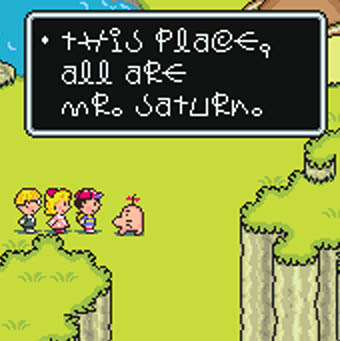
Possibly related to Elvish, Halfling is another silent language. Illusory word bubbles appear above the halfling's head. You don't have to look your subject in the eye--when yelled, the word bubbles are visible at a distance. The word bubbles look somewhat ridiculous, like Mr. Saturn's talk.


Dwarvish

Dwarvish is untranslatable. Spells like Comprehend Languages/Tongues automatically fail. If you don't speak Dwarvish, it's an untranslatable code.

Gnomish

Birds can understand Gnomish. They don't really care, but they understand it. 

Draconic

Draconic is hot. Speaking Draconic literally warms you up. In even mild climates, speaking Draconic is uncomfortable for humans since it raises their body temperature so much.

You cannot write Draconic on paper - it catches on fire. Only stone can bear the heat of its glyphs.

Goblin

Goblin hangs in the air after it's spoken like an invisible stinky cloud. Goblin houses get stained and greasy from the continual stream of their chatter. Goblins, dogs, and anything else with a great sense of smell can detect it for days after it's spoken. (Credit to Brent at Glassbird Games for this one.)

Thursday, February 16, 2023

Making Magical Items Feel Magical

+1 swords are boring. I talked about that here. 

Can we apply the principle of "active, fantastic magic" to other common magic items? 

Flaming sword

I think the flaming sword is particularly pathetic. It sounds so cool. A flaming sword! What does it do? Ah, "additional damage." Wow. 


Let's hit this one like a hammer.

After the first sin, Man and Woman were cast out of the Garden of Eden, and an angel set to guard the gates with a flaming sword. In time, the garden withered and the angel grew negligent. This is his sword. 

When drawn from its scabbard, the flaming sword erupts into fire. 

It sheds light and heat like a bright torch. Although you are never without light as long as you have this sword, it is uncomfortable to hold. Too bright. Too hot. You sweat while it's drawn. 

The sword is as hot as a forge. You can start fires with the sword easily.

Roll an additional +d6 when you attack with this sword (for a total of 2d6 damage). Make this extra dice red, for style and pizzazz purposes. 
If you ever deal 6+ damage with the flaming sword, your target catches on fire. They take an additional 1d6 damage every turn until they spend a turn putting themselves out. The GM arbitrates how fires are put out. Throwing themselves in water would work (but would ruin carried scrolls, etc.). Rolling on the ground might work, but would break potion bottles. 

Moreover, given time, you can cut through any material that will melt at forge temperatures. You can push the sword through a lock, easily hack open wooden doors, and melt down lesser swords.

The blood of an innocent will cool this sword's fire forever. If ever used to harm someone truly innocent (a child, someone who just undertook confession, etc.), the sword's magic is lost. 

Ring of protection

Ring of protection - another set it and forget it item. But how can we make it active? 

The ring of protection is writ with runes of invulnerability. While worn, the hand on which it sits is as invulnerable as mithril. 

If you are not carrying anything in that hand, you may use your hand like a light shield by catching and deflecting blows with your bare hand. 

Having a free, invulnerable hand is very handy for gambits. When it would be helpful (GM's discretion), you only roll one dice instead of two, succeeding on a gambit on a single hit. You simply twist weapons away from the hands of combatants by grabbing the blade.

Additionally, you can use your hand as an invulnerable tool--up unto the wrist. You can dip your finger in acid, hold open a door that slams shut, or catch a swinging pendulum blade. Still, the ring does not confer super strength or other protection. The force of a blow might shatter your shoulder.

You can elect to shatter the ring of protection to automatically pass a saving throw. You must make this decision before making the roll.

Boots of speed

These winged boots weren't meant for you, mortal. You are moving at god-speeds. You are killing yourself.

When you click your heels together, you rocket forward. Your body is faster than your mind. You're moving faster than you can see. This is disorienting.

While traveling overland, you blast forward. You can move 1 hex (6 miles) in 10 minutes. This causes 10 damage to your body as your joints and muscles and bones are put under incredible strain.

While traveling in close quarters (like in a dungeon), you instantly move a distance equal to your normal walking pace. This functions essentially like a teleport, and is disorienting. Take 1d4 damage as you clip the edge of a companion's shield or stop yourself by slamming into a wall.

During combat, you move your normal walking pace in addition to any other actions you take during this round. You take 1 damage from accident and strain when you do this, but you also deal +1d4 extra damage from inertia while making attacks. If it matters for your system, you automatically disengage from enemies when using the boots in this way.

Bag of holding

So I'm against the bag of holding on principle. Magic items shouldn't negate the essential dangers of the dungeon*. If you trivialize what you can bring on a journey, you trivialize the resource management of a dungeon crawl. But, uh, here's an alternative.

It's a pig. It looks dumb as hell. But if you scratch it behind its ears, it opens up like a pack.

The pig of holding can hold 20 slots worth of items. It follows beyond you, sometimes bumping into you and stepping on your heels. If unattended, it sometimes wanders away to press its head into a corner, so it's a good idea to tie a loose leash to it. It eats garbage, but you do need to feed it or it will die. It's just a pig after all.

Dimensional magics get all twisted up inside the pig. Casting teleport or dimension door on the pig, placing another dimensional artifact (portable hole, etc.) inside the pig, or similar results in a magical catastrophe. Draw on your favorite Bad Magic Shit table.

Eh. I don't love this one. It's maybe a little weirder but it's not necessarily more magical. 

* Did you notice how the flaming sword (above) did this? Yeah. Bad game design. The guy who wrote that sucks.

Belt of giant strength 

I like a belt of giant's strength as much as the next guy, but always thought it was interesting when it set your Strength directly to a number instead of giving you a bonus. Is there a way we can make this more active?
While wearing this belt, you have the strength of a giant. 

Let me clarify. You have the strength of one, specific giant. Perhaps you have the belt that channels the strength of Grom the Unwieldy. Perhaps you have the belt that channels Oglethorp of the Deep Nostrils.  They were created by dwarves long ago after the Second Giant Wars as a condition of their surrender. When you use the belt's powers, you make the bonded giant weak and tired. If that giant ever dies, the belt ceases to function. Obviously, giants hate this and will attack anyone wearing these belts on sight.

Once per day, you may invoke the power of the belt to perform some Herculean task. You can lift a portcullis, pull down a column, divert a river through sheer strength, wrestle a lion to the ground, etc. This task is automatically successful if it is at all possible through actual main-forte. This power refreshes at the dawn of every day, per the ancient bargain. 

Additional resources